REVIEW · SAN DIEGO
San Diego: Whale Watching Cruise
Book on GetYourGuide →Operated by San Diego Whale Watch · Bookable on GetYourGuide
Whales show up here with less hassle. This Mission Bay cruise heads out to the open ocean in search of whales and dolphins year-round, with live marine biologist narration to explain what you’re seeing (and why). You’ll also spot sea lions and seabirds as the boat works its way offshore.
I especially like the combination of expert commentary and a well-run, family-owned feel. It’s the kind of operation where check-in is organized, the boat stays clean, and the staff is quick to help—plus there’s a snack and beverages bar on board.
One thing to think about: the ocean can be a little unpredictable, and there may be stretches of time between whale and dolphin sightings. If you get motion sickness easily, plan for that before you go.
In This Review
- Key highlights worth planning around
- Mission Bay to the open ocean: how the cruise really plays out
- Seasonal timing: when the trip is shorter (and why)
- The marine biologist narration: what you gain besides sightseeing
- What you might see: whales, dolphins, sea lions, and birds
- Comfort and timing on board: seating, bar snacks, and motion reality
- Price and value: why $70 can feel fair (or not)
- Getting there smoothly: check-in, waivers, and your boarding pass
- Who should book this cruise (and who might skip it)
- Should you book: my practical take
- FAQ
- How long is the whale watching cruise?
- Where do I check in for the tour?
- Do I need to arrive early?
- Is the tour offered year-round?
- Is the cruise canceled for bad weather?
- Are food and drinks included in the price?
- What seating options are available?
- Does the tour include parking?
- What language is the tour commentary in?
- Who is this tour not suitable for?
- FAQ
- What is the cancellation window for a full refund?
- Can I book without paying immediately?
- Is the tour duration always exactly 3 hours?
Key highlights worth planning around
- Mission Bay departure with a fast run to open water, so you spend more time looking
- Live narration in English from a marine biologist, with answers to questions while you cruise
- Year-round chances for whales and dolphins, plus sea lions and seabirds during the search
- Indoor and outdoor seating, so you can choose fresh air or shelter as conditions change
- Snack and beverages bar on board, which keeps the trip manageable even without outside food
- Digital photo delivery speed, which some people mention as a nice add-on after the cruise
Mission Bay to the open ocean: how the cruise really plays out
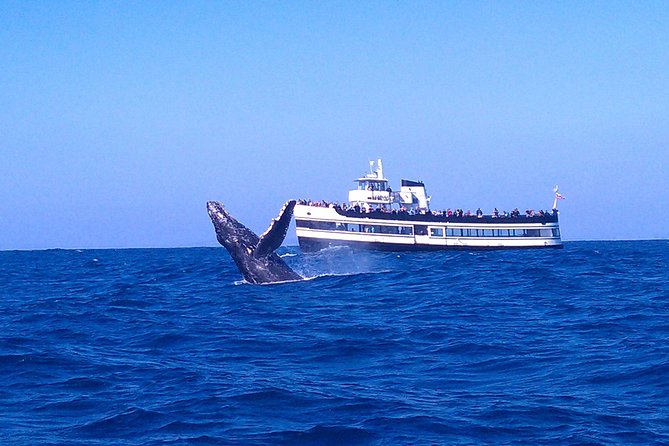
The experience starts in Mission Bay, then moves quickly toward open water where whales and dolphins are more likely to be roaming around. The boat isn’t just puttering; it’s a targeted search, and that matters. When you’re paying around $70 per person and staying on the water for a few hours, you want the “looking” time to outweigh the “sitting in transit” time.
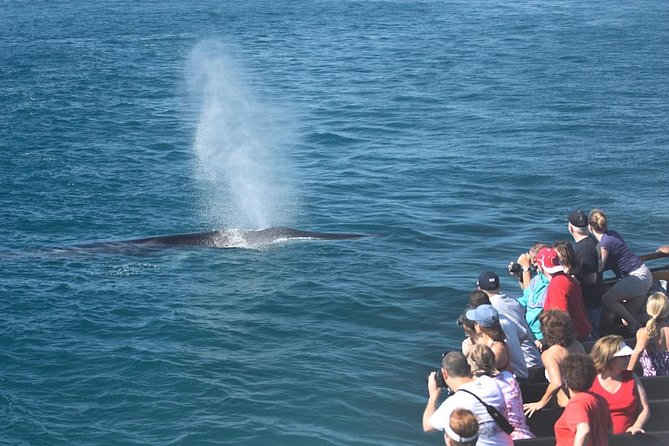
Once you’re offshore, you get the rhythm of a wildlife cruise: the captain goes searching, then you stop focusing only on movement and start focusing on behavior. Watch for blows on the surface, fin or tail sightings, and the quick patterns that show something bigger is nearby. The narration helps you connect the dots—what type of whale or dolphin you might be seeing, how marine life uses the area, and what to look for next.
If you’re hoping for the single big moment—like a whale surfacing near the boat—this is the right format. You’re not just “around water.” You’re on a guided expedition with frequent opportunities to spot wildlife as conditions and animal movement allow.
You can also read our reviews of more boat tours in San Diego

Seasonal timing: when the trip is shorter (and why)
Trip length changes by season, and that affects your day planning. In the warmer stretch (March–November), cruises run about 2.5 to 3 hours. In winter (December–February), it’s typically 2 to 2.5 hours.
That means you can build a flexible itinerary around it. In winter, you may get out and back sooner, which helps if you’re pairing this with other San Diego plans. In the rest of the year, you get a bit more time to search wider and stay out while animals drift into view.
Either way, plan on a full cruise mindset: you’re on the boat for the duration, and the “action” comes in sightings rather than a single guaranteed event. This is also why choosing the right time of day for you matters—if you hate waiting, go when you’re rested and ready to stay patient for the wildlife to appear.
The marine biologist narration: what you gain besides sightseeing
This cruise leans hard into learning, and that’s not just marketing fluff. You get live commentary by a marine biologist, and the best part is that it connects sightings to real-world marine behavior.
You can expect the guide to explain what you’re seeing as the boat finds wildlife—so the cruise becomes more than a photo scavenger hunt. People mention that the guide was informative and enthusiastic, and that questions were answered on the spot. Some folks even wish there had been a bit more back-and-forth discussion, especially during the longer stretches of searching, which tells you where the narration shines and where you might still have some downtime.
If you like nature explanations—how whales and dolphins feed, how they move through the water, why certain areas might attract them—this format will feel worth it even when you’re not lucky enough to see every species you were hoping for. And even if you miss whales one day, strong dolphin sightings can still make the cruise memorable.
What you might see: whales, dolphins, sea lions, and birds
The big promise here is year-round excitement for whales and dolphins, and the sightings tend to be the reason people rave about returning. On any given trip, you could see whales, dolphins, sea lions, and multiple seabird species while the boat searches the offshore area.
From the feedback and what the cruise is set up to do, dolphins are often the reliable crowd-pleaser. Some reports describe huge groups of dolphins and pods that travel alongside the boat for minutes at a time. When that happens, you get a very specific kind of sightseeing: repeated surface activity, quick bursts of movement, and a sense that the animals are curious about the boat.
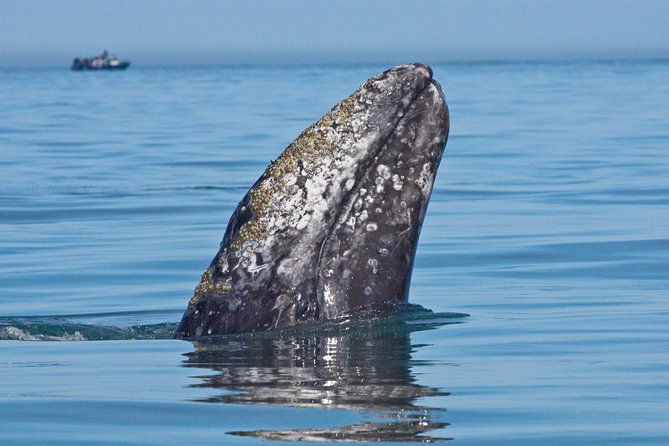
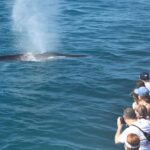
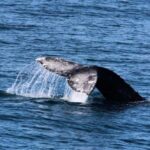
Whale sightings can be more dramatic but less constant. When a whale does show up, it tends to be a bigger, more unforgettable moment—tail flukes, fin visibility, and that unmistakable surface timing that makes you immediately understand why people travel for this. Some reports specifically call out grey whales and blue whales, plus the thrill of seeing a whale’s full surfacing behavior.
Sea lions and birds are the “bonus layer.” Even on days when whales are harder to line up, sea lions can keep the waterline interesting, and birds add that busy coastal energy offshore.
Comfort and timing on board: seating, bar snacks, and motion reality
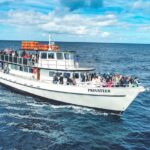
You’ll have a choice between indoor and outdoor seating, which is a practical win in San Diego. Even when the weather looks good at Mission Bay, ocean conditions can shift quickly—wind, spray, and sun angle all change once you head offshore. Indoor space helps if you’re trying to stay comfortable during cooler wind or rougher patches. Outdoor space helps you spot blows and fins without glass or glare slowing you down.
There’s a snack and beverages bar onboard, and that’s important because food and drinks are not included. So even though the cruise includes the cruise and live commentary, you’ll want to budget for snacks if you get hungry during the search. The good news: having a bar onboard makes it easier to manage the trip without planning a separate meal.
Now the motion piece. This is a boat out on open water, and at times it can feel like a workout for your balance. One review highlights that the crew was attentive to passengers prone to motion sickness, and that people should take medication before boarding if they’re susceptible. If you’re sensitive, don’t gamble with your comfort—bring your preferred solution and consider choosing indoor seating when waves pick up.
You can also read our reviews of more whale watching tours in San Diego
Price and value: why $70 can feel fair (or not)
At $70 per person, this cruise isn’t a budget throwaway—and it shouldn’t be treated like one. You’re paying for three things that matter on the water: access to the search area, live marine biologist narration, and the time on the ocean dedicated to wildlife spotting.
The value case gets stronger because the operation includes free parking and the live commentary is part of the core experience. Some cruises charge extra for guides, and you never fully know what you’re getting. Here, the narration is central, and people specifically mention the guide’s degree-level background and the way staff answered questions.
The trade-off is uncertainty. Wildlife cruises can’t promise specific species every trip. So if your one goal is a particular whale, you might feel the price more strongly on days when you get more dolphins than whales. Still, even those are often big-energy sightings—some people describe hundreds of dolphins and long shared travel moments with pods.
If you’re looking for a structured, educational, and well-run outing that fits into a morning or afternoon, $70 is in the right zone. If you only enjoy wildlife when it matches a very specific checklist, you’ll want to manage expectations.
Getting there smoothly: check-in, waivers, and your boarding pass
Logistics matter on cruise days, because being late can turn into a lost seat. You should check in 45 minutes before departure at a small gray booth between H2O Jet Ski Rentals and the Fish & Chips Shop, facing the marina. You’ll need to fill out pre-arrival waivers before you arrive, and you’ll receive a physical boarding pass at check-in.
This is also where the well-organized nature of the trip shows up. People mention it being easy to book and organized, and it lines up with how the check-in process is described: you arrive, complete your paperwork ahead of time, get your pass, and then you’re ready to board without chaos.
Free parking helps too, especially if you’re driving from outside the immediate Mission Bay area. It reduces stress, and stress is the enemy of a good wildlife outing.
Who should book this cruise (and who might skip it)
This cruise is a strong fit if you want a mix of wildlife viewing plus education, and you like having a guide explain what’s happening instead of just pointing at distant blows. It also works well for families, since the experience is designed as a guided activity with narration and frequent sightings.
It may not fit everyone. It’s not suitable for wheelchair users, and it’s not recommended for people with heart problems. Also, if you’re extremely motion sensitive, take that seriously. The crew may help, and medication advice pops up in the feedback, but the ocean is still the ocean.
If you’re a solo traveler, this is still a good pick. You’re not stuck waiting for someone to make the trip happen—you’re all there for the same thing, and the biologist narration gives you conversation fuel even if you’re traveling alone.
Should you book: my practical take
Yes, if you want a well-run San Diego outing that’s designed to maximize your chances of seeing marine wildlife, this is an easy yes. The combination of year-round whale and dolphin potential, live marine biologist narration, and clear, organized logistics makes it feel like a serious wildlife experience rather than a casual boat ride.
Book with a few expectations in mind:
- Treat sightings as a bonus, not a guarantee, and enjoy the whole search process.
- Plan for motion if you’re sensitive, and consider medication before you board.
- Bring room in your budget for snacks since food and drinks aren’t included.
If your dream is specifically one rare whale species, you may want to read the day’s conditions and be flexible. But if you’re happy to see dolphins, whales, sea lions, and birds in an educational setting, this cruise gives you a lot of value for your time on the water.
FAQ
How long is the whale watching cruise?
Trips are typically 2.5 to 3 hours from March to November, and 2 to 2.5 hours from December to February. Exact departure times vary, so check availability for the schedule.
Where do I check in for the tour?
Check in at the small gray booth between H2O Jet Ski Rentals and the Fish & Chips Shop, facing the marina. You’ll need to check in 45 minutes before departure.
Do I need to arrive early?
Yes. You should arrive 45 minutes early to finish the check-in process and receive your physical boarding pass.
Is the tour offered year-round?
Yes. The cruise offers year-round whale and dolphin watching excitement.
Is the cruise canceled for bad weather?
The tour departs rain or shine, but it may be subject to cancellation due to poor sea conditions.
Are food and drinks included in the price?
No. Food and drinks are not included. There is a snack bar and beverages available for purchase onboard.
What seating options are available?
There is indoor seating and outdoor seating on the boat, so you can choose based on weather and comfort.
Does the tour include parking?
Yes. Free parking is included.
What language is the tour commentary in?
The live commentary is in English.
Who is this tour not suitable for?
It is not suitable for wheelchair users and is also not suitable for people with heart problems.
FAQ
What is the cancellation window for a full refund?
You can cancel up to 24 hours in advance for a full refund.
Can I book without paying immediately?
Yes. You can reserve now and pay later.
Is the tour duration always exactly 3 hours?
No. The listed duration is about 3 hours, but seasonal schedules vary. Check availability to see the starting times and exact trip length.