REVIEW · SAN DIEGO
San Diego Whale Watching & Dolphin Cruise
Book on Viator →Operated by San Diego Whale Watching LLC · Bookable on Viator
Whales meet you fast in San Diego. I love that you leave Mission Bay and reach the open Pacific in about 10 minutes, so the trip doesn’t waste time. I also like having a captain plus onboard naturalists calling out sightings in real time. One thing to consider: whale and dolphin spotting depends on conditions, and the microphone system can be tough to hear over wind and boat noise on some departures.
This cruise is built around the hunt—eyes up, cameras ready, and listening for the next spout. You’ll cruise past familiar shoreline landmarks before you push farther out, with narration that aims to help you notice what matters: breathing blows, feeding behavior, and pod movement. If you go with the right expectations, it’s one of the easiest ways to experience San Diego’s marine world without a complicated plan.
In This Review
- Key highlights worth planning around
- Mission Bay to Open Pacific: the vibe in 2–3 hours
- The shoreline drive-by: Ocean Beach, Dog Beach, and Belmont Park views
- Sunset Cliffs pass-by: getting a feel for the coast from the water
- The wildlife hunt: what you’re really paying for
- Who’s talking on board: captains, naturalists, and the sound system
- Comfort on the open water: layers, binoculars, and what’s included
- Binoculars: worth it if your eyes aren’t eagle-mode
- Priority boarding: $10 if you care about prime deck time
- Itinerary flow, stop by stop: what each segment accomplishes
- Price and value: why $71 can work (or not)
- Who should book this cruise?
- Quick practical tips before you go
- Should you book this San Diego Whale Watching & Dolphin Cruise?
- FAQ
- How long is the cruise?
- Where do I meet the tour?
- What animals might I see?
- What should I wear?
- Is there a restroom on board?
- Can I buy food or drinks during the cruise?
- Are binoculars available?
- Is parking free?
- What happens if there are no whales or dolphins?
Key highlights worth planning around
- Mission Bay departure gets you out fast for a quicker shot at wildlife
- Live spotting help from a captain and onboard naturalists during the trip
- Scenic cruising time past Ocean Beach and the Mission Beach area
- Smart packing matters: the open ocean can be 10–15° cooler than the bay
- Binocular rental and priority boarding are simple add-ons if you want them
Mission Bay to Open Pacific: the vibe in 2–3 hours
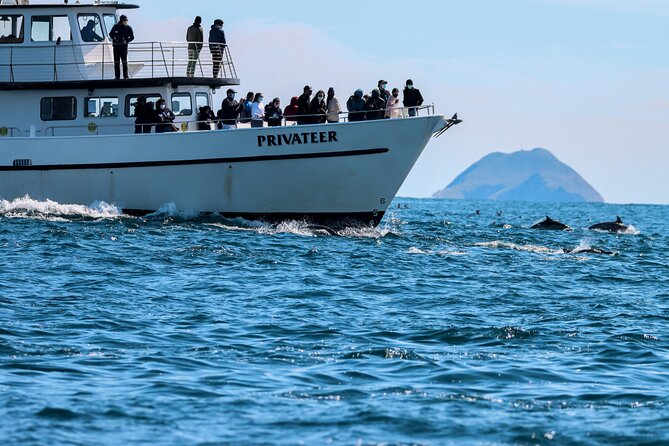
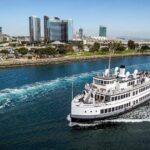
This is a short cruise, roughly 2 to 3 hours, and that matters because wildlife watching is all about the time you spend where the animals are. The boat leaves from South Mission Bay Park at 1617 Quivira Rd, and you’re out into the open Pacific quickly—about 10 minutes after you depart. That quick jump to blue water is a big part of why this trip tends to feel “worth it” even on days when conditions are mixed.
The pacing also helps. You don’t spend the whole tour stuck in the harbor with a long waiting game. Instead, the cruise balances two things:
- A scenic run along the San Diego shoreline
- A dedicated stretch where you look for whales and dolphins in real time
The maximum group size is 100 travelers, which is large enough to be social but small enough that you’re not fighting for basic sightlines the whole time. Still, you’ll want to dress for how the ocean feels, not how the bay looks from shore.
You can also read our reviews of more boat tours in San Diego

The shoreline drive-by: Ocean Beach, Dog Beach, and Belmont Park views
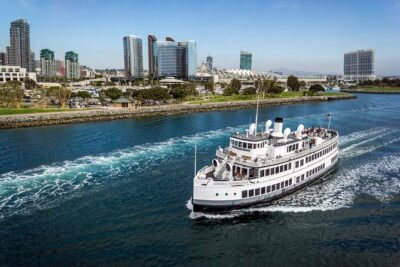
Before the search gets serious, you get the fun part: the coastline tour. After sailing from Mission Bay, the route takes you past the jetties and into open-water views that feel unmistakably San Diego.
On the way out, you can catch a view of:
- Ocean Beach’s Dog Beach
- The Ocean Beach Pier
- The Mission Beach Boardwalk area (including surfers and skaters from the water)
Then the boat slides past the Belmont Park area, with palm-lined promenade views and the coaster off to one side. If you like that “I’m seeing the city from a new angle” feeling, this portion delivers without extra time or transfers.
Why I like this part for first-timers: it sets your expectations. You’re not guessing what you’ll see later—you’re already getting a sense of how the coastline lines up with the water. Also, even when sightings are slow, having solid scenery and constant scanning keeps the trip moving.
Sunset Cliffs pass-by: getting a feel for the coast from the water
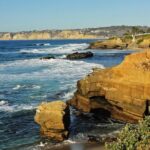
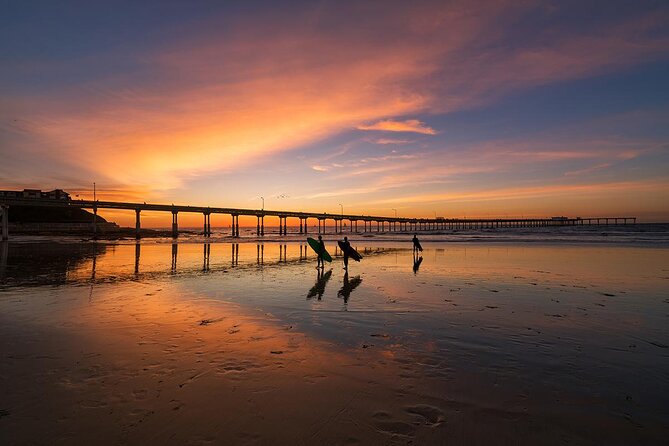
Another notable stop is a pass by Sunset Cliffs—the golden sandstone bluffs, sea caves, and surfers below. This works as more than a pretty moment.
It’s part of how you train your eyes for the open ocean. When you’re looking for spouts, you’ll notice that coastlines create visual cues—color changes, rock lines, and water texture shifts. The boat uses the route to keep you oriented while you wait for the crew to find wildlife.
If your group is split—some people want animals, others just want the San Diego coast experience—this is the zone where both sides get something.
The wildlife hunt: what you’re really paying for
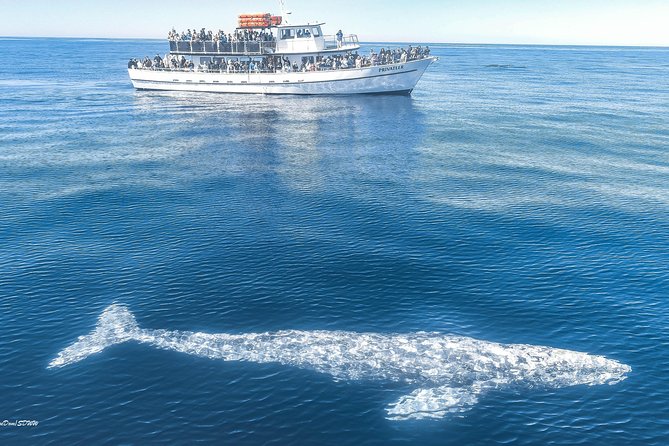
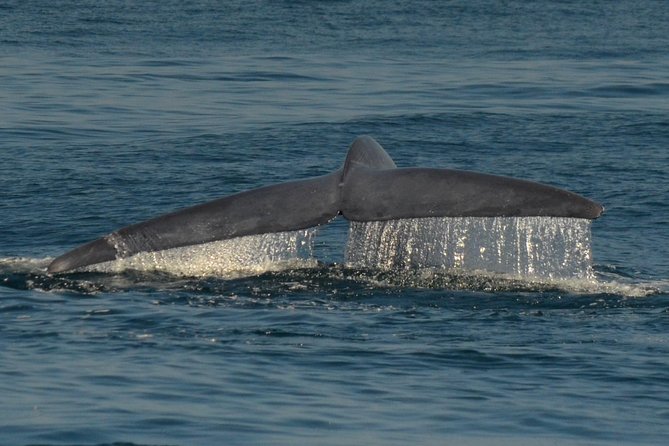
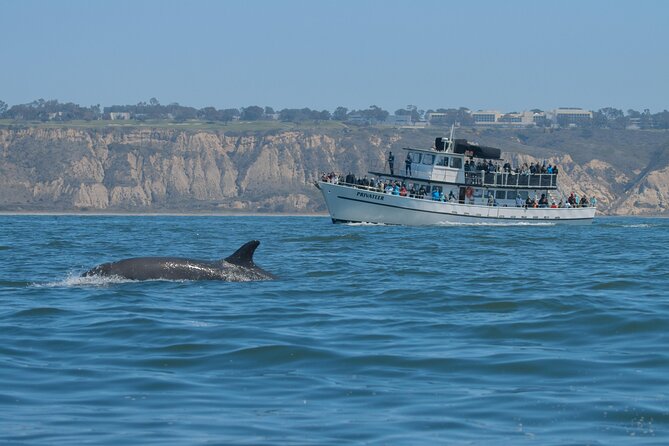
The core of the trip is simple: once you’re out far enough, the captain and onboard naturalists work together to find whales and dolphins. You’re listening for live updates over the microphone, and you’re watching for the small tells that often come before the big show: the direction of movement, quick surface breaks, and sudden spouting.
From the animals that have shown up on recent departures, you might see:
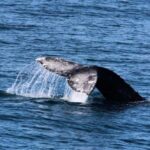
- Grey whales
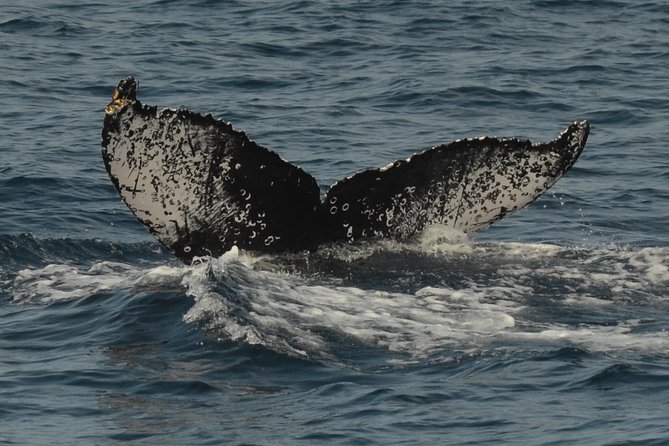
- Humpback whales
- Fin whales and minke whales (on some trips)
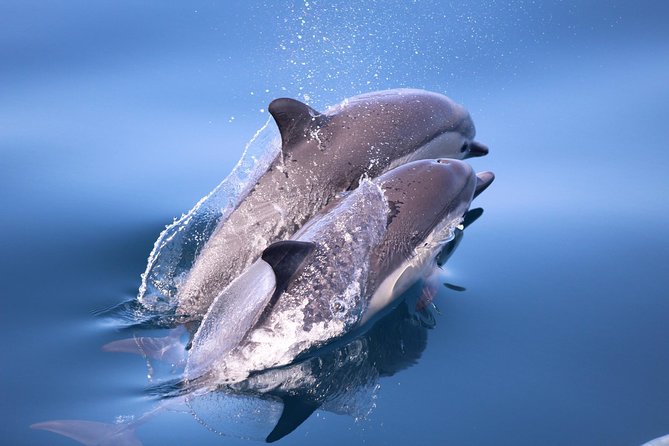
- Common dolphins
- Large pods of dolphins
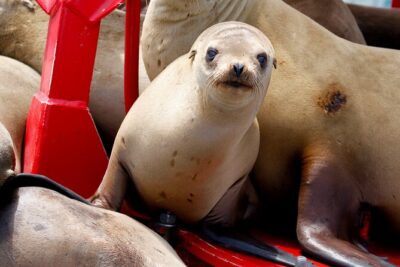
- Sea lions
- Even porpoises (which can show up as fast, jumpy surface activity)
A useful reality check: dolphins sometimes steal the show. Other times you get whales and less luck with dolphins. That’s not a “problem with the tour.” It’s how ocean encounters work.
The best advice: let the crew guide where to look, and keep your attention on what they point out. When you’re scanning the horizon, following their call beats trying to out-guess the ocean.
Who’s talking on board: captains, naturalists, and the sound system
The value here isn’t just that there’s narration—it’s that you have expertise feeding you information while you’re actively spotting wildlife. The crew uses real-time identification and landmarks over the microphone, and multiple guides and naturalists have earned strong mentions for their on-board commentary.
Names that have come up in recent departures include Allison (as a standout naturalist) and Jennifer (noted for commentary). When the system is working well, you get a clear link between what you see and why it’s happening—like how pods move or what specific behaviors mean.
Now the practical catch: a few experiences note that the speaker quality and microphone clarity can be inconsistent, especially with wind and crowd noise. So I’d plan for this:
- Don’t rely on audio to catch everything.
- Bring your eyes, not just your ears.
- If you’re sensitive to sound, you’ll still get value from watching the crew’s pointing and the boat’s reactions.
You can also read our reviews of more whale watching tours in San Diego
Comfort on the open water: layers, binoculars, and what’s included
The ocean can feel very different from shore. Even if the bay looks pleasant, the water is about 10–15° cooler out there. The tour’s smart-casual dress code is a good baseline, but I strongly suggest you treat it like weather, not fashion.
What I’d bring (practical, not fancy):
- A windbreaker or light jacket
- Layers you can peel on and off
- Non-slip shoes for deck time
Onboard you also get the basics handled:
- Restroom on board
- A galley with food and drink options for purchase
- Free parking on Quivira Road (but note the “free” part is limited to that area)
A few money-saving notes:
- Soda/pop/snacks are also available for purchase, so you don’t have to starve.
- Alcohol is sold, but it’s listed as available after 3 miles—so if you’re hoping to start a cocktail immediately, you might wait a bit.
Binoculars: worth it if your eyes aren’t eagle-mode
Binoculars aren’t required, but they’re useful if the wildlife is farther out. You can rent them for $6 per pair. If you’re going with someone who always forgets theirs (no judgment), this add-on is an easy fix.
Priority boarding: $10 if you care about prime deck time
There’s an optional upgrade for priority boarding for $10 per person. This can matter if you know you’ll want a strong viewing position right away. If you’re flexible and don’t mind walking to find space as the boat repositions, you can skip it.
Itinerary flow, stop by stop: what each segment accomplishes
Here’s how the trip’s rhythm adds up, without the fluff:
- Departure from South Mission Bay: You start right where the ocean meets the bay channel. It’s convenient and it gets you into the action quickly.
- Pass through the jetties and out toward Ocean Beach: You’re building coastal familiarity while the crew sets up the search.
- Glide past Mission Beach / Belmont Park / the boardwalk: This keeps the cruise lively even before major sightings.
- Sunset Cliffs pass-by: A scenic anchor point that also helps you stay visually oriented for later scanning.
- Open ocean search: This is the main event—where the captain and naturalists hunt for spouts and pods and tell you what you’re seeing in real time.
The trade-off in a short cruise is straightforward: you don’t cover the entire ocean. You do, however, get enough time in the field to feel like you were actually on a hunting mission, not just sightseeing.
Price and value: why $71 can work (or not)
At $71 per person, this sits in the “mid-range fun” category. The big question is always: will you see animals?
Here’s how I think about value on a whale-and-dolphin cruise:
- You’re paying for time on the water plus a skilled crew looking for whales.
- You’re also paying for onboard interpretation, so you can make sense of what you’re seeing.
- And you’re buying acceptance that wildlife encounters are not guaranteed.
The good sign: the overall rating is strong, with a recommendation rate around 91% and a 4.6/5 score. That suggests the majority of people feel the cruise delivers more than a quick look.
The potential downside: if your day turns out to be a slower sighting window, the cruise can feel long for the minutes you see surface behavior. One way to reduce disappointment is to come in open-minded. Even strong days can be whale-heavy or dolphin-heavy, not both equally every time.
Who should book this cruise?
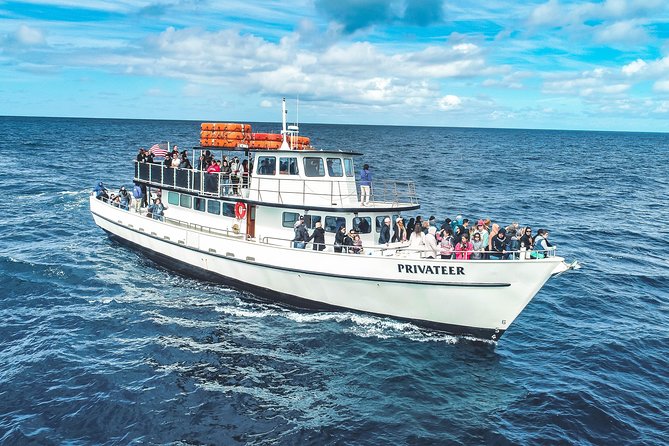
This is a great match if you:
- Want an easy, short ocean outing from central San Diego
- Like learning in real time while you watch
- Are comfortable with smart-casual weather prep and changing conditions at sea
- Are traveling with family or friends who want a mix of scenery plus wildlife
It’s also a solid choice if you’re visiting for the first time and want a “San Diego at sea” experience without a full-day commitment.
If you’re the type who needs guaranteed whales on the calendar, no ocean cruise can promise that. But this one does have a safety net: there’s a mention of a whale sighting guarantee where guests who see no whales or dolphins can be offered a return pass to try again.
Quick practical tips before you go
- Arrive early: plan to show up 30–45 minutes prior.
- Dress for wind: the open ocean is 10–15° cooler than the bay.
- Use the crew’s guidance: when they point, look there.
- Bring a wind layer even in warm weather.
- If you’re serious about spotting, rent binoculars ($6).
- If sound matters to you, remember that microphone clarity can be inconsistent. Don’t wait for audio cues only.
Should you book this San Diego Whale Watching & Dolphin Cruise?
I’d book it if you want a straightforward, well-run ocean outing from Mission Bay with real-time spotting support and the chance to see grey whales, humpbacks, dolphins, and sea lions. The price feels reasonable when you factor in the crew’s effort to locate animals and the fact that you’re out on open water quickly.
Skip it only if you know you’ll be extremely upset by variable sightings. This is nature, not a zoo. Some departures are dolphin-rich, some are whale-rich, and some are slower. If you can handle that reality, you’ll likely leave happy with both the wildlife encounters and the San Diego coastline views.
FAQ
How long is the cruise?
The whale watching cruise lasts about 2 to 3 hours.
Where do I meet the tour?
The meeting point is 1617 Quivira Rd, San Diego, CA 92109. The activity ends back at the meeting point.
What animals might I see?
You’re looking for whales and dolphins, and you may also spot sea lions and other marine life. Specific sightings in recent trips have included grey whales, humpback whales, and common dolphins.
What should I wear?
Dress is listed as smart casual. Plan for the ocean to be 10–15° cooler than the bay, so bring layers, especially a wind layer.
Is there a restroom on board?
Yes, there is a restroom on board.
Can I buy food or drinks during the cruise?
Yes. There’s a galley where you can purchase food and drink. Soda/pop/snacks are available for purchase, and alcoholic beverages are available for purchase after 3 miles.
Are binoculars available?
Yes. Binocular rentals are available for $6 per pair.
Is parking free?
Parking is listed as free on Quivira Road only.
What happens if there are no whales or dolphins?
The information provided indicates a whale sighting guarantee: if you don’t see any whales or dolphins, you’re offered a return pass to come back and try again.