REVIEW · SAN DIEGO
San Diego: 3 Hour Whale Watching Cruise
Book on GetYourGuide →Operated by Legacy Whale Watch · Bookable on GetYourGuide
A lot can happen in three hours at sea. This Mission Bay cruise is built for real wildlife spotting—whales, dolphins, and sea lions—plus the comfort to enjoy the ride even when conditions change. I love the two-deck setup with indoor windows and an outdoor bow for scanning the water, and I also like the fact that you’re not just sent out blind: the crew helps you track what’s around. The one drawback to plan for is seasickness—this trip is not a good match if you’re prone to it.
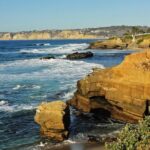
You’ll start at Legacy Whale Watch in the Mission Bay area and head toward La Jolla Canyon, where migration routes and local feeding activity can bring whales close enough to see their spouts, movements, and surfacing behavior. It’s a straightforward trip in the best way: get on, get out to productive water, and spend the time actively looking while learning from the guide and onboard naturalists you may find onboard.
In This Review
- Key takeaways before you go
- Mission Bay to La Jolla Canyon: what 3 hours looks like in practice
- Which whales you’re most likely to see (by season and month)
- November to April: California gray whale season
- Summer: your best shot at blue whales
- May to October: other big names enter the picture
- Dolphins, sea lions, and birds: the odds booster
- The 80-ft boat setup: where you should sit for the best experience
- The live guide and onboard naturalists: how spotting actually gets easier
- Drinks, snacks, and timing: making the ride feel like a trip, not a chore
- Where and how to park near 1717 Quivira Rd (so you don’t get towed)
- Comfort vs. conditions: what can affect whale sightings
- Value check: does $34 make sense for what you get?
- Who should book this cruise (and who should skip it)
- Should you book this San Diego whale watching cruise?
- FAQ
- Where do I park for the Mission Bay whale watching cruise?
- How long is the whale watching tour?
- What whale species are most likely to be seen by season?
- What’s included onboard besides the sightseeing?
- What should I bring for the cruise?
- What is the whale guarantee if no whales are spotted?
Key takeaways before you go
- Whale guarantee safety net: if no whales are spotted, you get a free ride
- Comfort first: a modern 80-ft fiberglass boat with indoor and outdoor decks
- Good weather still matters: rain and wind can reduce spotting, even when the crew tries hard
- Seasonal odds are real: gray whales in winter, blue whales in summer, and other species in between
- You’re likely to see something: dolphins and sea lions often show up even when whales don’t
Mission Bay to La Jolla Canyon: what 3 hours looks like in practice
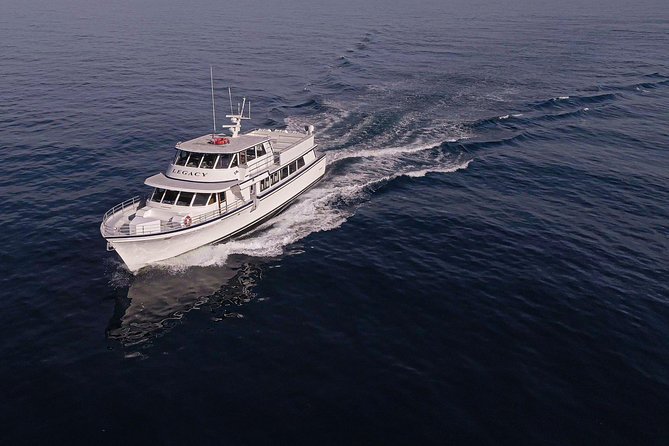
This cruise is short enough to feel doable on a busy San Diego day, but long enough that you’re not constantly rushing. You’re out for about 3 hours on an 80-ft fiberglass vessel with two decks. That matters because whale watching is time-based: animals surface, feed, and move on their own schedule. Three hours gives the crew room to reposition and gives you time to read the water instead of giving up after one quick pass.
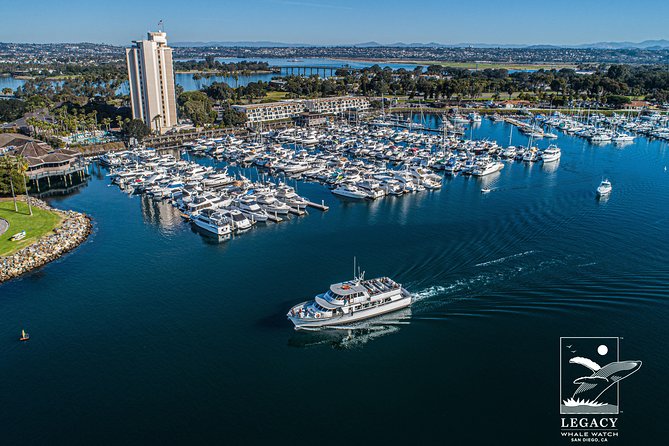
The trip starts from the Legacy Whale Watch area in the Mission Bay region, then you head toward La Jolla Canyon, a zone that can offer strong wildlife viewing. The reason this region works is simple: it sits in the path of migration and also supports resident animals, so you’re not only hunting for one species. Even when the big whales are quiet, you can still get dolphins, sea lions, and birds that keep the trip lively.
One more practical note: the boat is described as modern and stable, and that lines up with what people emphasize after the ride. Still, the company notes it’s not suitable for people prone to seasickness. So if you know your stomach doesn’t handle boat motion well, don’t “wait and see.” Make the call early.
You can also read our reviews of more boat tours in San Diego

Which whales you’re most likely to see (by season and month)
San Diego whale watching is seasonal, and this tour lays out a clear guide for what to expect. Use it like a forecast for your hopes—not a promise.
November to April: California gray whale season
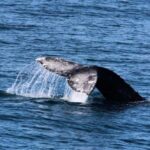
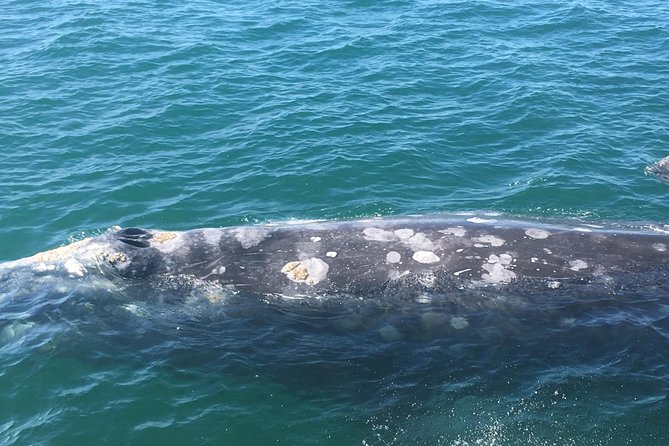
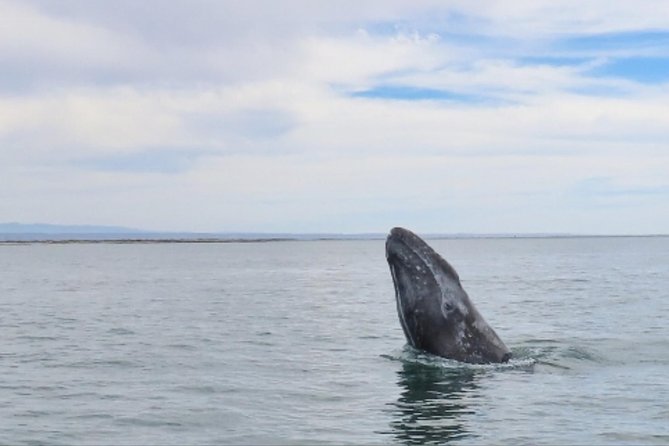
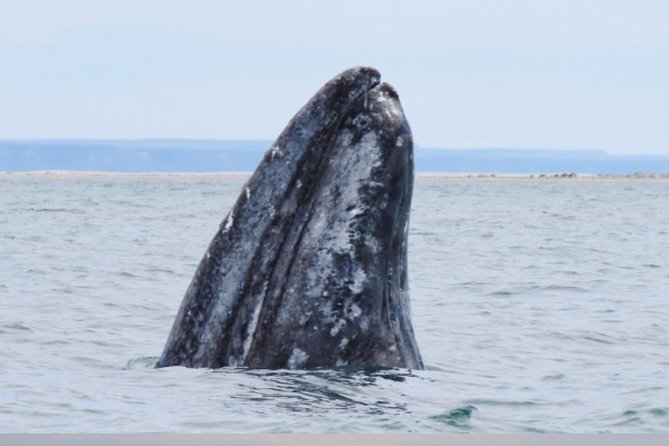
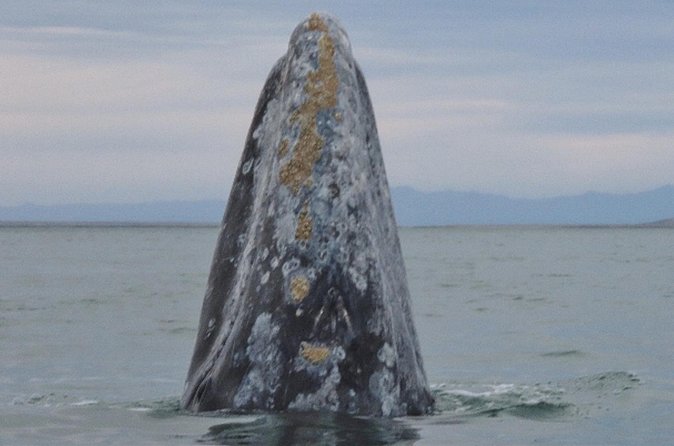
From about Nov/Dec to April, the highlight is the California gray whale migration. The timing aligns with the animals moving between feeding areas and breeding lagoons in Baja California. The provided information notes that gray whales complete a long route over more than 5,000 miles, and that over 20,000 California gray whales make this migration annually.
If you’re visiting during winter, this is the season to aim for when your goal is whales—not just dolphins. Expect the crew to spend more time focusing on gray whale behavior and likely routes.
Summer: your best shot at blue whales
During the summer, the water is warmest, and the information provided says this is when you have the best chances for blue whales. Blue whales aren’t guaranteed, but if your travel dates are flexible, summer improves the odds compared with winter on this route.
May to October: other big names enter the picture
From May to October, you might see fin whales, humpback whales, and minke whales. This is a good window if you want variety and you’re willing to accept that the standout species can shift week to week.
You can also read our reviews of more whale watching tours in San Diego
Dolphins, sea lions, and birds: the odds booster
Even when whales are harder to find, the cruise is described as a strong chance for dolphins/porpoises and sea lions, plus a range of sea birds. Several ratings highlight dolphins as the star when whales were not present. That’s important because it changes how you should plan your expectations: you’re not making a “yes/no” gamble only on whales.
The 80-ft boat setup: where you should sit for the best experience
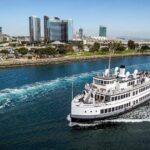
The boat is a big part of why this feels like good value. It’s an 80 ft fiberglass craft with two decks, and it’s designed for visibility. Windows run through both decks, so you can stay sheltered without giving up the view. There’s also covered indoor seating sized for over 100 passengers, plus outdoor options like seating near the bow and an upper deck area that’s slightly elevated.
Here’s how to use that:
- If the weather is cool or windy, I’d prioritize indoor deck seating with windows. You can still watch spouts and movements as they happen.
- If you want more direct sky and horizon scanning, go outdoors on the bow or upper deck whenever you can stand the conditions.
One small real-world snag from a review: if you end up far back, the onboard audio system may not be as easy to hear. If you care about hearing the wildlife talk clearly, pick seating closer to the area where announcements feel easiest.
The onboard comfort package is also solid for a whale watch. The tour includes access to a well-stocked bar with snacks and beverages, and there are 3 full-sized bathrooms. For a 3-hour outing, that’s not a luxury detail—it affects how relaxing the trip feels.
The live guide and onboard naturalists: how spotting actually gets easier
Whale watching sounds like a passive activity, but the best trips are active. The crew and guide help you understand what you’re seeing and where to look next.
You’ll have a live tour guide in English, and on some departures you may also find extra wildlife education from naturalists or volunteers, including an example of a member of a local natural history society doing an informative talk with displays. That kind of add-on isn’t just entertainment. It helps you interpret behavior: what a “spout” means, how surfacing differs by species, and why dolphins often signal feeding activity nearby.
This is also where the crew effort shows up. Even when whale sightings are limited, reviews emphasize that the staff tries hard to locate whales and dolphins during the cruise window. That practical work is why you shouldn’t treat the tour as just a ticket to the water.
Drinks, snacks, and timing: making the ride feel like a trip, not a chore
The bar is included in the experience, with snacks and beverages available, so you’re not stuck with a single option. For me, the value here is less about alcohol and more about not needing to plan a whole food strategy around being out at sea. You can snack as you watch, keep warm (if it’s cool), and stay focused on the water.
Timing-wise, three hours can fly if you’re actually engaged with spotting. The onboard talks, sightings, and the natural rhythm of scanning the surface all fill the time. If you’re the type who gets bored watching the ocean from the shore, this helps because you’ll have a reason to keep looking.
And yes, you may still have dry land moments between sightings—especially if you’re on a “dolphins now, whales later” kind of trip. But that’s part of marine wildlife watching. I like that this tour doesn’t pretend every minute will be a whale blow-up moment.
Where and how to park near 1717 Quivira Rd (so you don’t get towed)
Start with the most practical detail: you park at 1717 Quivira Rd, San Diego, CA 92109. The guidance here is blunt for a reason.
The note says towing near the neighboring lots is aggressive, and you should not park in Seaforth Boat Rentals, Seaforth Marina, or Marina Village parking lots. You’re meant to park either in the recommended lot at 1717 Quivira Rd (Seaforth Sportfishing) or in designated areas along Quivira Rd.
If you’re driving in from outside the area, this is worth doing carefully. It’s one of those travel problems you don’t want to solve while rushing toward check-in.
Comfort vs. conditions: what can affect whale sightings
Even on a great trip, nature is nature. Some of the strongest reviews still describe trips where whales weren’t spotted due to conditions like rain, while dolphins were seen instead.
So what should you take from that?
- Rain, wind, and visibility can reduce spotting chances.
- The crew will work hard, but you’re still dealing with wildlife behavior and ocean conditions.
That’s exactly why the whale guarantee matters. The tour includes a whale guarantee, and if whales are not spotted, you receive a free ride. It doesn’t remove the uncertainty, but it does change the risk.
There’s also a reality check on the body part: if you’re prone to seasickness, this is specifically noted as not suitable. Even on a stable boat, motion is motion. If you’re sensitive, choose another plan or talk to a doctor about prevention.
Value check: does $34 make sense for what you get?
At $34 per person for a 3-hour whale cruise, this is priced like a solid deal compared with “all spectacle, no support” tours. The reason I think it holds up is that the ticket buys more than just leaving the harbor.
You get:
- A modern 80-ft boat with indoor/outdoor decks
- A bar with snacks and beverages
- 3 full-sized bathrooms
- Live English guiding
- Active wildlife search with a whale guarantee/free ride if whales are not spotted
And, importantly, the experience can still deliver even if whales are quiet. Multiple reviews emphasize dolphins as the highlight on days without whales. That means you’re not paying only for a single outcome.
If your main goal is to maximize whale probability, pick dates that match the season guide (gray in winter, blue in summer). But if your goal is “see marine wildlife and learn while doing it,” the value here is strong.
Who should book this cruise (and who should skip it)
This tour fits best if you want:
- A short whale watching experience that won’t swallow your whole day
- Comfort on the water with indoor seating and plenty of space to view
- A trip that includes education, not just sightseeing
- The chance to see dolphins and sea lions, not only whales
Skip it if:
- You’re prone to seasickness and know boats feel rough for you
- You need guaranteed whale sightings with no uncertainty at all (the guarantee is a backup, not a guarantee of whales on every departure)
Should you book this San Diego whale watching cruise?
Yes, I’d book it if your trip dates line up with the seasonal whale guide and you’re okay with the normal wildlife uncertainty. The biggest reasons to feel good about it are the boat comfort, the active crew search, and the whale guarantee/free ride if whales don’t show.
I’d be extra confident in the winter months for gray whales and in summer for blue whales, since the tour information directly ties those seasons to your best odds. If you’re going in a different season, don’t panic—your chances for dolphins, sea lions, and birds remain a major part of what makes this cruise worth it.
If you hate boat motion, take that seriously and choose something else. Otherwise, plan to dress for cool marine weather, bring binoculars if you have them, and be ready to spend three hours scanning the horizon like it’s your job.
FAQ
Where do I park for the Mission Bay whale watching cruise?
You’ll park at 1717 Quivira Rd, San Diego, CA 92109. The instructions warn not to park in Seaforth Boat Rentals, Seaforth Marina, or Marina Village parking lots due to towing risk. The recommended options are the lot at 1717 Quivira Rd or designated parking along Quivira Rd.
How long is the whale watching tour?
The tour runs for 3 hours.
What whale species are most likely to be seen by season?
The guide information says California gray whales are the focus from Nov/Dec to April. It also says blue whales have the best chances in summer, and that May to October can bring fin whales, humpback whales, and minke whales. Dolphins/porpoises and sea lions are also expected.
What’s included onboard besides the sightseeing?
You’ll have indoor and outdoor seating, access to a well-stocked bar with snacks and beverages, and 3 full-sized bathrooms on the boat.
What should I bring for the cruise?
Bring warm clothing, a hat, a camera, sunscreen, and binoculars.
What is the whale guarantee if no whales are spotted?
The tour includes a whale guarantee. If no whales are spotted, you receive a free ride.