REVIEW · SAN DIEGO
San Diego Whale Watching Cruise
Book on Viator →Operated by Flagship Cruises Events · Bookable on Viator
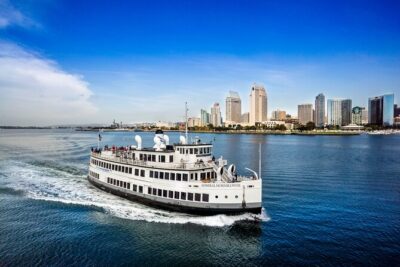
A San Diego morning on the sea sounds simple. Then the ocean starts doing its thing, and this half-day cruise turns into a moving wildlife lesson, with your guide pointing out whale behavior and the wider ocean ecosystem. I like that you can choose a morning or afternoon departure, yet keep the same chance of sightings. One thing to keep in mind: whales are wild animals, so sightings are never guaranteed.
What I like most is the balance of comfort and information. You get both indoor and outdoor seating, and your guide shares practical context on migration, habitat, and other creatures you spot along the way. A second big plus is how organized the experience feels, with clear timing and a max group size that keeps it from feeling like a crowd jammed on deck.
The main drawback is also the real one for any whale watch: cold wind and motion can be part of the deal. Also, if you hate the idea of waiting for action, plan your expectations for gray whales and dolphin pods, not a guaranteed whale blow-up at a set time.
In This Review
- Key things to know before you go
- A 3.5-hour half-day that still feels like real ocean time
- Where to meet: 990 N Harbor Dr and why arriving early matters
- Morning vs afternoon: same odds, use the day in your favor
- Getting comfortable on the decks: layers beat guessing
- What the guide does out on the water (and why it’s worth it)
- The core “hunt”: gray whales, dolphins, sea lions, and quick reads
- Itinerary reality check: it’s one stop, but multiple phases
- Motion sickness: plan ahead, don’t white-knuckle it
- Food, drinks, and what to bring for a smoother ride
- Clean boat, organized crew, and a cap near 100 people
- Price and value: is $54 a fair deal?
- Should you book it? Yes, if you match the cruise’s style
- FAQ
- How long is the San Diego whale watching cruise?
- What does it cost?
- Where do I meet for the cruise?
- Are there indoor and outdoor seating options?
- Do I need to choose a morning or afternoon departure?
- What should I wear for the trip?
- Is food and drink included?
- What happens if the cruise is canceled due to poor weather?
- Is this your kind of outing?
Key things to know before you go
- Half-day timing (about 3.5 hours) makes it easy to pair with other San Diego plans
- Same whale odds for morning vs afternoon and any day of the week (no calendars for whales)
- Indoor + outdoor deck seating so you can switch when wind or sun changes
- Guide-led spotting with facts about migration and habitat, plus visual aids like a baleen display
- Motion-sickness planning matters, and the crew encourages medication taken before boarding
- Max group size of 100 travelers, which helps keep the vibe calmer than “mass boat tours”
A 3.5-hour half-day that still feels like real ocean time
This cruise is built for people who want wildlife without eating the whole day. At roughly 3 hours 30 minutes, you get out past the harbor area and spend long enough to actually search, not just “pass by” and wave.
The half-day format is also a practical win. You can schedule this before dinner, after breakfast, or as a lighter day activity if your itinerary is already packed with museums, beach time, or a stop at a viewpoint.
You’re not just riding around. You’re learning how to look. The guide gives you pointers on where to watch and what behaviors to notice, which makes the waiting phase less dull and more focused.
You can also read our reviews of more boat tours in San Diego

Where to meet: 990 N Harbor Dr and why arriving early matters
Plan to show up at least 30 minutes before departure at 990 N Harbor Dr, San Diego, CA 92101. That buffer helps you get checked in, find your boarding spot, and get situated on the decks without rushing.
This matters more than you might think because whale watching is time-based. The crew needs you in place so the boat can head out on schedule. If you roll up late, you’ll lose the best “settle in” window and start your first moments behind the rest of the group.
The meeting point is also described as near public transportation, which is handy if you don’t want to fight parking.
Morning vs afternoon: same odds, use the day in your favor
You can choose either a morning or afternoon departure. The important part is that your chance of spotting whales is the same either way—whales don’t run on human schedules, and the tour doesn’t treat the daypart like it’s a “better time” slot.
So how do you choose? Pick based on the rest of your day:
- Morning works if you want sea air first and then an easier afternoon on land.
- Afternoon works if you’d rather sleep in, or you’re pairing this with an evening plan.
In colder months especially, going earlier can mean a longer time in wind as you wait for activity. Going later can mean the boat is on the water when temperatures may shift. Either way, bring layers and plan to adapt.
Getting comfortable on the decks: layers beat guessing
Once onboard, you can choose indoor or outdoor seating. That flexibility is more valuable than it sounds. On a whale watch, conditions change quickly—sun can vanish behind clouds, and wind can pick up the moment you’re farther from shore.
I’d treat dressing in layers as non-negotiable. The cruise advice is blunt for a reason: temperature and winds can be unpredictable even if it looks fine when you start walking down to the pier.
If you run cold easily, wear more than you think you need. If you get warm fast, bring something you can shed inside. Your goal is to be comfortable enough that you’ll actually stand and look when the guide calls attention.
What the guide does out on the water (and why it’s worth it)
The best whale watches don’t just point at animals. They teach you how to understand what you’re seeing.
On this cruise, the guide explains ocean ecosystems and whale behavior, including migration patterns and what makes this habitat valuable for whales and other species. That context helps you connect the dots when you spot surface activity, a blow, or a pattern of movement.
A standout detail from past departures: some guides bring visual aids, including a baleen plate demonstration. You don’t just hear that gray whales feed differently—you get a concrete way to picture it. One host guide named Becca is specifically praised for explaining the bay and open ocean, helping people find pods, and sharing migration context.
You’ll also pass by the kind of working coastline activity where naval vessels show up in the conversation. That adds variety to the story—this isn’t only about animals in isolation, it’s about how wildlife fits into a real, active ocean.
You can also read our reviews of more whale watching tours in San Diego
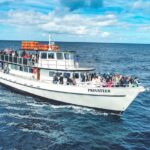

The core “hunt”: gray whales, dolphins, sea lions, and quick reads
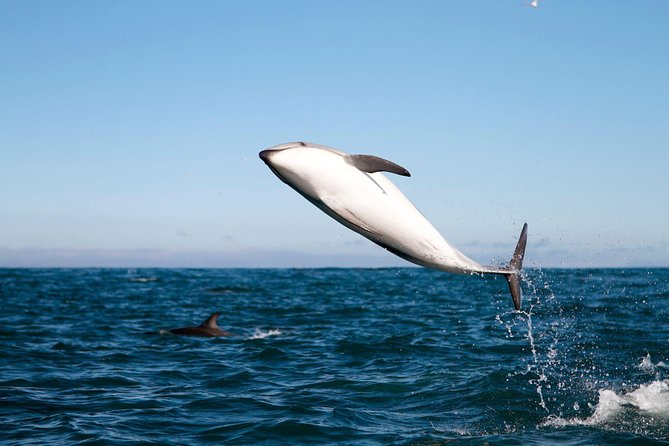
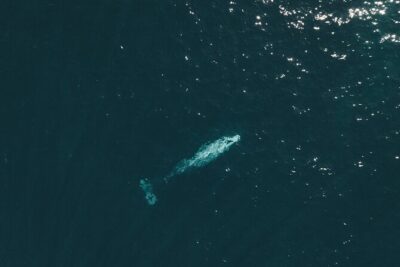
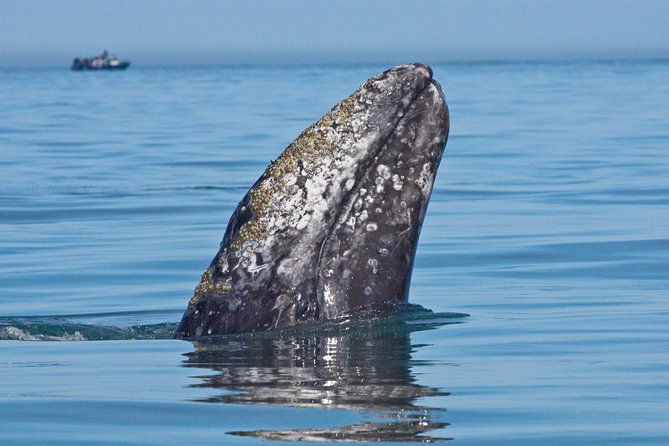
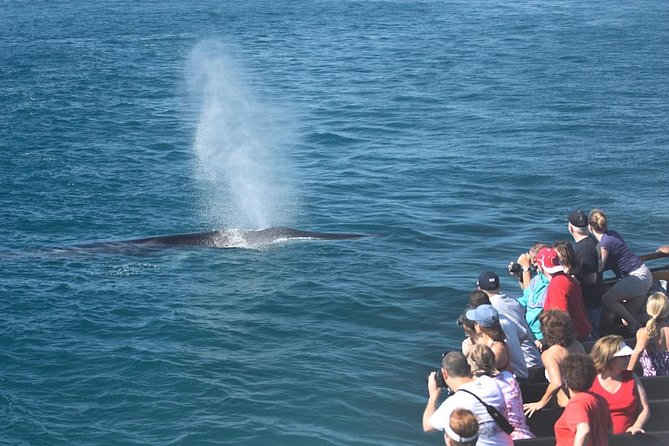
Your eyes should be on gray whales, since they’re the main target highlighted for this route. Sometimes you get a quick glimpse—just a pop above the water—then the ocean goes quiet again.
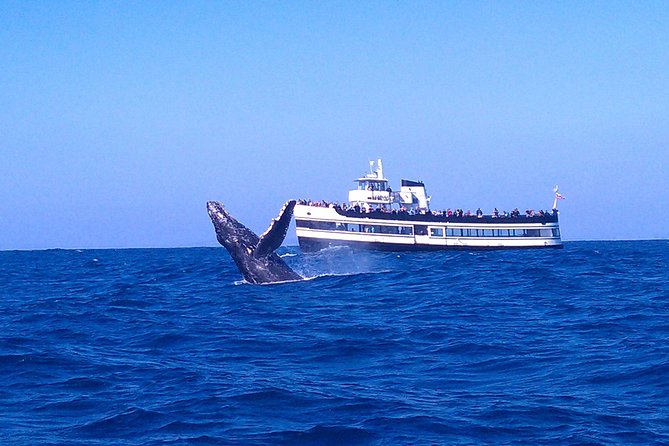
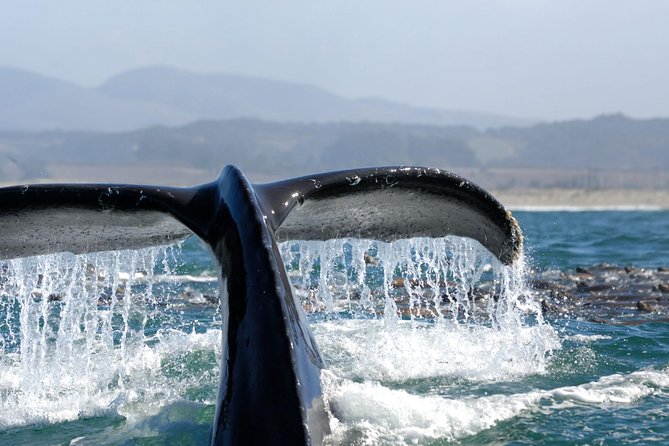
Other times you see more dramatic behavior, like animals making big splashes or showing a jumpy, social pattern. The guide’s job is to help you time your viewing so you’re not staring at empty water at the wrong moment.
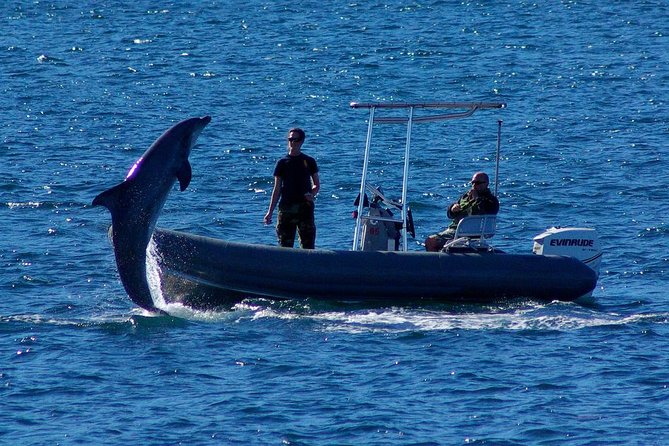
Dolphins are a huge part of the payoff for many departures. Multiple past trips describe pods of dolphins cruising alongside the boat and doing playful wake-surfing style behavior. Sea lions and birds often show up too, which can turn a “waiting day” into an “interesting day even if the whales are shy” kind of outing.
Important rules keep everything respectful. You won’t be allowed to touch, feed, or pet whales. This is whale watching, and the approach is strictly observational—watch with your eyes, not hands.
Itinerary reality check: it’s one stop, but multiple phases
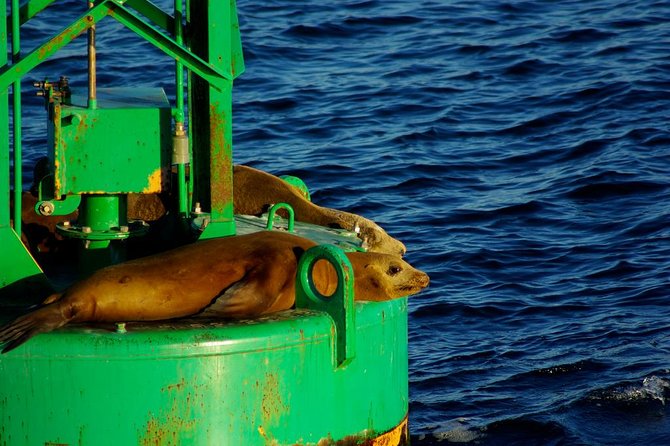
The listed stop is San Diego, but on the water you’ll experience distinct phases:
- First, you settle in after boarding and orient yourself on the deck.
- Next, the crew and guide start scanning and directing attention as you move from the harbor area toward open ocean searching zones.
- Then the cruise becomes a continuous cycle of spotting, listening, and learning as animals (or other ocean life) appear.
The “special” part is how often the information syncs up with what you’re actually seeing. When dolphins show up, you get context on behavior. When gray whales are in range, you get help reading the signs so you can catch more than one moment.
Motion sickness: plan ahead, don’t white-knuckle it
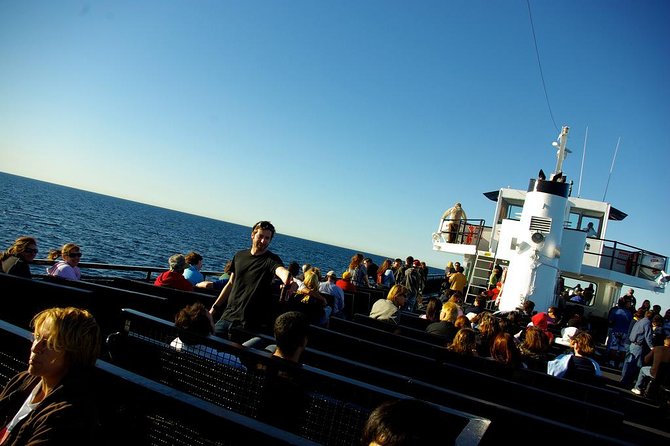
This tour clearly expects that some people will feel seasick. The guidance is practical: if you’re prone to motion sickness, take medication before boarding. Waiting until you feel sick often means it’s too late for the medication to help as well.
There’s also an option mentioned in the cruise guidance: wristbands for motion sickness can work for some people, and they’re sold at many drug stores.
And yes, past guests noted that Dramamine may be sold on board at a reasonable cost. That’s helpful as a backup plan, but I wouldn’t count on last-minute fixes if you’re sensitive.
A good mindset: treat discomfort prevention as part of the experience, not a failure. You’ll enjoy the spotting more if you can stay focused and steady.
Food, drinks, and what to bring for a smoother ride
Food and drinks are not included. That’s exactly why it makes sense to think ahead about snacks and water.
One review mentioned a bar with drinks and snacky food available on board, which suggests you can find options while you’re out there. Still, if you have preferences, allergies, or you want to keep things simple, bring your own snacks before you board.
At minimum, plan for a “you might stand on deck for a while” reality. Hunger is distracting when the guide is calling out a moment you don’t want to miss.
Clean boat, organized crew, and a cap near 100 people
A common praise point is that the ship feels clean and the operation is organized. Loading and unloading are described as easy, and the crew is friendly and supportive when it’s time to get people positioned.
The max size—up to 100 travelers—also helps. You can move around, find a spot on the deck, and still hear the guide without feeling like you’re shoulder-to-shoulder the whole time.
That matters for wildlife viewing. You want space to shift your angle when you spot action on one side of the boat.
Price and value: is $54 a fair deal?
At $54 per person for about 3.5 hours, the value is mostly about what you get beyond the boat ride.
You’re paying for:
- time on the water during prime searching windows
- guide commentary with real information
- indoor/outdoor seating for comfort
- and a crew that actively works to find animals
If you see gray whales and dolphins, the price feels very reasonable for the experience you get. If whales are quiet that day, you may still come away with dolphins, sea lions, and a solid educational angle—one “no whale” experience still described a lovely cruise and a rain check/voucher outcome.
Think of it as paying for a guided ocean outing, where wildlife sightings are the big bonus.
Should you book it? Yes, if you match the cruise’s style
Book this cruise if you:
- love wildlife and can enjoy the ocean even during the waiting
- like having a guide explain what you’re seeing
- want a half-day option that doesn’t wreck your whole schedule
- are okay bringing layers and planning for motion
You might want to reconsider if you:
- need a guaranteed whale sighting, no matter the conditions
- dislike cold wind and boat movement even with preparation
My take: this is a strong option for a first San Diego whale watch because it mixes comfort, clear guidance, and a real focus on how the ecosystem works—not just a quick drive-by.
If you do book, do it with the right mindset: whales are wild, dolphins are often the consolation prize, and the best moments usually come when you’re dressed for the deck and ready to look when the guide points.
FAQ
How long is the San Diego whale watching cruise?
It’s about 3 hours 30 minutes.
What does it cost?
The price is $54.00 per person.
Where do I meet for the cruise?
Meet at 990 N Harbor Dr, San Diego, CA 92101, USA.
Are there indoor and outdoor seating options?
Yes. There is both indoor and outside seating on the yacht.
Do I need to choose a morning or afternoon departure?
Yes. The cruise offers both morning and afternoon departures.
What should I wear for the trip?
Dress in layers and bring warm clothing. Temperatures and winds can be unpredictable even if it’s sunny.
Is food and drink included?
No. Snacks and food and drinks are not included.
What happens if the cruise is canceled due to poor weather?
If it’s canceled for weather reasons, you’ll be contacted in the morning and can choose to reschedule for another day or receive a full refund.
Is this your kind of outing?
If you want a guided half-day on the water with good deck options and real learning about whales and their habitat, this is a solid pick. Just plan for wind, plan for motion, and treat whale sightings as the exciting bonus they are.