REVIEW · SAN DIEGO
San Diego Walking Tour: Balboa Park with a Local Guide
Book on GetYourGuide →Operated by San Diego Walks · Bookable on GetYourGuide
Balboa Park feels like a whole city inside a park. This guided walk turns that space into a story you can actually follow, from the California Tower to the Botanical Building and the Plaza de Panama. I like how the tour mixes big, famous sights with small details you’d otherwise miss, and I especially like the photo-focused stops that spotlight Spanish Colonial Revival buildings and garden angles. One thing to consider: it’s a walking tour, so you’ll want comfortable shoes and to plan for sun, heat, or shade depending on the day.
You start at Founder’s Plaza and spend about two hours getting your bearings, learning what the expositions changed, and hearing how the park became a symbol of San Diego. Guides like Jennifer and Brooke are repeatedly praised for being fun, factual, and question-friendly, not just reading facts from a script. If you’re hoping for museum entry tickets included, you’ll need a separate plan since entrances aren’t part of this tour.
If you want Balboa Park without wandering in circles, this is a very efficient way to get oriented and leave with a short list of what to revisit next.
In This Review
- Key things you’ll notice on this Balboa Park walking tour
- Why this Balboa Park walk makes the park easier to enjoy
- Finding the meeting point: 698 El Prado and the three-stature trick
- Founder’s Statue and California Tower: start with the story you can see
- Alcázar Garden: Spanish inspiration and a built-in photo frame
- Old Globe Theater and The Prado: architecture details you’d otherwise miss
- Zoro Gardens: when the park’s weird past becomes today’s butterfly habitat
- Spanish Village Art Center and coffee cart time: art in real use
- Botanical Building and the lily pond koi: beauty with wartime purpose
- Moreton Bay fig tree, Morton Bay size brag, and the Junior Theater finish
- What to do next when the tour ends at Plaza de Panama
- Price and value: $60 for 2 hours with a real guide, not a script
- Who this tour fits best (and who might want a different plan)
- Should you book this Balboa Park Walking Tour?
- FAQ
- How long is the Balboa Park walking tour?
- Where does the tour start?
- How do I find the exact meeting spot?
- Where does the tour end?
- What’s included in the price?
- Are museum tickets included?
- Is the tour wheelchair accessible?
- What should I wear or bring?
- Is the tour okay for young children?
- What should I plan for food and drinks?
- Is free cancellation available?
Key things you’ll notice on this Balboa Park walking tour
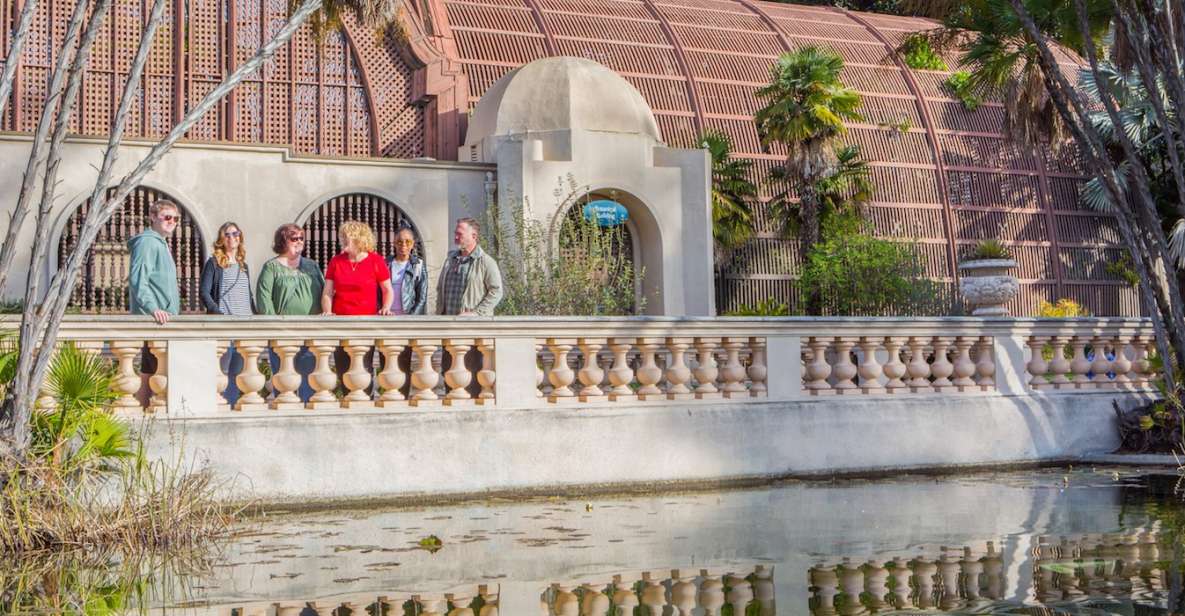
- Founder’s Plaza to California Tower: how the Panama-California Exposition shaped what you’re seeing
- Alcázar Garden and Spanish Colonial angles: built for beauty, still built for photos
- Old Globe Theater: why a London model matters here
- Zoro Gardens to butterfly habitats: the park’s surprising past, now repurposed
- Spanish Village Art Center + coffee cart break: art studios in action, with a quick recharge
- Botanical Building and lily pond koi: a calm stop with serious WWI/WWII purpose behind it
Why this Balboa Park walk makes the park easier to enjoy
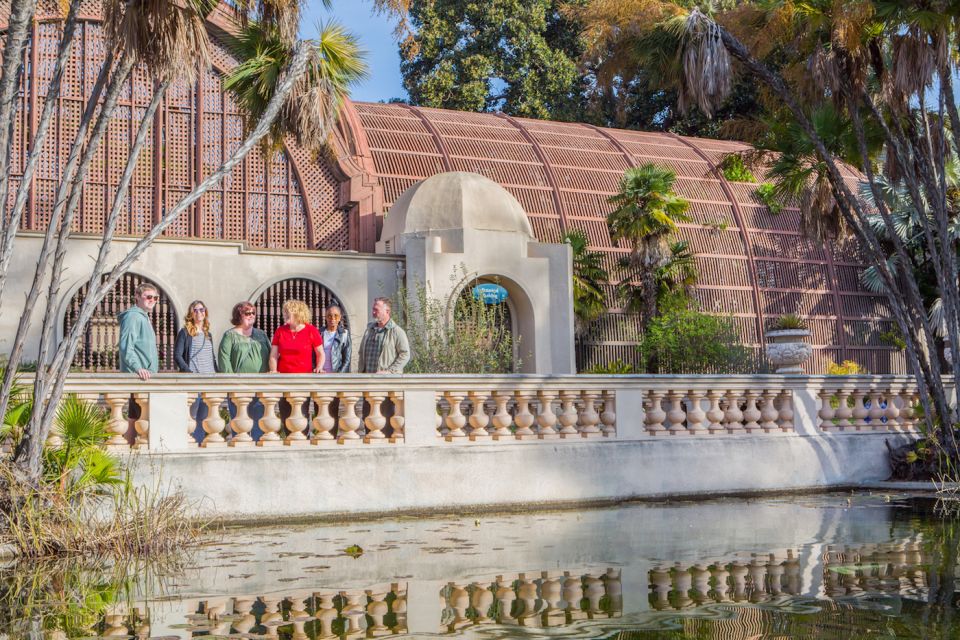
Balboa Park can feel huge, and huge is how you lose time. This tour gives you a route that connects the dots: where to stand, what to look at, and what each landmark meant to the city. You’re not just collecting pretty views; you’re learning how the park’s buildings and gardens grew out of early 20th-century expositions.
I also like the pacing. It’s about two hours with a walking-and-stops rhythm, and the itinerary is structured so you’re not stuck staring at your phone while other people move on. Plus, you get at least one organized break with a beverage from a local coffee cart, so you can keep your legs and your attention working.
One more value point: you don’t have to already know Balboa Park. The guide starts at an obvious anchor and builds outward. Even if you consider yourself a first-timer, you’ll leave with a mental map you can reuse on your own later.
You can also read our reviews of more walking tours in San Diego

Finding the meeting point: 698 El Prado and the three-stature trick
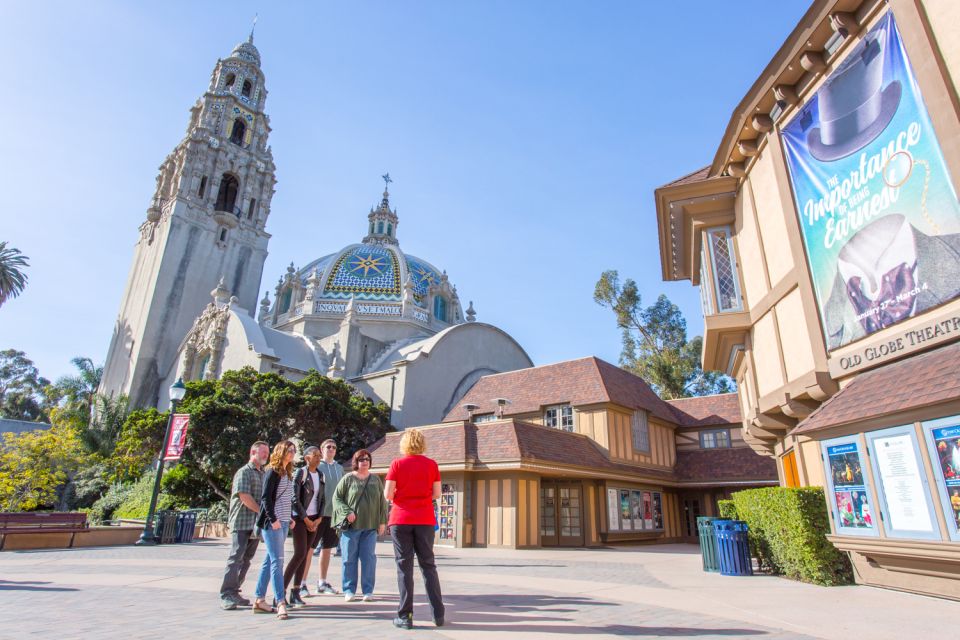
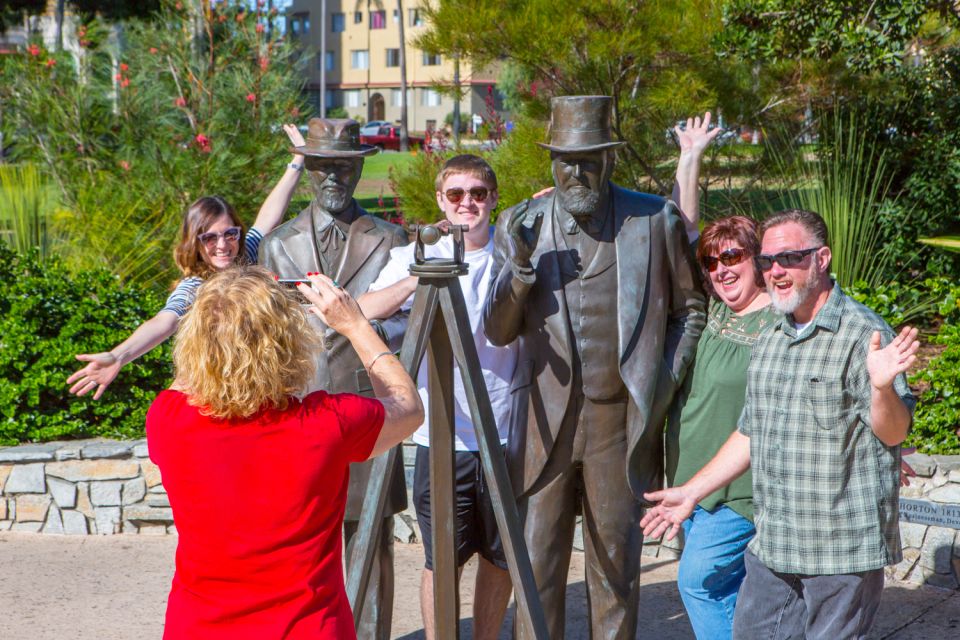
The meeting spot is listed as 698 El Prado, at Founder’s Plaza on the west side of Balboa Park. If that address doesn’t show up in your maps app, use Sefton Plaza instead. Once you’re there, look for three male statues on the only sloped corner at Balboa Dr & El Prado.
That last detail matters more than it sounds. Even in the small set of experience reports you provided, one person noted a meeting-spot hiccup, then got back on track after contacting the guide. So give yourself a little buffer time.
If you’re driving, plan parking time too. You’ll be using a kiosk or the PARK SMARTER app (license based). The guidance here is practical: allow extra time and aim for minimum 3 hours, since it’s a park day and you’ll want time after the tour. Parking along Balboa Dr & El Prado can be all day for $10.
And if you’re using ride share, double-check the drop-off. Drivers sometimes aim for the wrong statue, so it’s on you to confirm you’re at the correct spot before everyone gets moving.
Founder’s Statue and California Tower: start with the story you can see
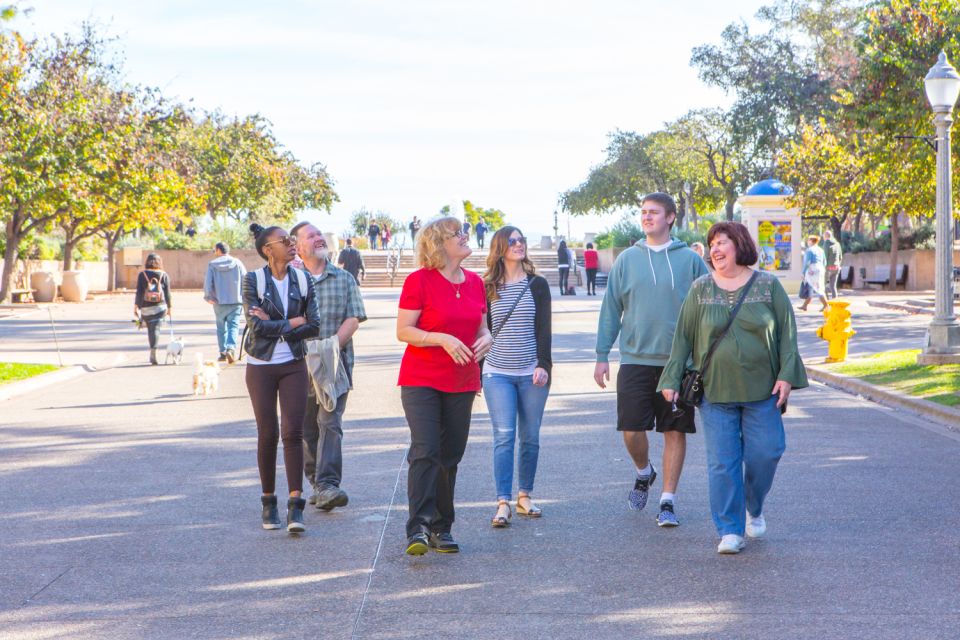
You kick off at Founder’s Statue on the west side of Balboa Park. It sets context fast: San Diegans reserved about 1,400 acres for the park back in 1868. That’s not just a trivia fact; it explains why Balboa Park feels like a planned civic space rather than random greenery.
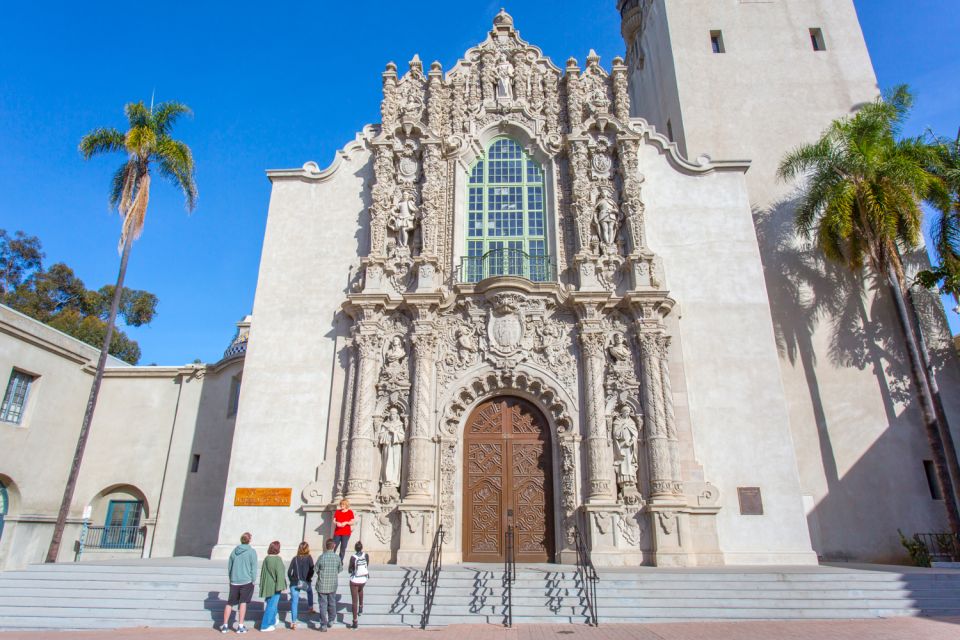
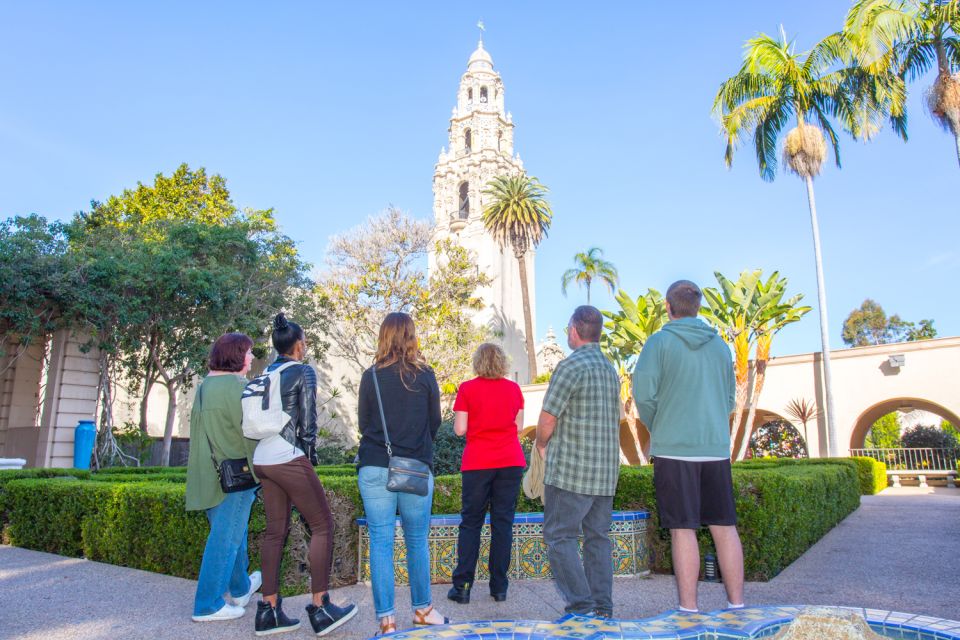
Next comes the California Tower, built for the 1915 Panama-California Exposition. The tour doesn’t treat the tower as a postcard. The guide points out how the face of the tower depicts early history of the city. When you know that, the tower stops being a background skyline piece and becomes a readable monument.
This is also one of those stops where your eyes start training themselves. You’ll begin noticing ornament, symbolism, and the way buildings relate to each other—especially if you’re the type who likes to photograph architecture instead of just photographing people posing.
Alcázar Garden: Spanish inspiration and a built-in photo frame
After the tower, you’ll head to Alcázar Garden, inspired by gardens in Spain. The tour ties it to the expositions: the garden was used for both the 1915 and 1935 events, giving fair-goers a respite from the noise and crowds.
Here’s the practical reason I like this stop: it’s a short walk with big pay-off. It’s a picturesque foreground for California Tower photos, so you’re not wandering to find the perfect angle. You’ll get a reason to stop, a reason to look closely, and a few seconds of guidance for composition.
If you’re chasing Spanish colonial revival vibes—arched shapes, textured surfaces, warm stone tones—this is the part of the tour that makes it click.
Old Globe Theater and The Prado: architecture details you’d otherwise miss
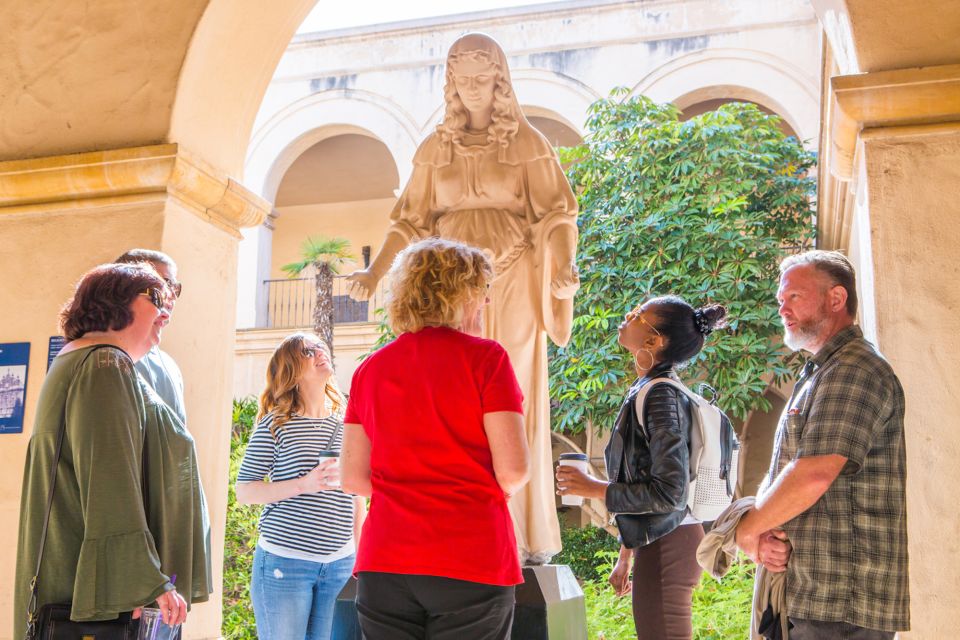
From Alcázar Garden, the walk continues to the Old Globe Theater. This is Tony Award-winning and world-renowned, and it’s also modeled after The Globe Theater in London. That matters because the design tells you the park wasn’t only building museums and exhibits. It was building cultural institutions with theatre at the center.
Next you’ll move through the heart of Balboa Park’s Prado, where the guide points out unique building façades and roof supports that most visitors don’t notice. That’s a big deal for two reasons.
First, it changes how you walk. You stop treating buildings like a wall and start treating them like a puzzle. Second, it helps you explore on your own afterward, because you’ll know what to look for when you see another roofline detail or repeating façade pattern.
The Prado walk also makes the whole park feel connected. Instead of separate attractions, it reads like a designed campus.
You can also read our reviews of more guided tours in San Diego




Zoro Gardens: when the park’s weird past becomes today’s butterfly habitat

Not every tour stop stays in the comfy “pretty garden” category. You’ll visit Zoro Gardens, a sunken garden that was once used as a nudist colony during the 1935 California Pacific International Exposition. Yes, really.
Today, the space has a different job: it’s a butterfly garden built for butterflies and their life cycle needs. The guide’s angle here is smart. You’re not just being told a headline. You’re shown how a historic space can be repurposed and still honor the park’s role as a place for living exhibits.
If you like stories that have a little bite, this stop is a strong one. If you prefer only classic “best of Balboa Park” scenery, you’ll still probably enjoy it—because it shows Balboa Park isn’t frozen in time.
Spanish Village Art Center and coffee cart time: art in real use
You’ll pass Bea Evenson fountain, then move onward toward the Natural History Museum area and into the Spanish Village Art Center. The point here isn’t museum galleries; it’s watching artists at work in their studios.
That’s one of the most “alive” moments in the tour. You’ll get to see how the park functions as an ongoing creative community, not just a set of old buildings people walk past.
By this stage, you’ll likely want a sip and a small reset, and the tour includes a drink from a local coffee cart. It’s not a full meal stop, but it gives you just enough fuel to keep going and still enjoy the next gardens and pond area.
If shopping is your thing, this is also where you might browse, since the art center is meant for studios and craft work rather than generic souvenir stalls.
Botanical Building and the lily pond koi: beauty with wartime purpose
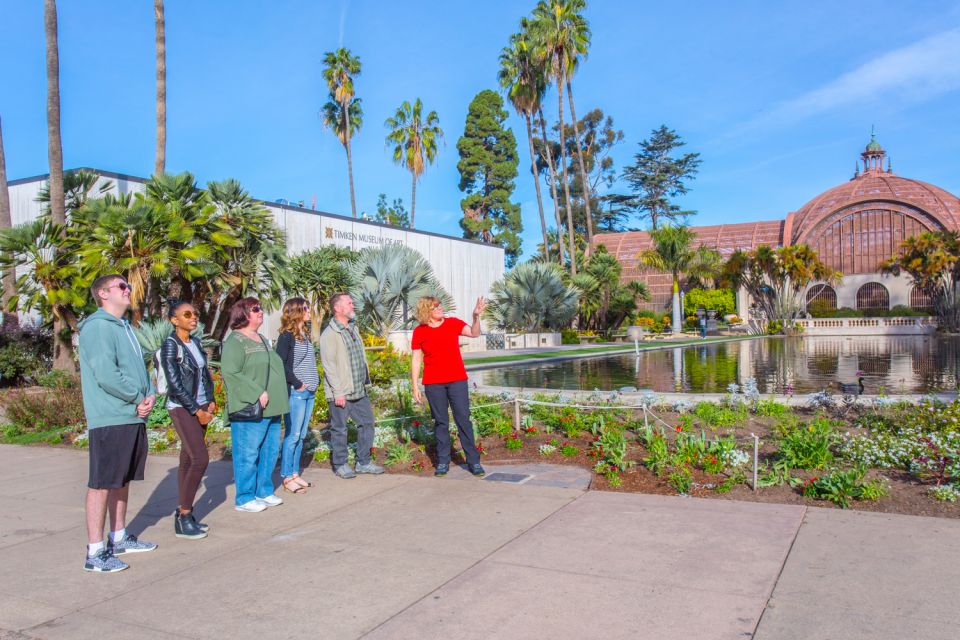
One of the highlights in the route is the Botanical Building and the adjacent lily pond with koi. The koi pond looks peaceful, and the guide makes sure you understand it isn’t just ornamental.
The pond is described as being important during the war effort: it helped during WWI and supported wounded sailors and soldiers during WWII. That kind of context changes your experience. You stop seeing the pond as background and start seeing it as an engineered tool the park community helped provide.
This is a great stop to slow down and take in the building details too. The Botanical Building area gives you that classic Balboa Park contrast: architectural romance paired with very real world impact.
And yes, the photos are worth it. Calm water, stone and glass, soft greenery—if you’ve got your camera ready, this is a good place to use it instead of just holding it.
Moreton Bay fig tree, Morton Bay size brag, and the Junior Theater finish
Along the way you’ll also see a Moreton Bay fig tree, noted as one of the largest in California. It’s one of those “feel the scale” moments. Trees like this make Balboa Park feel older than any individual building, because they quietly prove time has been passing here for a long while.
You’ll continue past the San Diego Junior Theater and then wrap up at Plaza de Panama. This ending spot is useful because it acts like a natural transition point from guided highlights back to independent exploration. If you want to keep going on your own, you’ll have a clearer sense of direction.
What to do next when the tour ends at Plaza de Panama
The guide ends at Plaza de Panama and also gives directions for the nearby Visitor Center—useful for snacks, maps, souvenirs, and museum passes. It’s the kind of practical close that helps you avoid the classic problem: you’ve got momentum but you don’t know where to go for the next right thing.
The guide will also point out places to eat and offer tips on what else to see and do inside the park. Since museum entrances aren’t included in the tour, this is where you can choose what to revisit when you have the time for a second visit.
If you’re the kind of visitor who likes to plan your day in blocks, you can use the tour as your first phase: orientation plus the best “must-see” photo angles, then a museum or garden return later.
Price and value: $60 for 2 hours with a real guide, not a script
At $60 per person for about 2 hours, this sits in the “worth it if you care about details” category. You’re paying for two things: a route that saves you time and a guide who connects landmarks to the park’s story.
What you get included is practical:
- a local friendly English-speaking guide
- one beverage from a park coffee cart
- an exclusive resource list with the guide’s recommendations
What you don’t get:
- entrance tickets to museums (but you’ll get suggestions for where to return)
I think that’s fair. Museums can eat time and money fast. This tour keeps you moving and gives you a short list of what to tackle next when you can decide based on your interests.
Also, the feedback you included points to a strong value match: people praised the pace as perfect and the guides as funny and engaging. In a city park that can be hard to “read” without context, that human guidance is usually the difference between a pleasant walk and a memorable one.
Who this tour fits best (and who might want a different plan)
This works best for:
- first-timers who want a clear map and a fast understanding of Balboa Park’s major landmarks
- architecture and photo lovers who want help finding the best angles for Spanish colonial revival spaces
- people who enjoy guided storytelling, including the park’s unusual twists (yes, Zoro Gardens)
It may not be the best fit if:
- you want museum entry included in the price
- you don’t like walking for about two hours, even with frequent stops
It’s also noted as not suitable for children under 6, so families with younger kids will need another option.
Should you book this Balboa Park Walking Tour?
If you want Balboa Park without guesswork, I’d book it. This tour is built for orientation and for noticing details: California Tower context, Alcázar Garden angles, Old Globe theatre significance, and the story behind Zoro Gardens and the lily pond. The included coffee cart drink and the end-of-tour directions to the Visitor Center are the kind of small supports that make it easy to keep exploring afterward.
If you’re mainly looking for a long museum day, skip this and build a self-guided itinerary. But if you want a focused two hours that teaches you what you’re looking at—and gives you photo-ready viewpoints—this is a strong way to start.
FAQ
How long is the Balboa Park walking tour?
The tour duration is about 2 hours.
Where does the tour start?
The meeting point is at 698 El Prado (Founder’s Plaza at the west entrance). If it doesn’t appear on your map, you can use Sefton Plaza instead.
How do I find the exact meeting spot?
Once you’re at Founder’s Plaza/Sefton Plaza area, look for three male statues on the only sloped corner at Balboa Dr & El Prado. Ride share drops can be wrong, so double-check.
Where does the tour end?
The tour ends at Plaza de Panama.
What’s included in the price?
You get a local friendly English-speaking guide, one beverage from a park coffee cart, and access to an exclusive park resource list with recommendations from your guide.
Are museum tickets included?
No. Entrance to museums is not offered with this tour. Your guide will provide suggestions for where to come back and visit on your own time.
Is the tour wheelchair accessible?
Yes, the tour is listed as wheelchair accessible.
What should I wear or bring?
Wear comfortable shoes and weather-appropriate clothing. Casual dress is recommended.
Is the tour okay for young children?
It’s not suitable for children under 6.
What should I plan for food and drinks?
Only one beverage at the coffee cart is included. Food and drinks beyond that are not included.
Is free cancellation available?
Free cancellation is available up to 24 hours in advance for a full refund.