REVIEW · SAN DIEGO
San Diego Harbor Cruise on the largest Catamaran in San Diego!
Book on Viator →Operated by Triton Charters · Bookable on Viator
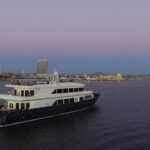
San Diego looks best from the water. On Triton Charters’ largest catamaran, this 2.5-hour harbor cruise hits the big-name sights with an onboard cocktail bar and plenty of room to relax. I really like how quickly it shows you the harbor (including USS Midway and the Coronado Bridge) and I love the wide-open views from a spacious boat. The one catch: there’s no food for sale, so bring lunch or snacks if you’re likely to get hungry.
You’ll also get a smooth ride and an easygoing vibe that works for couples and families. If you want a fun, no-stress way to see San Diego’s waterfront, this cruise does that job well—especially with seating options like bean bags on the bow reported by passengers, plus clean, well-kept interiors and a friendly crew.
One more planning note: while there is onboard crew information about landmarks, the narration level can feel lighter than you expect. I’d treat this as a sights first cruise where you’re paying for the water-level angles and time on the bay.
In This Review
- Quick hits on the Triton catamaran ride
- Price and value: is $55 fair for 2.5 hours on the bay?
- Starting point at Shelter Island: what your day feels like before departure
- USS Midway from the water: seeing the scale of a museum ship
- Maritime Museum of San Diego: the waterfront context you’ll remember later
- Going under the Coronado Bridge: the moment most people will point out
- Port of San Diego and The Brigantine: seeing what the waterfront is for
- Coronado from the bay: a resort city you understand faster
- The onboard experience on Triton: comfort, drinks, and what to pack
- How to choose your sailing time: daylight vs sunset
- Who should book this cruise, and who might skip it
- Should you book the San Diego Harbor Cruise on Triton?
- FAQ
- How long is the San Diego Harbor Cruise on the Triton catamaran?
- What does the cruise cost?
- Where do we meet, and where does the cruise end?
- Is the tour offered in English, and how many people are on board?
- Are there food options onboard?
- Is there a bar onboard?
- What happens if the cruise is canceled due to weather?
Quick hits on the Triton catamaran ride
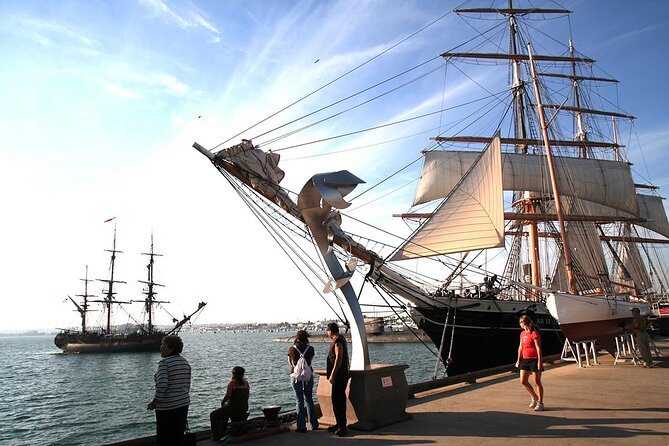
- USS Midway passes at close range, including the aircraft carrier’s WWII-to–Persian Gulf service timeline.
- Star of India views through the Maritime Museum area, plus details like the MacMullen Library and the Berkeley research archives.
- You go under the Coronado Bridge, one of the most photogenic moments on the bay.
- Onboard cocktail bar with drinks for purchase, and a crew that keeps the mood up (with mentions of bartender Brad).
- No food included, so pack a lunch if you want a full meal onboard.
- Max 85 people means it stays manageable, not cramped.
Price and value: is $55 fair for 2.5 hours on the bay?
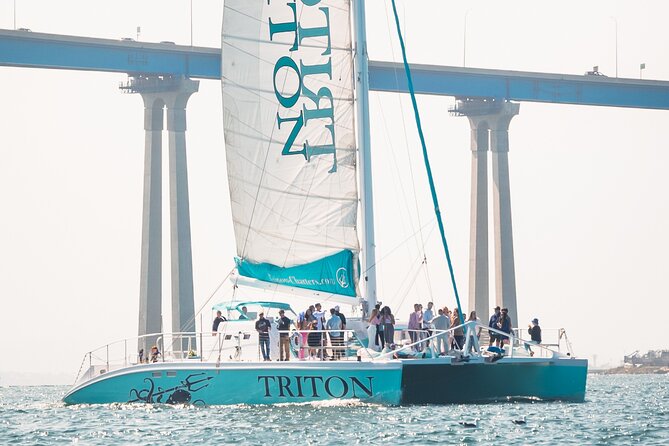
At $55 per person for about 2 hours 30 minutes, you’re not paying for a meal or a museum entrance. You’re paying for what’s harder to replicate: time on the water with skyline and harbor views that you can’t get from a single pier, plus the comfort of a large catamaran.
The biggest value win is flexibility. You get the big sights clustered into one outing—USS Midway area, the Maritime Museum waterfront, the Coronado Bridge pass, and the Coronado side of the bay—without renting a car, switching rides, or juggling multiple stops.
The tradeoff is exactly what to plan around: no food or snacks are available onboard. If you’re the type who needs sustenance during a 2.5-hour activity, I’d treat this as a BYO-lunch cruise so you don’t cut your experience short.
You can also read our reviews of more boat tours in San Diego
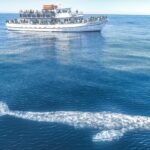
Starting point at Shelter Island: what your day feels like before departure
Most departures start at Triton Charters and Yacht Rental at 2700 Shelter Island Dr, San Diego, CA 92106. The cruise ends back at the same meeting point, so you don’t have to figure out a second transport puzzle when you’re done.
You’ll use a mobile ticket, and confirmation comes at booking. Since this is offered in English and capped at 85 travelers, I’d arrive with a bit of buffer so you’re not rushing when you should be settling in and claiming a good seat.
Also, the experience is weather dependent. If conditions aren’t right, the cruise can be canceled, and you’ll be offered a different date or a full refund. That matters because San Diego days can look perfect on land while wind or swell makes the water less comfortable.
USS Midway from the water: seeing the scale of a museum ship
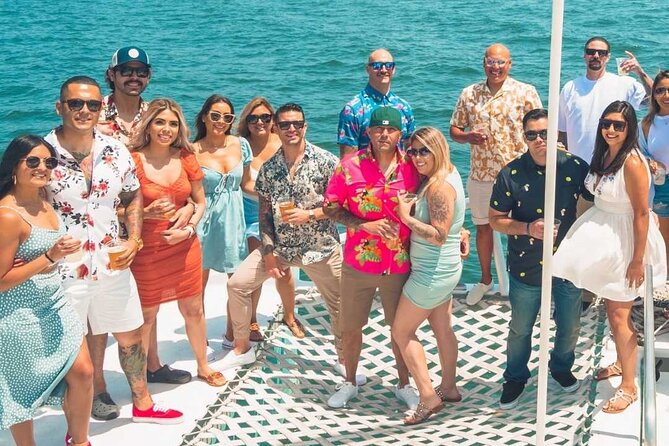
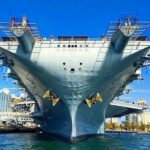
One of the cruise’s best features is the way it frames the USS Midway like a moving backdrop instead of a fixed photo location. As you pass, the Triton splashes by the aircraft carrier now part of the USS Midway Museum.
Here’s what makes that pass more than just a pretty view. Midway was commissioned 8 days after the end of World War II and was the largest ship in the world until 1955. It was also the first U.S. aircraft carrier too big to transit the Panama Canal, and it served for 47 years—from action in the Vietnam War to serving as the Persian Gulf flagship during Operation Desert Storm in 1991. Decommissioned in 1992, it’s now an inactive U.S. aircraft carrier museum ship.
On a boat, scale hits differently. From the water, you can really sense why a ship like this has become a major piece of San Diego’s identity. You also get a change in perspective without needing timed museum tickets or a whole separate day plan.
Just be realistic about pacing: a cruise pass is not a long museum visit. If you want to read every detail at a slower pace, you’ll still want land time later. But for people who want the big moment and the easiest orientation, this stop is one of the core reasons to book.
Maritime Museum of San Diego: the waterfront context you’ll remember later

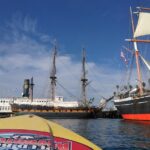
As you head toward the Maritime Museum of San Diego area, you’re looking at a place dedicated to preserving historic sea vessels since 1948. The standout name here is the Star of India, an 1863 iron bark that serves as the centerpiece of the museum’s collection.
This is also tied to research and archives, not just ships on display. The museum maintains the MacMullen Library and Research Archives aboard the 1898 ferryboat Berkeley, and it publishes a quarterly peer-reviewed journal called Mains’l Haul: A Journal of Pacific Maritime History.
On the cruise, you’re not turning this into a deep museum day. You’re getting the setting—the “why this matters” context—while the boat keeps moving. That can actually be a good thing. It gives you an anchor point for future visits, so when you do see the museum up close later, the names and purposes won’t feel random.
The practical thing to know is that waterfront viewing depends on conditions and angles. If you’re hoping for the best photo, sit where you can see forward or out toward the harbor as the boat repositions. The catamaran’s open vantage points help, but your seat still matters.
Going under the Coronado Bridge: the moment most people will point out
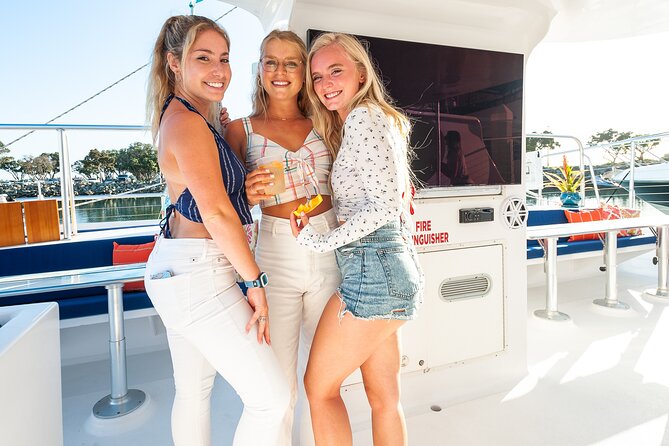
If you want one signature “wow” moment, this is it: you get to go under the Coronado Bridge. That bridge—locally known as the Coronado Bridge—crosses San Diego Bay, linking San Diego with Coronado. It’s part of State Route 75 and is described as a prestressed concrete/steel girder bridge.
Why this matters: the bridge isn’t just a backdrop. Passing underneath changes your frame completely. You go from skyline views to a tunnel-like harbor feeling, and suddenly the bay geography clicks into place.
This is also where you’ll want your phone ready. The light can shift fast depending on the time of day, and the bridge underside gives a strong “structure + water” photo composition. If you book an afternoon or sunset departure, this pass often becomes a visual highlight because the waterfront looks different in softer light (and some sailings run later toward sunset; one passenger mentioned a 4:30pm option).
A small consideration: you’ll be under a major structure, so head clearance and sightlines can feel different than open water. I’d keep an eye on where you’re sitting relative to windows/open deck areas so you don’t end up blocked by railings.
You can also read our reviews of more sailing experiences in San Diego

Port of San Diego and The Brigantine: seeing what the waterfront is for
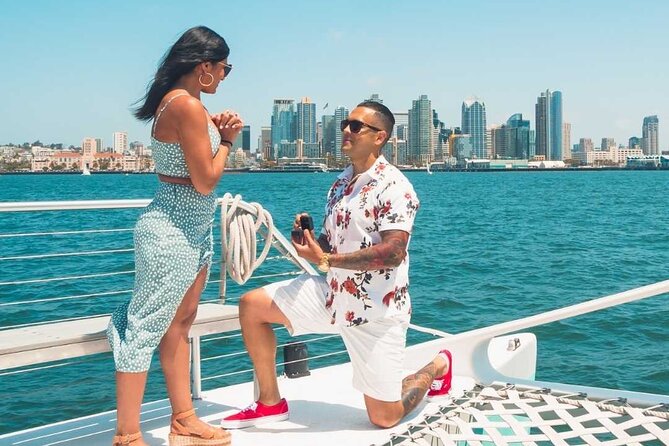
As the cruise continues, you’ll see the area around The Brigantine and the Portside Pier, part of the Port of San Diego waterfront scene. The Brigantine’s site at 1360 North Harbor Drive is one of those places locals use for views and meals, and the Portside Pier opened in July 2020.
What’s useful for you: it gives you a mental map for what to do after the cruise. The Portside Pier offers dining options—fresh seafood, authentic Mexican, pub fare, coffee and gelato—and it includes free public access to enjoy the bay views.
From the water, you get the big-picture view of how the harbor functions: work areas, leisure areas, and where the best sightseeing angles are from piers versus from boats. Even if you don’t plan to eat there that day, you’ll know what neighborhood you’re looking at.
If you’re thinking about turning this into a half-day loop, the cruise becomes the “see it first” step. Afterward, you can decide if you want to linger along the shoreline for more time in the same area.
Coronado from the bay: a resort city you understand faster
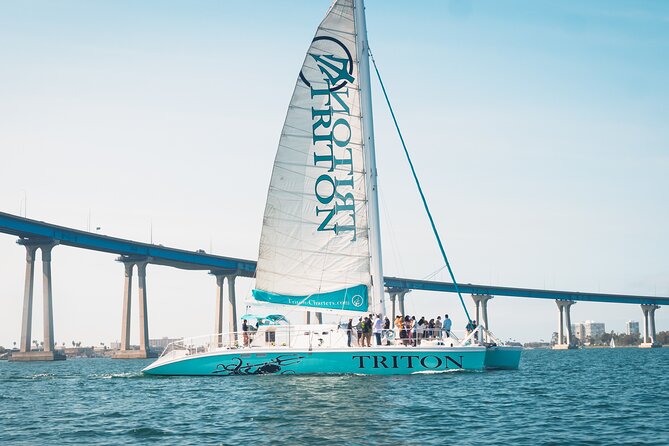
Coronado is directly across the bay from downtown San Diego, and the cruise treats it like a second viewpoint. The name means Crowned in Spanish, and the city was founded in the 1880s and incorporated in 1890. Its population was listed as 24,697 in the 2010 census, up from 24,100 in 2000.
On a catamaran, Coronado reads as more than a postcard. You see its relationship to the bridge, how the skyline and waterfront line up, and where the bay narrows and opens.
If your plan includes walking or grabbing a drink later, this helps you choose where you might want to go. You’ll leave with a clearer sense of distance and orientation than if you only looked at a map.
The onboard experience on Triton: comfort, drinks, and what to pack
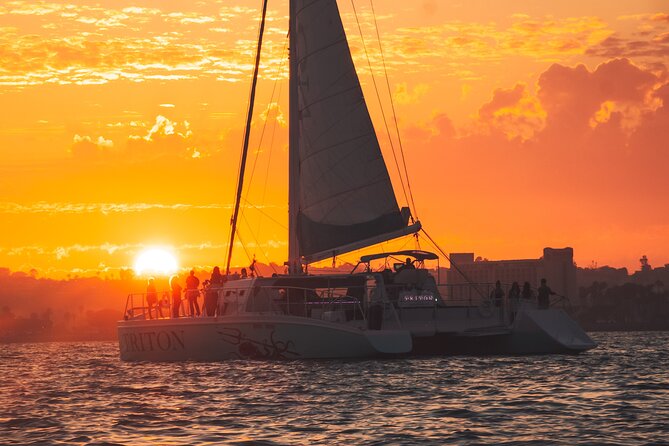
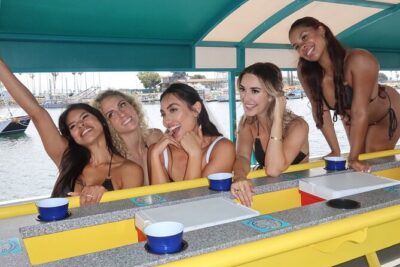
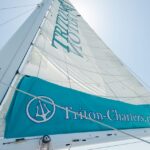
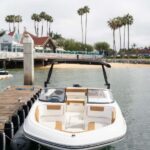
The Triton catamaran is described as spacious, and that shows in the seating layout. Clean boat design and comfortable seating came up again and again, plus there’s a bar onboard for cocktails and other drinks.
Drinks are available at the cocktail bar, and at least one passenger noted that drink prices felt reasonable and cocktails were delicious. If you want non-alcohol options, plan on water and soft drinks being part of the setup; one review specifically appreciated an open water station for people who weren’t drinking spirits.
But there’s a major practical limiter: no food or snacks are available for purchase. That’s the biggest “don’t get surprised” detail. If you want a full meal, pack it. Even if you’re planning to just snack, bringing something simple will keep the experience relaxed instead of turning into a hunger countdown.
What about onboard guidance? The cruise includes an onboard crew that shares information about local landmarks, but narration can vary from sailing to sailing. One passenger found it more like a ride with little commentary. My advice: don’t book expecting a lecture. Go expecting scenery, then enjoy any added facts the crew shares.
One more detail that can make a difference to the vibe: live music shows up on some sailings. If you hear it when you board, it’s a nice bonus for an upbeat atmosphere without changing the focus.
How to choose your sailing time: daylight vs sunset
You’re looking at a 2.5-hour window, so departure time changes the whole feel. Daytime sails tend to be best for clear harbor photos and easy visibility of the ship textures and bridge geometry.
If you opt for a later departure, such as a sunset-time sail (one passenger referenced a 4:30pm departure), the waterfront can look softer and more cinematic. The skyline and water reflections can feel more dramatic, and the Coronado Bridge pass often becomes even more memorable.
No matter the time, remember this is a harbor cruise: wind can cool you even if the day feels warm. Bring a layer you’re comfortable wearing while sitting still for a long stretch.
Who should book this cruise, and who might skip it
This is a strong fit if you want:
- A big-sight San Diego harbor overview in a short time
- Unobstructed views of the skyline and ships from the water
- A relaxing outing that works for couples and families
- A fun way to see the USS Midway area without committing to a full museum day
I’d think twice if you need:
- Food included during the cruise (it isn’t)
- A very structured, heavy narration experience (you may get more or less crew commentary depending on the sailing)
- A long stop where you can tour everything in depth from the boat (this is a cruise, not a museum crawl)
Should you book the San Diego Harbor Cruise on Triton?
Yes—if your goal is to see San Diego’s waterfront in one smooth, scenic hit. The combination of a large, clean catamaran, the USS Midway pass, and the one-of-a-kind feeling of going under the Coronado Bridge makes this an easy “starter” outing for a first-time visit or a low-effort local staycation.
If you book, just plan like a local: bring lunch or snacks, bring a layer for the ride, and set your expectations that the cruise is primarily about views. With that approach, this is the kind of $55 experience that leaves you feeling oriented, relaxed, and ready to explore the rest of the day.
FAQ
How long is the San Diego Harbor Cruise on the Triton catamaran?
It lasts about 2 hours 30 minutes.
What does the cruise cost?
The price is $55.00 per person.
Where do we meet, and where does the cruise end?
You meet at Triton Charters and Yacht Rental, 2700 Shelter Island Dr, San Diego, CA 92106. The activity ends back at the meeting point.
Is the tour offered in English, and how many people are on board?
It’s offered in English, and the maximum group size is 85 travelers.
Are there food options onboard?
Food is not available for purchase, so bring lunch or snacks if you want to eat during the cruise.
Is there a bar onboard?
Yes. There is an onboard cocktail bar where drinks are available.
What happens if the cruise is canceled due to weather?
The experience requires good weather. If it’s canceled due to poor weather, you’ll be offered a different date or a full refund.