REVIEW · SAN DIEGO
San Diego Gaslamp Quarter Small Group Walking Tour
Book on Viator →Operated by ExperienceFirst · Bookable on Viator
Gaslamp history hits harder when it’s on your feet. This 2-hour walking tour takes you from the Spreckels Theatre into the heart of the Gaslamp Quarter, where you’ll hear how San Diego grew from early trouble spots into a major port district. I like that the stories don’t stop at famous landmarks; you also get the behind-the-scenes details tied to specific buildings. I also like how the guide wraps it up with insider ideas for what to eat and do after the walk. One thing to consider: with many stops packed into a short time, the pace can feel a bit fact-heavy if you prefer fewer building details.
At $39 per person, the value comes from the combination of a live local guide, a tight route, and stops that are planned with free admission. It’s not a food tour, so you’re paying for context and walking—not samples.
Logistics are straightforward: you’ll start at 121 Broadway at 1:00 pm, and you’ll finish by the Gaslamp Quarter Archway (near 208 Fifth Ave). You get a mobile ticket, and the group is capped at 25, so it’s not a cattle-car kind of experience. The tour also depends on decent weather.
In This Review
- Key Highlights You’ll Feel on This Walk
- Entering the Gaslamp Quarter: a 2-hour route with good momentum
- Spreckels Theatre: the opening act since 1912
- Horton Plaza Park and the US Grant: moving from port life to prestige
- Balboa Theatre: early cooling tech and wartime use
- The Ingle Building and Louis Bank of Commerce: prohibition-era and sailor-adjacent stories
- Victorian brick and a false-bay connection: the Yuma Building
- Ghirardelli’s 1913 past: from theater to chocolate
- Gaslamp Museum at the Davis-Horton House: oldest downtown structure and the haunting lore
- Horton Grand Hotel: built in 1887, moved brick by brick
- Old Spaghetti Factory building: time travel through an 1898 structure
- The Gaslamp Arch and Harry Houdini: finishing with a story hook
- Why the guide quality matters (Debbie and Debra are proof)
- Is $39 worth it? Value check for a 2-hour Gaslamp walk
- Best for: history lovers, architecture watchers, and night-out planners
- A few practical tips so the tour feels great
- Should you book this Gaslamp Quarter walking tour?
- FAQ
- How long is the San Diego Gaslamp Quarter Small Group Walking Tour?
- How much does the tour cost?
- Where do I meet and where does the tour end?
- What time does the tour start?
- Is food or drink included?
- Is admission included for the stops?
- Do I need to print tickets?
Key Highlights You’ll Feel on This Walk
- Free-admission landmarks that turn the street into a timeline
- Small group size (25 max) so questions don’t get lost
- Architecture with real backstories, from theaters to hotels
- Crime-and-prohibition era details that explain why the district looked the way it did
- Fun curveballs like Harry Houdini and a story involving the Marbles
- End-of-tour recommendations for restaurants, shows, nightlife, and day-to-day activities
Entering the Gaslamp Quarter: a 2-hour route with good momentum
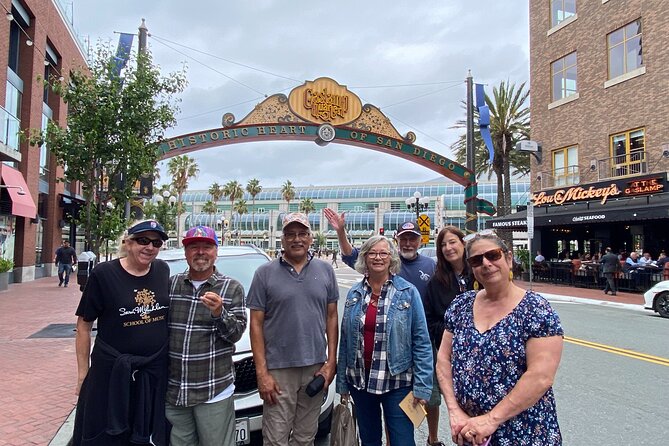
This tour is designed like a guided sprint through downtown’s oldest layers. You’ll cover key sites across the Gaslamp Quarter in about 2 hours, starting at the Spreckels Theatre. The start-and-finish pattern matters: you end at the Gaslamp Arch, which makes it easy to keep going on your own afterward without backtracking.
Because it’s a small group and not a long slog, you’re likely to get the feeling of moving through the district’s past in order. That matters here. The Gaslamp Quarter’s reputation is a mix of glamour and grit, and the walk gives you the order—how places changed, and why people built or used certain buildings the way they did.
If you’re the type who likes to look up while walking, this tour rewards you. Many stops focus on exterior details—window and facade elements, plus what used to happen inside. I’d plan on checking your phone for the route notes only if you want them; otherwise, keep your eyes on the buildings.
You can also read our reviews of more walking tours in San Diego


Spreckels Theatre: the opening act since 1912
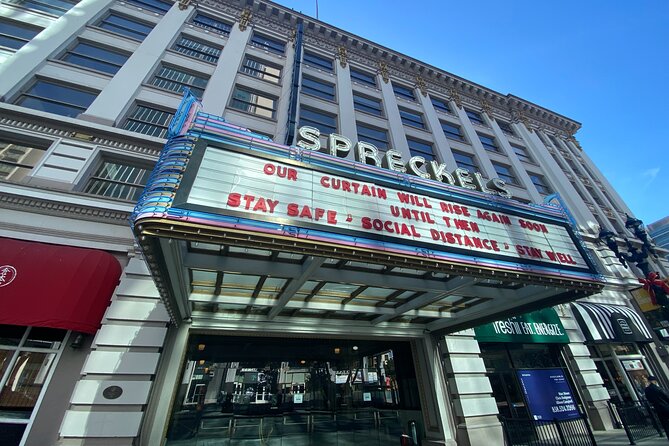
You begin at the Spreckels Theatre, commissioned by sugar magnate John D. Spreckles. The theatre has been in continuous operation since 1912, and it’s described as acoustically perfect. Even if you don’t care about concert halls, this stop sets the tone: this wasn’t always a tourist district—it was a working, changing downtown.
What I like about this first stop is that it anchors you in a real downtown anchor before the stories turn darker. You’re not just learning the legend of The Stingaree; you’re learning how a proper city block grew alongside it.
The stop is short—about 15 minutes—but it works as an orientation moment. You’ll start to notice the kind of architectural choices that repeat throughout the tour.
Horton Plaza Park and the US Grant: moving from port life to prestige
Next up is Horton Plaza Park. It used to serve as a hitching post and carriage stop, and it was created by Alonzo Horton as a respite for guests of the Horton Hotel. This is one of those stops where the guide’s framing helps. You start to see that the Gaslamp wasn’t only made of buildings; it was made of movement—people arriving, departing, and waiting.
Then you’ll pass the US Grant, a Luxury Collection Hotel. This 1910 landmark is on the National Register of Historic Places and is described as opulent and haunted. It was built by Ulysses S. Grant Jr. and his wife, and it still hosts presidents and dignitaries.
A quick heads-up: if you like haunted stories, you’ll get them here. If you don’t, you can still focus on the building’s status as a sign of how far the neighborhood traveled—from rough beginnings to high-profile visitors.
Balboa Theatre: early cooling tech and wartime use
The Balboa Theatre stop connects architecture to daily comfort and to history that didn’t feel glamorous at the time. It was constructed to coincide with the Pan-American Exposition, and it has two working waterfalls that were designed as an early cooling system.
You also get a wartime twist: during World War II, the upstairs offices were used to house sailors going off to war. That detail gives the theatre a layered identity—entertainment space with civic use behind the scenes.
This stop is about 10 minutes, so don’t expect long explanations. You’ll get the highlights and enough context to make the building’s features make sense.
The Ingle Building and Louis Bank of Commerce: prohibition-era and sailor-adjacent stories
Now you get into the kind of stories that make the Gaslamp Quarter’s past feel personal.
At Mad House Comedy Club, you’ll hear about the building’s older identity as the Ingle Building. It was the original home to Ye Old Golden Lion, a mens-only restaurant. Upstairs, the space was used as a front for two men’s clubs that found ways around prohibition laws. This is one of the stops where the guide’s narrative style matters, because the point isn’t just “it was shady.” It’s how people worked the rules they couldn’t fully ignore.
A few stops later is the Historic Louis Bank of Commerce. It’s one of the most photographed downtown buildings, and the stories behind it are specific. The building was once home to an infamous San Diego madam who used a unique way to communicate with foreign sailors interested in her “Ladies.” The bottom storefront was an oyster bar favored by Wyatt Earp.
If you like history that includes real names and believable human details, this is a highlight. It also helps you understand why the district gained the nicknames and reputations it did. You’re seeing how commerce, entertainment, and vice all rubbed shoulders in the same tight footprint.






Victorian brick and a false-bay connection: the Yuma Building
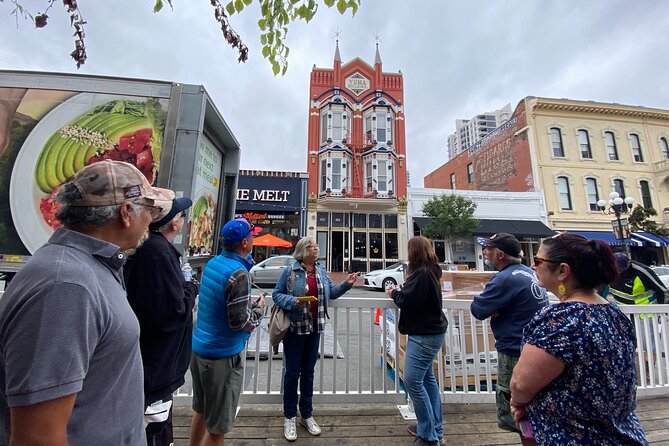
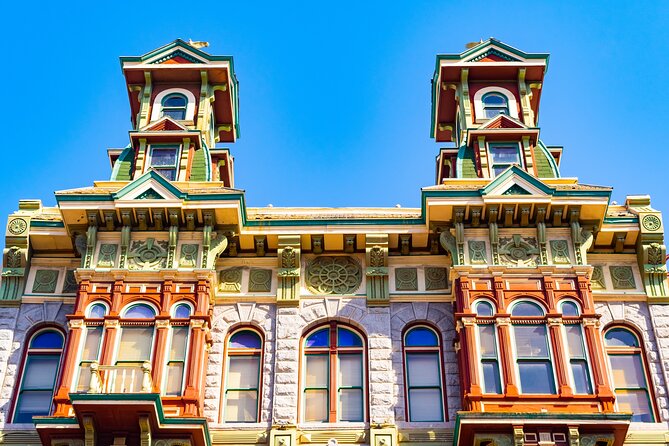
The Yuma Building is a standout brick-and-Victorian example, and it’s built entirely of brick. It was constructed by Captain Wilcox, who is also tied to the false bay you know today as Mission Bay.
That connection is the kind of “wait, what?” fact that makes walking tours worth it. You’re not just reading local trivia; you’re learning the names behind the city’s big physical changes.
This is a 10-minute stop, so it’s more about the fact pattern and what to notice than a long lecture.
Ghirardelli’s 1913 past: from theater to chocolate
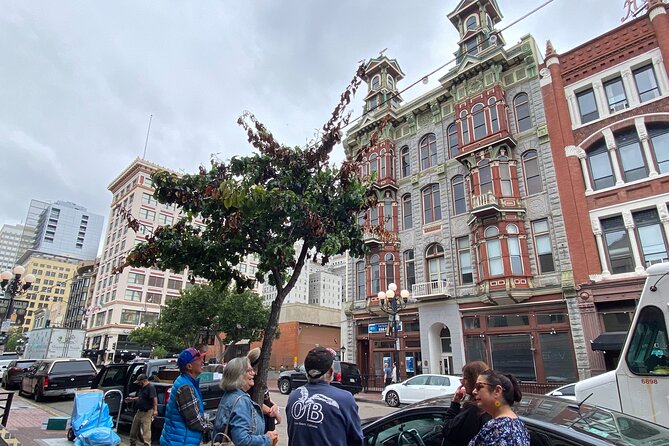
At Ghirardelli, you’ll hear the building opened in 1913 as a theatre. The description includes what it cost and what you could watch for ten cents: two feature films, a comedy short, a cartoon, and a western serial.
This is a fun contrast stop. You’re used to chocolate now, but the building’s earlier use reminds you that downtown properties often shifted jobs over time. Today’s famous name doesn’t always mean today’s original purpose.
The stop is brief—about 5 minutes—but it lands because it’s unexpected.
Gaslamp Museum at the Davis-Horton House: oldest downtown structure and the haunting lore
The Gaslamp Museum at the Davis-Horton House is described as the oldest structure downtown. It’s also rumored to be one of the most haunted homes in the country, and the house was moved from its original location to where it stands today.
Even if you don’t buy into ghost stories, this stop is valuable for the physical reality: relocation means someone cared enough about preserving (or reusing) the structure to move it. That kind of detail helps you see how the neighborhood evolved without starting from scratch every time.
You’ll spend about 15 minutes here, so you’ll have enough time to absorb the museum setting and the stories tied to it.
Horton Grand Hotel: built in 1887, moved brick by brick
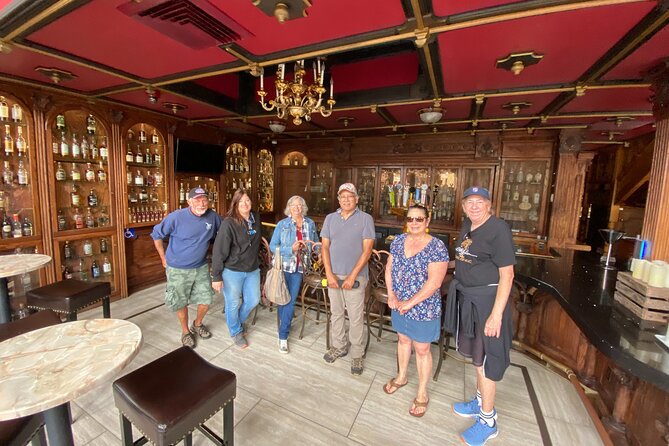
Next is the Horton Grand Hotel. It was built in 1887, and it’s described as home to several ghosts. The hotel was moved brick by brick to its current location, and its original bar and front desk were found in a church basement in New York and returned to the hotel.
That’s an extraordinary set of facts, and it changes how you look at the building. You can’t see it from the outside and know it traveled. The guide’s job here is to connect what you see with the effort it took to get it where it is.
This stop is also about 15 minutes, giving you room to notice details and let the story sink in without rushing.
Old Spaghetti Factory building: time travel through an 1898 structure
Along the way, you’ll also pass the site of the San Diego Old Spaghetti Factory, located in the old McKenzie, Flint and Winsby building from 1898. It’s in the center of the historic Gaslamp Quarter, so even though this portion is shorter than the major landmarks, it helps reinforce a theme: downtown reuse is part of Gaslamp DNA.
If you’re hungry later, this stop helps you connect the walking tour to what to do next. You now have a mental map of the district that matches where you’ll likely end up for dinner.
The Gaslamp Arch and Harry Houdini: finishing with a story hook
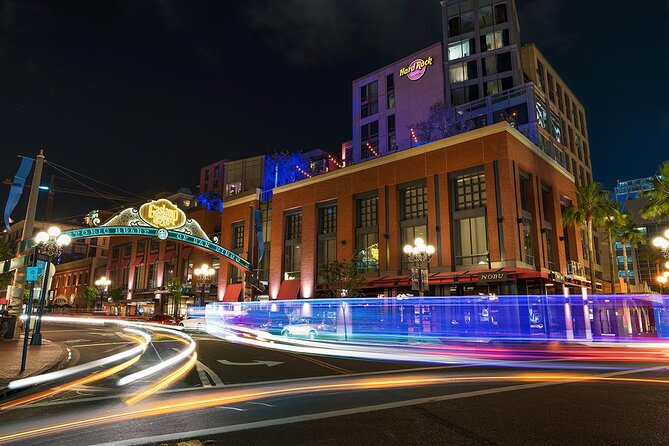
You wrap with the Gaslamp Quarter Archway, described as symbolic—a declaration that San Diego committed to continuing the redevelopment of downtown. And then the guide brings in the fun closer: a story about Harry Houdini and his one and only stop in San Diego.
This ending works because it turns “past” into “why it matters today.” The arch doesn’t just mark a finish line; it represents the district’s reinvention.
Expect about 10 minutes at this stop, and then you’re released at the arch area so you can keep going.
Why the guide quality matters (Debbie and Debra are proof)
A walking tour stands or falls on the person leading it. In the past, guides named Debbie and Debra have been praised for being engaging and for making the tour feel worthwhile. Even if you don’t know what style you’ll get, the format is set up for clear storytelling at each stop—history, then a human angle, then a few things to notice as you move to the next block.
One review theme to keep in mind: if you love long lists of building owners and micro-details, you might be satisfied. If you’d rather focus more on the big story beats, you could find the pace a touch heavy at certain points. That’s not a deal-breaker, but it’s a fair expectation with this kind of condensed route.
Is $39 worth it? Value check for a 2-hour Gaslamp walk
For $39, you’re buying three things: time, guidance, and context. The duration is about 2 hours, and the itinerary includes multiple stops marked free admission, which helps keep the cost from turning into a ticket-and-fees situation.
You’re also not paying for food here. That can be a plus. If you’d rather choose where to eat based on your own tastes, this tour gives you recommendations at the end, then lets you make the final call later.
One practical tip: since the walk is booked fairly ahead on average (around 22 days), I’d treat this like a “grab it when you see a good time” type of activity—especially if you’re traveling during peak seasons.
Best for: history lovers, architecture watchers, and night-out planners
This is a strong fit if you like:
- city stories that connect to actual buildings
- architectural details you can see while walking
- history that includes the messy human side of downtown growth
It’s also a good pre-game tour if you’re planning a night out. You’ll leave with guide-supplied ideas for shows, nightlife, and daily activities, plus must-try restaurant suggestions.
Who might not love it as much? If you hate crime-related lore or you want a purely polished, celebratory view of downtown, the Stingaree-era framing may feel too edgy. And if you want lots of downtime between stops, this schedule won’t give it to you.
A few practical tips so the tour feels great
Because this is a walking tour and depends on weather, dress for the outdoors and plan for the sun or marine layer depending on the day. If you’re carrying a bag, keep it light so you can focus on the buildings.
Also, arrive a few minutes early so you’re not rushed at the 121 Broadway meeting point. The tour ends at the Gaslamp Arch, so once you finish, you’ll be in the right spot for dinner and wandering.
Finally, since it’s capped at 25 travelers, you’ll get more of a conversation vibe than on huge group tours. If you have questions—how the district shifted, why specific buildings were used the way they were—this is a good time to ask.
Should you book this Gaslamp Quarter walking tour?
I’d book it if you want a compact, guided way to understand why the Gaslamp Quarter looks the way it does. The value is strongest if you like architecture plus real stories, and you want a guided route that ends with good ideas for your next steps. It’s also a nice way to get oriented fast in downtown, then branch out on your own.
Skip it if you want a long, slow museum-style experience or a food-and-drink focus. This is history on the move, built around a tight set of landmark stops.
If you’re planning a San Diego downtown day, this tour is an easy win: it gives you a sense of place, a few surprising facts (Houdini and those building transformations), and a map in your head you can use all evening.
FAQ
How long is the San Diego Gaslamp Quarter Small Group Walking Tour?
It runs for about 2 hours.
How much does the tour cost?
The price is $39.00 per person.
Where do I meet and where does the tour end?
You meet at 121 Broadway, San Diego, CA 92101, and you end at 208 Fifth Ave, San Diego, CA 92101, near the Gaslamp Arch.
What time does the tour start?
The start time is 1:00 pm.
Is food or drink included?
No. Food and drink are not included.
Is admission included for the stops?
The itinerary lists the stops with admission ticket free, so you’re not paying extra admission fees at each scheduled location.
Do I need to print tickets?
No. You’ll use a mobile ticket.