REVIEW · SAN DIEGO
San Diego: Balboa Park Botanical Exploration Game
Book on Viator →Operated by Questo · Bookable on Viator
Balboa Park turns into a puzzle board. This San Diego botanical exploration game sends you on a story-driven walk through famous spots in Balboa Park, starting at the Carousel and moving stop to stop with clue clues you handle at your own pace. You play as a lead botanist, and you follow directions from your phone instead of waiting on a large group. Balboa Park stays the star, while the game just gives it a fun framework.
I especially like that you do it as a private group. That means you’re not stuck in a one-size-fits-all rhythm, and you can move when your crew is ready. I also like the pacing style: the game includes built-in moments that let you actually look around at each stop, not just rush through.
One drawback to consider is how much walking it takes. Based on what people report, you can easily clock 4.2+ miles on foot, and there aren’t scooters or bikes offered—so pack for a solid walk.
In This Review
- Key highlights worth knowing
- Why this botanical game works so well in Balboa Park
- Price and time: value at $7.20 for a 90-minute adventure
- Start at Balboa Park Carousel: clue delivery and getting your bearings
- Spanish Village Art Center to Rose Garden: a puzzle rhythm that feels natural
- Bea Evenson Fountain and the Botanical Building: where the game encourages actual looking
- Museum and Old Globe Theatre stops: keep it moving without paying entry
- Cabrillo Bridge to Alcazar Garden: the route shifts gears
- Finishing at 1900 Zoo Pl: wrap the story, then loop back
- How private pacing and puzzle style affects your group
- What to bring so the game feels fun, not tiring
- Should you book the San Diego Balboa Park botanical game?
- FAQ
- Where does the experience start?
- How long does the game take?
- Do I need a tour guide?
- What does the $7.20 per person price include?
- Are entry tickets to attractions included?
- Is this a private experience?
- Can we pause or take breaks during the game?
- What is the cancellation and refund option?
- What language is the experience offered in?
Key highlights worth knowing
- Private group format: only your friends or family participate
- Story + puzzles (12 total): you solve interactive challenges as you go
- Pausing built into the game: you can slow down and enjoy each stop
- Attractions not ticketed: entry tickets are not needed to complete the route
- Phone-based navigation: mobile ticket and directions guide your next move
- Low price for a full route: $7.20 per person for about 90 minutes
Why this botanical game works so well in Balboa Park
Balboa Park can feel huge if you’re just wandering with a map. This game gives you a simple structure: follow the clue, go to the next place, solve a puzzle, and repeat. You’re not trying to conquer the whole park at once. You’re doing a focused route that naturally nudges you toward several highlights.
What makes it feel different from a standard walk is the role play. You’re not just collecting photos—you’re acting like a lead botanist in a story. That matters because it keeps your attention on details like signage, landmarks, and the little “what’s next” moments between stops. It also keeps kids and adults engaged in the same activity without forcing everyone into one lecture or one soundtrack.
You also get real control over your pace. The experience is designed with flexibility, so you can pause and resume. That’s a big deal in a place like Balboa Park, where you’ll want to stop for a bathroom break, water, or just a breather when the sun hits.
You can also read our reviews of more tours and experiences in San Diego


Price and time: value at $7.20 for a 90-minute adventure
At $7.20 per person, this is priced like a budget-friendly activity, not an all-day guided tour. And you’re paying mainly for the game content: the story and the interactive puzzles. Since no tour guide is included, you’re not covering guide time—you’re covering the self-paced challenge.
The duration is about 1 hour 30 minutes, give or take based on how long you linger at each stop. That timing is ideal if you want something active in the middle of a broader Balboa Park plan. It also makes it easier for families: it’s long enough to feel like an outing, but short enough that kids usually stay interested.
A practical note on value: the tour doesn’t require paid entry to attractions. So even if you choose not to go inside a museum or theater, you can still keep the game moving and complete the route.
Start at Balboa Park Carousel: clue delivery and getting your bearings
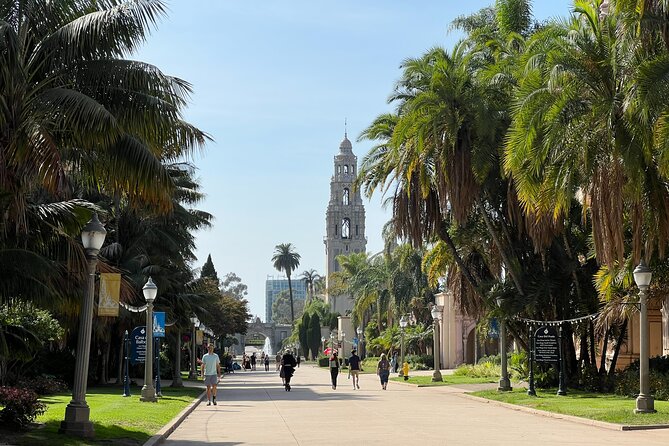
The whole experience begins at the Balboa Park Carousel at 1889 Park Blvd, San Diego, CA 92101. When you arrive, you’ll get your first clue to kick off the story. From there, each location becomes both a destination and a checkpoint.
This opening step matters more than you’d think. The game is phone-driven, and your next moves depend on solving the puzzle at each stop and then using the directions you’re given. So I’d treat the first 5–10 minutes as setup time: get your phone charged enough, make sure your screen brightness is comfortable, and be ready to follow directions without rushing.
If you’re traveling with kids, this is the moment to decide roles. One person can read the clue instructions, another can check the map, and everyone else can keep an eye out for the next hint in the area. That turns the start into a quick team warm-up rather than an awkward scramble.
Spanish Village Art Center to Rose Garden: a puzzle rhythm that feels natural
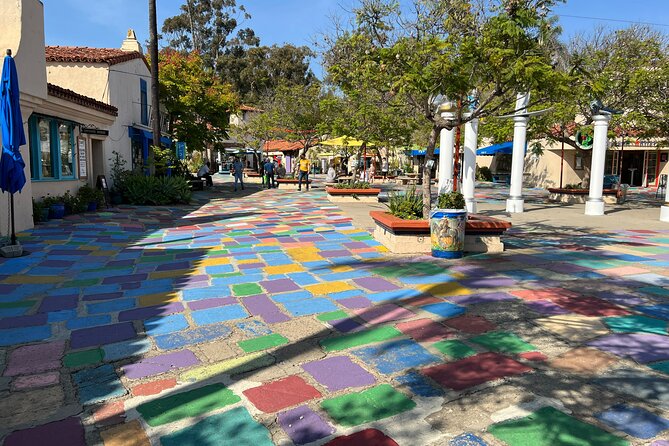
Your next stop is the Spanish Village Art Center, followed by the Inez Grant Parker Memorial Rose Garden. This pairing is a smart part of the route because it changes your experience from one style of place to another.
In these middle stops, the game’s style shines: it isn’t just a scavenger hunt where you barely look up. It includes pauses that give you time at each place the game takes you to. That means you can slow down, read what you’re seeing, and solve the puzzle without feeling like you’re sprinting between landmarks.
If you like a walk that feels varied, these stops help. Art areas tend to invite slower looking, and gardens are the kind of places where you can naturally pause. For puzzle solvers, it also helps because you’ll often need to notice small details to figure out what the game wants you to do next.
The one caution here is simple: keep shoes comfortable. Even on a “light” walking day, this route is designed to keep you moving from stop to stop long enough that you’ll feel it in your feet.
Bea Evenson Fountain and the Botanical Building: where the game encourages actual looking
Next you go to Bea Evenson Fountain, then the Botanical Building and Lily Pond. This is where the botanical theme becomes more than just a label. You’re guided to places that naturally fit the idea of plants, careful landscaping, and “look around” moments.
This is also where the game’s built-in pause feature can make your experience better than a typical checklist walk. You get structured moments to slow down and take in what’s around you before the next clue. That helps you avoid the common trap of doing a fun activity where you’re too focused on getting through it to enjoy the actual surroundings.
One more practical tip: if you’re doing this with a mixed-age group, this part of the route is great for flexible pacing. Adults might enjoy staying on the puzzle for a moment longer, while kids may want to move more quickly through the clue cycle. The pause style helps keep everyone from feeling left behind.






Museum and Old Globe Theatre stops: keep it moving without paying entry
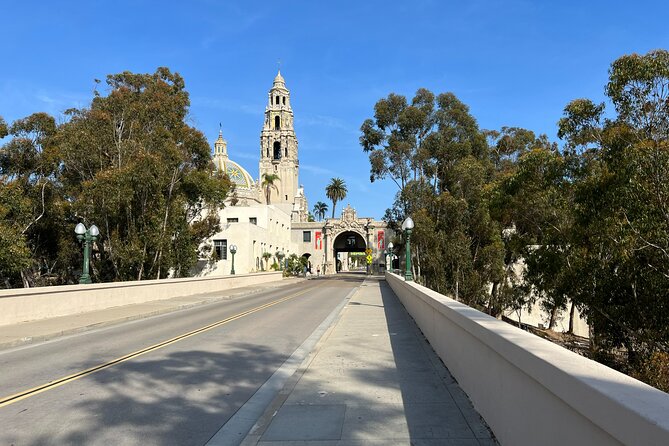
After the garden and botanical spaces, the route continues to the San Diego Museum of Art and then the Old Globe Theatre. Here’s what I appreciate: even though those are well-known attractions, you don’t need entry tickets to complete the tour.
That’s useful if your group wants the game to guide you, but you’d rather save your museum or theater time for a different day. You still get the benefits of the walk—changing scenery, landmark variety, and puzzle challenges—without the extra cost or time commitment of paid admissions.
In practical terms, treat these stops like “checkpoints, not deadlines.” You’re not racing to see everything inside. You’re solving the puzzle work tied to the stop, then continuing when your group is ready.
Cabrillo Bridge to Alcazar Garden: the route shifts gears
The itinerary then heads to Cabrillo Bridge, followed by Alcazar Garden. I like this portion because it acts like a reset. You’re still in the park, still on the same game, but you’re moving into a different kind of setting.
Cabrillo Bridge can be a memorable visual pause point, and a bridge-style stop tends to slow people down naturally. After that, Alcazar Garden gives you another “take a breath” environment before your final stretch.
If you’re the organizer for your group, this is a good place to check in. Ask if anyone needs water, if the phone battery is okay, or if the group wants to speed up or slow down before the finale. Since the game can be paused and resumed, you don’t have to force a perfect pace.
Finishing at 1900 Zoo Pl: wrap the story, then loop back
The final named stop is 1900 Zoo Pl. After you complete the story-driven puzzle sequence there, the activity ends back at the meeting point—so you’re not stranded across the park.
The end feels satisfying because the route stops being about planning what you’ll see next. Instead, it becomes about completing the last part of the challenge and getting back with a sense of having followed a path rather than wandered randomly.
For families, this is often the moment when kids ask to rerun the game route again or try to beat their own scores. For adults, it’s the moment where you realize you’ve seen more of the park’s key areas in less time than if you had planned it alone.
How private pacing and puzzle style affects your group
This experience is listed as private, meaning only your group participates. That changes the vibe. You’re not competing for space with strangers, and you don’t have to match your rhythm to someone else’s family schedule.
The game also supports a social style. You can split tasks—one person can read clues, others can handle navigation, and everyone can take turns solving. That also helps reduce frustration if one person gets stuck. Since it’s story-driven rather than a pure stopwatch race, there’s room to talk it out.
Language is English, so the clue reading is straightforward. If you’re traveling with friends or family who read at different speeds, build in a “no pressure” rule: if the puzzle stalls, pause, talk it through, and then move on together.
The biggest practical consideration for groups: this is walking-heavy. Even though it’s only about 90 minutes, the route covers a lot of ground. If someone in your party has mobility limits, you’ll want to be honest about walking tolerance before you sign up. There’s no scooter or bike option included.
What to bring so the game feels fun, not tiring
Because this is a walking-focused route through multiple stops, your packing list is simple: comfort first. Bring comfortable shoes that can handle repeated walking on park paths. If you’re going on a warm day, bring water and plan small breaks around puzzle pauses.
For phones, think practical:
- Make sure your mobile ticket is accessible on your device.
- Keep your screen brightness readable in daylight.
- Consider a portable charger if you’re using navigation often.
If you’re traveling with kids, I’d also bring a small snack. The game’s pauses help, but a short snack break can keep energy steady through the last third of the route.
Finally, go in expecting a puzzle rhythm, not a speed challenge. If you love races where the main energy is sprinting between tasks, this might feel more relaxed and story-anchored. If you prefer a walk where the challenge makes you look closely, you’ll likely have a better time.
Should you book the San Diego Balboa Park botanical game?
I think you should book this if you want an affordable, self-paced activity in a park you may not know well. The private group format is a win, the 12 interactive puzzles give structure, and the fact that you don’t need attraction entry tickets to finish the route keeps it low-pressure and budget-friendly.
Skip it (or rethink the plan) if your group can’t handle walking distances around 4.2+ miles, or if you want something with a tighter, speed-first competition vibe. This is more about enjoying the stops and solving clues at a steady pace.
If your ideal day includes wandering Balboa Park but with a plan that actually gets you moving, this game is a smart choice. It’s also a great option for families who want an activity that keeps everyone engaged without turning into a long museum slog.
FAQ
Where does the experience start?
It starts at the Balboa Park Carousel, 1889 Park Blvd, San Diego, CA 92101.
How long does the game take?
The duration is about 1 hour 30 minutes.
Do I need a tour guide?
No. A tour guide is not included. You follow the story clues and directions yourself.
What does the $7.20 per person price include?
Your ticket includes the story-driven role as a lead botanist, and you’ll solve 12 interactive puzzles as you walk.
Are entry tickets to attractions included?
No. Entry tickets to attractions are not included, and you do not need them to complete the tour.
Is this a private experience?
Yes. It’s private, so only your group will participate.
Can we pause or take breaks during the game?
Yes. The experience includes flexibility, so you can pause and resume anytime.
What is the cancellation and refund option?
You can cancel for free up to 24 hours in advance for a full refund. If you cancel within 24 hours, it isn’t refunded.
What language is the experience offered in?
It’s offered in English.