REVIEW · LA JOLLA
Learn to Surf in La Jolla
Book on Viator →Operated by Everyday California · Bookable on Viator
La Jolla turns nerves into standing. This beginner-friendly surf class at La Jolla Shores pairs a calm learning spot with small group coaching (max five), so you get real attention instead of waiting your turn. The instruction style is built around fundamentals and ocean safety first, then hands-on time in the water.
What I like most is how the session is structured around progress. You get a 90-minute lesson plus included equipment, and you can keep the surf setup for one extra hour after class so you actually get repetition, not just a quick taste. One thing to consider: the meeting area is not right on the sand, and parking in La Jolla can be tricky; lockers also cost $6 for the day.
In This Review
- Key things to know before you go
- La Jolla Shores is built for learning, not showing off
- Small-group coaching: why five people changes everything
- The 90-minute lesson: land fundamentals first, then waves
- Gear included: the value isn’t just the board
- A small note on what is not included
- Where you meet and how the walk can affect your timing
- Ocean safety and confidence: what you should actually take home
- Instructor energy: why patience wins on a first surf day
- Pricing and value: is $119 fair for what you get?
- Who should book this surf class in La Jolla?
- Practical tips so you get more waves (and fewer frustrations)
- Should you book Learn to Surf in La Jolla?
- FAQ
- How many people are in the class?
- Do I need surfing experience?
- What’s included in the price?
- Where do we meet, and where does it end?
- Is there a locker available?
- How long is the experience?
- What language is the class in?
- What about weather and cancellations?
- What is the cancellation policy?
Key things to know before you go
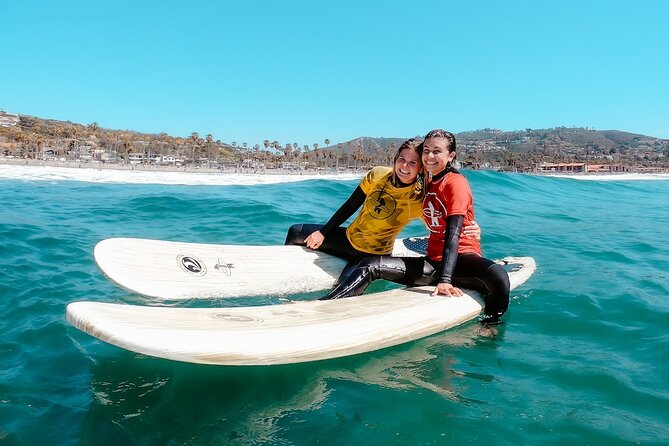
- Max of five people means more time watching, correcting, and trying again
- La Jolla Shores is used for beginners because the water is calmer for learning
- Ninety-minute lesson + an extra hour of board time helps you build confidence fast
- Rash guard, wetsuit, and board are included, with an Everyday California rash guard included for each participant
- Lockers cost $6 if you need to store small items for the day
La Jolla Shores is built for learning, not showing off
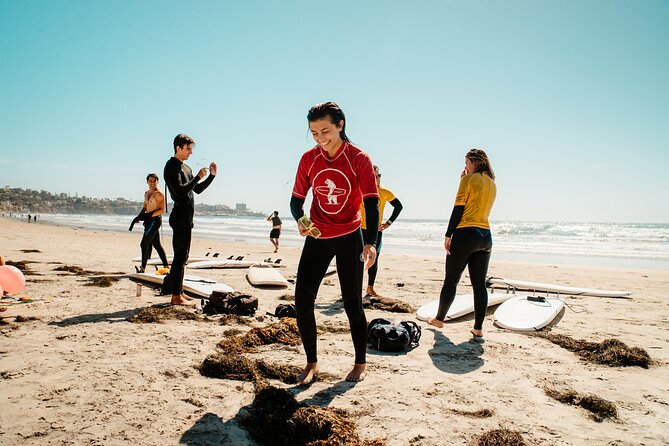
La Jolla is San Diego’s beach-magnet zone, but this lesson focuses on the part that matters for new surfers: La Jolla Shores. The area is often picked because conditions tend to be friendlier for beginner and intermediate surfers, so instructors can teach without constantly stopping for bigger, harder water.
This is the kind of setup where you’ll spend more time learning how to move on a board and handle waves, not just surviving them. And that matters for your first day out. When you feel steady, you can actually absorb instructions like turning your head, timing your paddle, and reading the water in front of you.
You can also read our reviews of more tours and experiences in La Jolla.



Small-group coaching: why five people changes everything
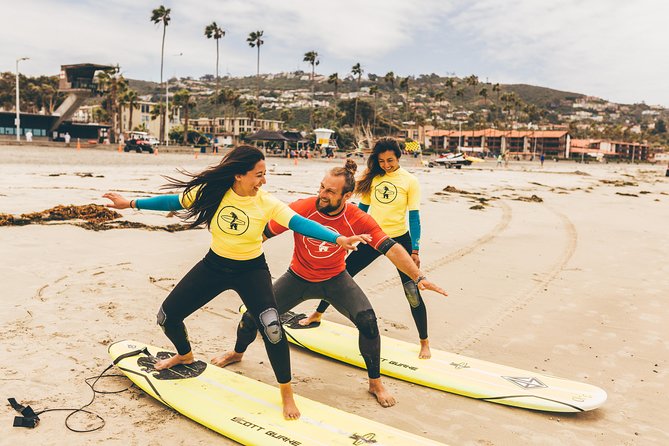
A surf class for a big crowd can feel like a waiting game. Here, the group size stays under control at up to five, which is exactly what I’d want if I were learning from scratch.
Instructors also stick closely to the progression you need. Names like Kelly, Chris, Trevor, Riley, Devan, Brandon, and Nate show up in the kind of feedback people give when they feel personally guided. The common thread is patience and focus, including help that gets people comfortable enough to try on their own sooner than they expected.
If you’re traveling with teens or kids, this small cap can be a huge deal. Teens often want speed, but first-timers still need a lot of calm repetition. A smaller group makes it easier for an instructor to notice when you’re doing something unsafe or when you simply need one more adjustment.
The 90-minute lesson: land fundamentals first, then waves
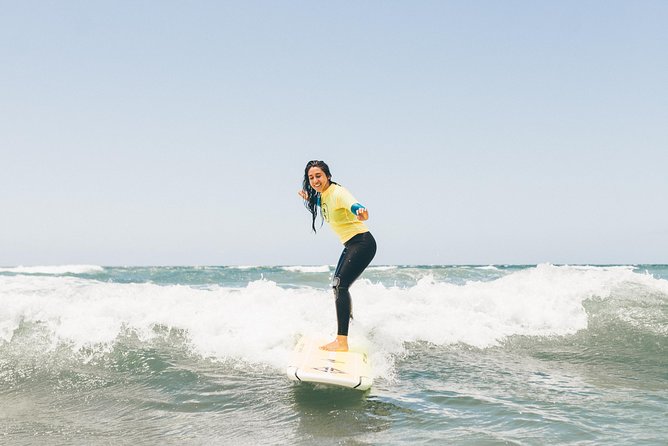
You start with basics on land before you hit the ocean. That is not just a warm-up. It’s where you learn the fundamentals of surfing and the safety rules that keep the whole group safer once you’re in the water.
Then you head to the waves together. The goal is simple: you catch waves as a group, with your instructor watching and correcting in real time. You’re not thrown in and left to figure it out.
The lesson flow is designed for no experience. That means you should expect step-by-step coaching, like how to position yourself on the board, how to paddle, and how to get your bearings before a wave arrives. You’ll also get reminders about ocean safety, which is a big part of why this format works for beginners.
Gear included: the value isn’t just the board
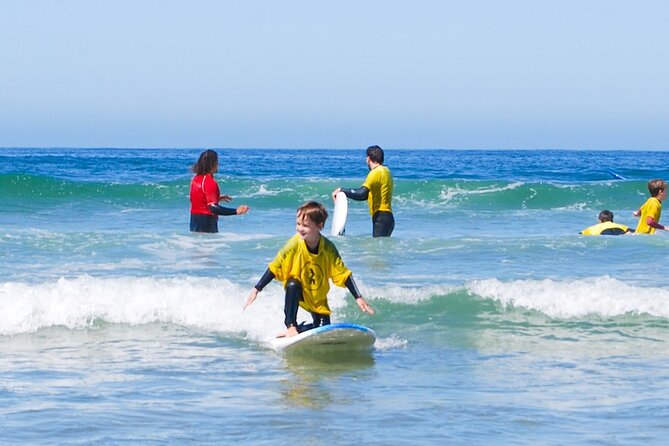
At $119 per person, you’re not only paying for instruction. You’re also getting the gear that makes the whole experience practical.
Included items:
- Everyday California rash guard (participants get one)
- Surfboard for the 90-minute lesson
- Wetsuit
- You can keep the equipment for an additional hour after the lesson to keep surfing
That “keep it for an extra hour” detail is where the value really shows. One lesson can be great, but it’s hard to build muscle memory on a schedule that cuts off right when you start getting it. The extra time gives you more chances to stand, fall, reset, and try again with the same board setup.
Should you bring your own items? If you already own a wetsuit and board, you might wonder if it’s worth it. But the convenience here is real: no hunting for rentals, no guessing about fit, and no losing time to equipment logistics. For most people, that saves money and headaches.
A small note on what is not included
Lockers are available but cost $6.00 per locker for the day. That’s fine if you only need to store a phone, keys, and a couple small things. But it’s smart to plan ahead so you’re not scrambling with your day bag.
Also, there is a concessionaire percentage fee not included in the ticket price. The tour confirms this kind of extra charge exists, so it’s worth remembering when you’re budgeting.



Where you meet and how the walk can affect your timing
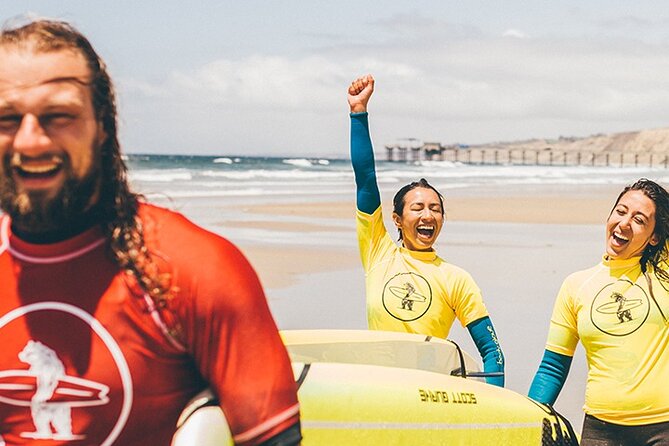
You meet at 2261 Avenida De La Playa, La Jolla, CA 92037 and the activity ends back at the meeting point. That sounds straightforward, but the beach itself isn’t literally next door.
One detail that comes up clearly in real-world feedback: the walk from check-in to the surf location can be quite a distance. If you’re with kids, or if someone in your group has limited mobility, that walk can eat into your patience quickly.
Parking can also be challenging in the area. If you’re driving, give yourself extra time. If you’re using public transportation, the meeting spot is near public transit, which can reduce stress when you’re trying to time everything around the ocean.
Ocean safety and confidence: what you should actually take home
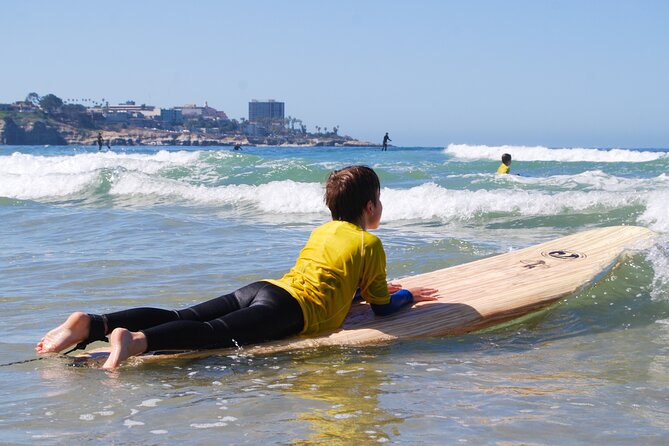
This class emphasizes ocean safety, and that’s not filler. Ocean safety is the difference between a fun first session and a scary one.
Because the lesson begins on land, you can get your head around key rules before you’re dealing with timing, waves, and balance all at once. You’re also in a group where the instructor can directly manage safety and keep the session moving without chaos.
What you’ll likely leave with:
- A basic sense of how to position yourself for a wave
- Clear reminders about what to do when a wave hits
- Confidence from repetition, especially with the extra hour of board time after the lesson
That matters if you plan to surf again. Once you know what to focus on, your next session often feels easier because you’re not starting from zero.
Instructor energy: why patience wins on a first surf day
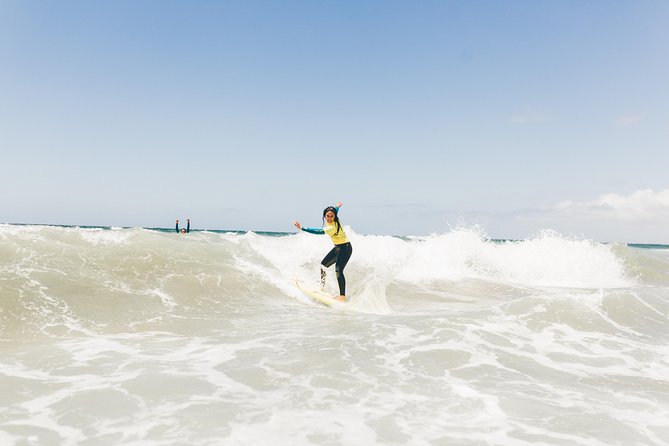
Surf lessons are equal parts skill and nerves. When instructors are patient, you’re more likely to keep trying after your first wipeout.
The best feedback in the info you have centers on instructors being high energy and very patient, with people quickly getting comfortable in the lineup. Names like Chris and Trevor show up with praise for both energy and careful coaching. Riley and Nate also show up in examples where the instructor helped new surfers and got them standing.
At the same time, there’s one cautionary note: one person felt the pace was too slow and that a chunk of lesson time went to walking. The important takeaway for you isn’t that something is automatically wrong. It’s that the schedule depends on getting from the meeting point to the water and then running the lesson efficiently.
So if timing matters to you, show up early, use the bathroom before you start, and think of the walk as part of the experience.
Pricing and value: is $119 fair for what you get?
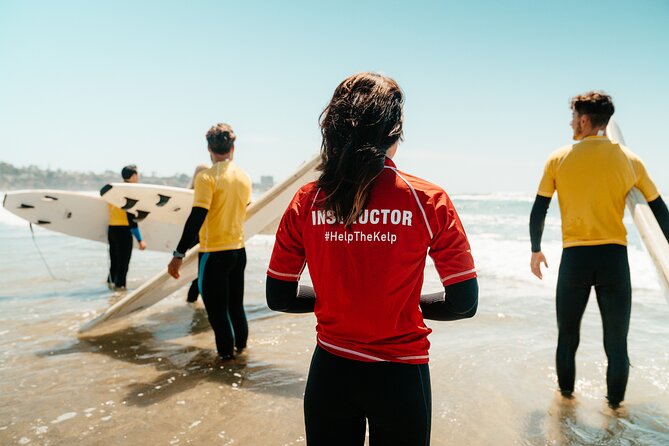
Let’s break it down in plain terms.
You pay $119 per person for:
- A small group lesson (max five)
- Veteran instruction
- Wetsuit
- Rash guard
- A surfboard for the lesson
- The option to keep the board and equipment for an additional hour
When you put that together, this isn’t just a “try surfing once” experience. It’s closer to a half-day attempt where you can build skills through repetition. The included wetsuit and rash guard also reduce the usual hidden costs of surf day logistics.
Is it expensive? For some budgets, yes. But if you’ve ever paid for gear rentals and then lost half the time to logistics, you’ll likely find this format easier to justify. You’re buying a structured lesson plus extra practice time, not just an hour of coaching.
Who should book this surf class in La Jolla?
This is a strong fit if you:
- Want a beginner-friendly surf lesson with calm-water conditions
- Prefer small-group instruction where you’re not waiting around
- Have kids or teens who need patient coaching and a clear structure
- Want to keep surfing after the lesson without immediately changing plans
It’s also a decent choice if you’re returning after a long break. One feedback example describes learning after a long pause and getting a session that felt well-run and professional.
If you dislike walking or are tight on time, plan carefully. The meeting point is not right on the sand, so your day schedule should include that.
Practical tips so you get more waves (and fewer frustrations)
A few things you can do to make the session smoother:
- Arrive early. The walk and check-in process can take more time than you think when you’re excited (or carrying gear).
- Wear or bring what you need for comfort before you change into a wetsuit. You’ll want to be ready to move.
- Use the locker if you need it, but plan for the $6 cost so you’re not surprised.
- If you have kids, set expectations. A first surf day includes falling. The class is designed for that, but it helps if everyone mentally prepares for wipeouts.
Most of all, remember what the format is trying to do: get you catching waves safely, then give you enough extra time afterward to actually improve.
Should you book Learn to Surf in La Jolla?
I’d book it if your top goal is a structured first surf day with small-group coaching and gear you don’t have to rent separately. The included wetsuit, rash guard, and board, plus the extra hour of practice time after the lesson, make it one of the more practical ways to learn in La Jolla.
I’d pause or plan carefully if:
- Parking and walking are major issues for your group
- You’re very sensitive to strict timing, since moving between meeting point and the water matters
- You’re expecting a long lesson based on the total time label, since the key paid instruction is the lesson portion and the extra surf time is an additional practice window
If you want a realistic first step into surfing at a known learning spot, this class is built for that. Show up ready, be patient with the learning curve, and use the extra hour wisely. That’s when surfing starts to feel less like a challenge and more like progress.
FAQ
How many people are in the class?
The surf lesson is limited to a maximum of five travelers, which keeps the group small for hands-on coaching.
Do I need surfing experience?
No experience is necessary. The instructors teach the fundamentals and focus on getting you comfortable step by step.
What’s included in the price?
You get an Everyday California rash guard, a surfboard for the 90-minute lesson, and a wetsuit. You can also keep the equipment for an additional hour after the lesson to continue surfing.
Where do we meet, and where does it end?
The meeting point is 2261 Avenida De La Playa, La Jolla, CA 92037, USA. The activity ends back at the meeting point.
Is there a locker available?
Yes. Lockers are available to store small items for $6.00 per locker for the day.
How long is the experience?
The lesson is about 90 minutes, and you can use the board and equipment for an additional hour after the lesson. The total activity time is listed as approximately 1 hour 30 minutes.
What language is the class in?
The tour is offered in English.
What about weather and cancellations?
The experience requires good weather. If it’s canceled due to poor weather, you’ll be offered a different date or a full refund. It may also be canceled if a minimum number of travelers isn’t met, with either a different option or a full refund.
What is the cancellation policy?
You can cancel for a full refund up to 24 hours in advance. If you cancel within 24 hours of the start time, the amount paid is not refunded.