REVIEW · SAN DIEGO
San Diego Zoo Safari Park 1-Day Pass: Any Day Ticket
Book on Viator →Operated by San Diego Zoo Wildlife Alliance · Bookable on Viator
A safari day in San Diego works better than you think. You get direct entry with a mobile ticket, plus a choose-your-own-route park built around long animal sightlines. I especially like the Africa Tram for easy, no-stress coverage, and the chance to watch animals across different habitats instead of one tight building loop. One thing to plan for: this park is big, and some animal viewing can be hit-or-miss if exhibits are quiet, under construction, or animals are tucked away.
At the heart of it, you’re paying for access to a huge, 1,800-acre reserve where animals live in open field habitats. Your ticket includes admission, all exhibits and shows, and unlimited Africa Tram rides, so you can pace yourself from an intense, early start to a slower “see what’s out” day.
The main tradeoff is energy. Expect lots of walking on outdoor paths, and you’ll do better if you use a cart/scooter option when needed or if you build a loop that keeps you from backtracking.
In This Review
- Quick take: highlights worth planning around
- San Diego Zoo Safari Park 1-day pass: what you’re actually buying
- Timing your visit: hours, drive time, and how long you need
- Mobile entry and getting set up inside fast
- Walking trails and “set your own pace” savanna viewing
- Africa Tram for easy coverage (and why it’s worth it)
- Africa, Walkabout Australia, and the themed areas to target
- Food, breaks, and bringing your own snacks the smart way
- Price and value: is $78 a good deal for one day?
- What can affect your animal sightings (and how to handle it)
- Who this experience is best for (and who might not love it)
- Should you book the San Diego Zoo Safari Park 1-Day Pass?
- FAQ
- How do I redeem my Safari Park ticket?
- Where is the Safari Park located?
- Is parking free?
- What should I know about ticket dates?
- Can I bring food into the park?
- Is the park open every day?
Quick take: highlights worth planning around
- Unlimited Africa Tram rides help you cover distance without burning your legs.
- Mobile scan-in means no Will Call stop and no ticket exchange at the gate.
- Open-habitat viewing is built for overlooks, watering holes, and grazing scenes, not just glass-front cages.
- Habitat variety (savanna, forested sections, and themed areas like Africa and Walkabout Australia) keeps the day from feeling repetitive.
- Food and rest spots like Nairobi Village and the Watering Hole area give you a break without leaving the park.
- Plan for reality: animals sometimes sleep or hide, and some enclosures may be harder to see on certain days.
San Diego Zoo Safari Park 1-day pass: what you’re actually buying
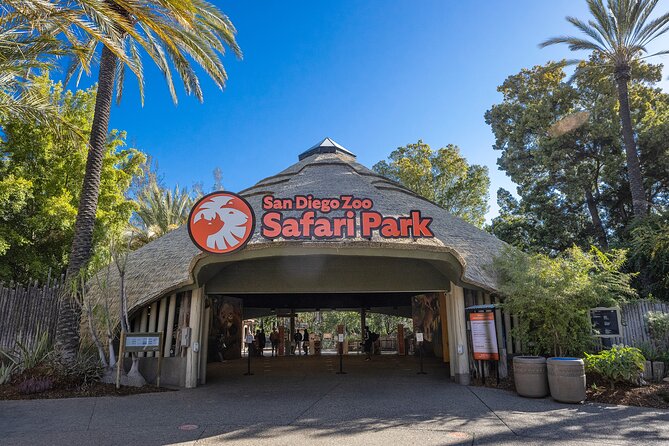
This is a straightforward 1-day Any Day ticket to San Diego Zoo Safari Park. In plain terms, you’re buying admission plus the park’s core experiences. When you arrive, you scan your mobile ticket at the turnstiles for direct entry. No swapping at Will Call, no paperwork run. That matters because the park day starts the moment you walk in.
Your ticket includes:
- Admission
- All animal exhibits and shows
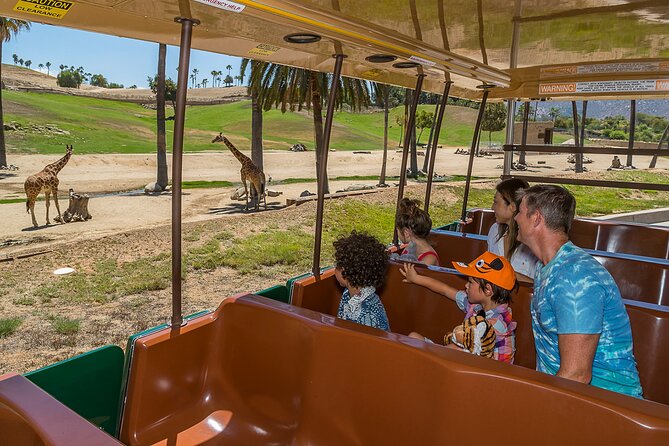
- Unlimited rides on the Africa Tram
A few things are intentionally not included. Parking costs extra. Food and drinks cost extra. And special ticketed experiences or events may not be included (so if you see an upgrade option that’s sold separately, assume it costs extra).
For me, the “value” question isn’t just the $78 price tag. It’s whether you can use that day pass to build a full safari loop that fits your energy level. This ticket is set up for that because you can mix walking and tram riding instead of committing to one mode all day.
You can also read our reviews of more tours and experiences in San Diego


Timing your visit: hours, drive time, and how long you need
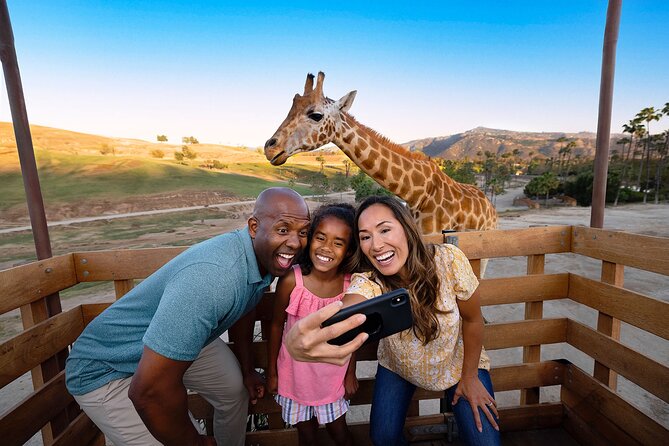
The park runs daily from 9:00 AM to 6:00 PM. The day itself is flexible; the pass is listed as lasting roughly 2 to 8 hours depending on how much walking you want to do and whether you stay for animal shows and tram time.
Also, plan for travel time. The Safari Park sits about 40 miles from downtown San Diego, and you should budget time for traffic. If you’re pairing it with the main San Diego Zoo, that’s a separate drive (roughly 35 miles, about 45 minutes to 1 hour). Even then, you’ll want multiple hours for each park. Trying to do both as a same-day sprint usually turns fun into logistics.
My practical rule: if you want a relaxed day with plenty of stops and photo time, aim closer to half-day to full-day. If you’re comfortable walking for hours and you keep a smart route, you can do more. Either way, the park rewards you for starting early and then shifting into “follow what you see” mode.
Mobile entry and getting set up inside fast
The biggest time-saver here is the mobile ticket. You take your phone directly to the turnstiles and scan for entry. That also means you don’t need to hunt down a will-call counter if you bought through an online booking.
Once you’re in, give yourself a few minutes before you start racing toward animals. This is a big property with lots of outdoor paths, so getting oriented early helps. In particular, learn where the tram and main overlooks sit relative to the areas you care about most, then build a loop.
If you’re worried about walking, you’ve got options:
- You can rent manual wheelchairs and electric scooters for a nominal fee (you’ll need a valid driver’s license or a Safari Park Global membership card to rent).
- You may find stroller and e-cart options through rentals (helpful for families or anyone with limited stamina).
One small caution: the park has open areas and some signage can feel confusing if you’re moving quickly. Slow down at key junctions. It’s worth it.
Walking trails and “set your own pace” savanna viewing
The safari-style part of the day is the part you control. You choose walking trails that lead to overlooks for animal viewing. That’s the big shift from a typical zoo day: here, your movement is part of the experience.
The park’s big promise is close viewing from paths and overlooks, including chances to see animals like lions, tigers, giraffes, rhinos, and more as you move through sections of habitat. You can also find classic safari moments like animals gathering around watering spots, plus gazelle-and-giraffe-style scenes where the viewing feels more like a live habitat than a slideshow.
There’s also an important reality check: open-air habitats mean animals don’t always show up on schedule. On some days, you might find an enclosure less active. Some visitors note elephant viewing can be disappointing depending on where animals are positioned or where viewing areas are set up. Even if you’re paying for rare animals, you still have to accept that wildlife doesn’t perform.
If you want the best chance at good viewing, I’d do this:
- Start earlier and hit the most “point-of-interest” areas first.
- After lunch, do a second round of your favorites and check overlooks again.
- If you arrive and certain animals aren’t visible, don’t spend an hour staring the same spot. Use the tram or alternate paths to change the viewing angle.
Africa Tram for easy coverage (and why it’s worth it)
The Africa Tram is included and operates as your distance-eater. The safari tram portion is listed as about 30 minutes, and it’s designed to take you past herds like elephants and zebras and through areas with endangered species.
Tram time is also a good reset for your brain. Walking sections can stack up quickly in a big park, especially in warmer weather. The tram gives you a breather while still keeping the animal viewing in motion.
One practical note from real-world experience: tram lines can get long on busy days. If the tram feels like it’s going to swallow your morning, don’t panic. Use your time to pivot toward other zones, then come back to the tram later. Also remember that not every safari-style vehicle is included. The information on the day mentions that some safari expeditions have additional fees, while the Africa Tram rides are included. If you see other upgrade options like certain truck or zip line experiences, treat them as add-ons.
You can also read our reviews of more tours and experiences in San Diego
Africa, Walkabout Australia, and the themed areas to target
This ticket gives you access across multiple habitat zones and themed areas. The day’s “story” is basically: you walk for intimate viewing, then you tram for big-picture habitat context.
Key areas to think about:
- Africa exhibit: This is where savanna-style scenes and watering-hole viewing come into play. You might spot giraffes near other grazing animals, plus rhinos when they’re active.
- Watering hole restaurant area: Nairobi Village is called out for dining and shopping options. It’s a smart midday stop because it keeps you inside the park while you refuel.
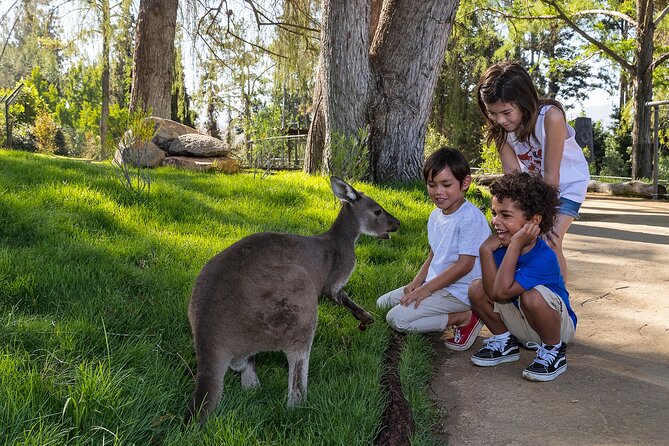
- Walkabout Australia: You can add on a visit to kangaroo areas during your loop. Even if the animals are not all out at once, the themed pathways help break up the day so it doesn’t become a straight animal hunt.
And don’t forget shows. Your admission includes animal exhibits and shows, and those can be a nice “guaranteed” part of the day if a few animal groups are sleeping or hiding.
If you want to learn faster while you move, look for staff or volunteers on the ground. One guide named Delaney comes up as a great example of someone who points out where to go next and what to look for. You don’t need that exact person to get value from the staff; you just need to ask good questions at the right time, like what’s most active right now and where the best viewing angles are.
Food, breaks, and bringing your own snacks the smart way
Food and drink aren’t included, but the park is set up with enough options that you won’t feel stuck. You can go full-service at The Watering Hole at Kijamii Overlook, and you can also find casual dining and quick bites in different parts of the park.
My practical advice: bring snacks if that’s your style. Some visitors recommend packing your own healthy drinks and snacks, especially if you want to avoid wasting time waiting in lines or paying premium prices for basic items. The park does allow outside food in small containers, but it does not allow coolers, glass containers, alcohol, party trays, birthday cakes, or decorations. Also, there’s no luggage storage, so if you’re arriving with a lot of stuff, plan to carry your food safely in the small items you bring.
Where to rest: plan one real break. Nairobi Village is explicitly mentioned as a dining and shopping area, and that’s the kind of checkpoint that keeps a long walking day from feeling like one long grind.
Price and value: is $78 a good deal for one day?
At $78 per person, this pass sits in the “not cheap, but not absurd” category for a major wildlife park. Here’s how I’d judge value before you buy:
You’re getting:
- All exhibits and shows (not just a couple highlights)
- Unlimited Africa Tram rides
- The chance to cover a very large area over a long window (9 AM to 6 PM)
Where value can feel lower:
- If you end up spending too much time in lines (tram can be busy), you might feel like the day ran slow.
- If construction or animal positioning makes a top draw less viewable, you might feel like you paid for something you couldn’t see.
The best way to protect value is to plan around flexibility. Don’t force yourself to “complete” everything in one pass. Use the tram for distance, walk for the places you care about most, and be okay with swapping plans if a certain enclosure isn’t showing much.
Also, factor in the real add-ons you might pay for:
- Parking (not included, and it can cost around $20 based on what people report)
- Food and drinks
- Any optional safari expeditions that have additional fees
If you’re coming with kids, seniors, or anyone who prefers fewer stairs, you may value the tram and scooter rentals more than you expect, which can make this ticket feel like a better deal.
What can affect your animal sightings (and how to handle it)
Wildlife days have variables. This park is designed for habitat viewing, so expect some animals to be asleep, tucked away, or simply less visible depending on time of day and conditions. Rain or shine is fine, and the facilities are open daily. But animal visibility can shift with weather and temperature.
Two issues to keep in mind:
- Distance and viewpoint design: some enclosures can be harder to see depending on where the viewing areas are located. For example, elephant viewing has been described as a letdown when the viewing point is far away or when animals aren’t positioned for easy viewing.
- Construction and temporary changes: at least some visitors report that construction impacted what they could see, especially elephants. That doesn’t mean you’ll have the same problem, but it does mean you should avoid locking your entire day around a single exhibit.
How to stay happy anyway:
- Pick three priorities, not ten.
- Use the tram to reposition quickly if a section disappoints.
- Give each area time, but not too much time. If you’ve waited and nothing’s out, switch tactics.
Who this experience is best for (and who might not love it)
This day pass shines for:
- Families who want a full-day wildlife outing with options to rest and ride
- Couples or friend groups who like nature walks but also want tram support
- Anyone who values habitat-based animal viewing across multiple zones
- People who want a “choose your pace” day rather than a strict guided schedule
It may be less ideal for:
- Anyone expecting nonstop close-up action at every turn
- Visitors who hate walking outdoors for hours
- People who need guaranteed access to every headline exhibit every time (wildlife doesn’t work that way)
If you’re traveling with mobility concerns, use the scooter or wheelchair rental option, and build a route around tram access. The park is large, but it’s set up so you’re not forced to do everything on foot.
Should you book the San Diego Zoo Safari Park 1-Day Pass?
I’d book this if you want a big animal day where you control the route, the tram is built into your ticket, and you’re okay with the honest part of wildlife viewing: sometimes animals are out, sometimes they’re not.
Don’t book it on autopilot if you’re only chasing one specific animal moment like elephants. Even though the park is famous for rare species and strong conservation work, your best experience comes from doing a flexible loop, using the tram, and treating the day as a habitat safari rather than a checklist.
If you do decide to go, go in with a simple plan: start early, hit your top areas first, take a real break at Nairobi Village or the watering hole dining spot, and use the Africa Tram to keep your day enjoyable instead of exhausting. That’s when this pass feels like $78 well spent.
FAQ
How do I redeem my Safari Park ticket?
It’s a direct entry ticket. You go straight to the turnstiles with your mobile ticket scan, so you do not need to exchange anything at Will Call.
Where is the Safari Park located?
The San Diego Zoo Safari Park is at 15500 San Pasqual Valley Rd, Escondido, CA 92027.
Is parking free?
No. The Safari Park parking lot is privately owned and has a parking fee, which can change. Payment can be made by credit or debit card or cash.
What should I know about ticket dates?
The travel date shown on the ticket is for reference only. Tickets are redeemable one year after the purchase date, and you do not need to amend the date for travel within that year.
Can I bring food into the park?
Yes, you can bring your own food in small containers. No coolers, glass containers, alcohol, or party trays are allowed, and there’s no food storage available.
Is the park open every day?
Yes. The Safari Park is open daily, rain or shine, including holidays.