REVIEW · SAN DIEGO
Sinister Shadows of San Diego Gaslamp Ghost Tours
Book on Viator →Operated by San Diego Ghost Tours By Us Ghost Adventures · Bookable on Viator
Spooky stories start on busy Gaslamp streets. This 1-hour walking tour threads together true past events and reported hauntings at eight landmark stops, from old hotels to former morgue basements.
I especially like the small-group feel and how the guides keep the stories tied to real addresses and building histories. It also helps that you’re not stuck on a bus for the whole night. One thing to consider: this tour is mostly about the outside view and the lore that goes with it, so you should not expect to wander inside every building.
In This Review
- Key highlights at a glance
- A One-Hour Walk of Gaslamp Hauntings Without the Bus
- Price and Value: Is $32 Fair for This Haunted Walking Route?
- Meeting on Fourth Ave: Timing, Noise, and Staying Comfortable
- Eight Stops of Haunted Gaslamp: What You’ll See and Why It Matters
- Stop 1: Garage Kitchen + Bar (Carriage Works Roots and a Tragic Backstory)
- Stop 2: Horton Grand Hotel (1886 Charm With Ghost Tales)
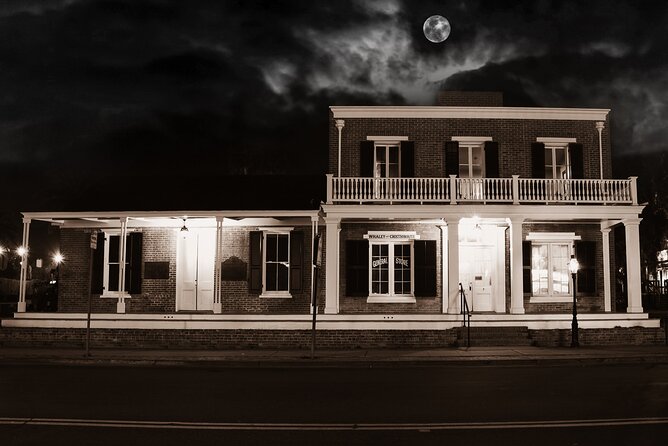
- Stop 3: Gaslamp Museum at the Davis-Horton House (Oldest Building, WWII Mystery)
- Stop 4: 516 Fifth Ave / Yamada Building (1869 Boom-Era Architecture and Lingering Legends)
- Stop 5: Prohibition Lounge (A 1920s Speakeasy With a Morgue Basement Tale)
- Stop 6: 664 Fifth Ave / Old City Hall (Bank Facade Changes and the Story People Still Feel)
- Stop 7: Yuma Building (Multiple Identities and Two Reported Hauntings)
- Stop 8: Ghirardelli Ice Cream & Chocolate Shop (Old Casino Theater Tragedy and After-Effects)
- Guide Style Makes the Night: What You Should Expect From the Storytelling
- The Big Reality Check: Mostly Outside, So Manage Expectations
- Who This Walking Ghost Tour Is Best For
- Should You Book Sinister Shadows of San Diego Gaslamp Ghost Tours?
- FAQ
- How long is the Sinister Shadows of San Diego Gaslamp Ghost Tours experience?
- What is the price per person?
- Where does the tour start and end?
- Is this a walking tour?
- What language is the tour offered in?
- Is food or drinks included?
- Are tickets or entry fees included for the stops?
- Is there motorized transportation included?
- Is there mobile ticketing?
- Is free cancellation available?
Key highlights at a glance
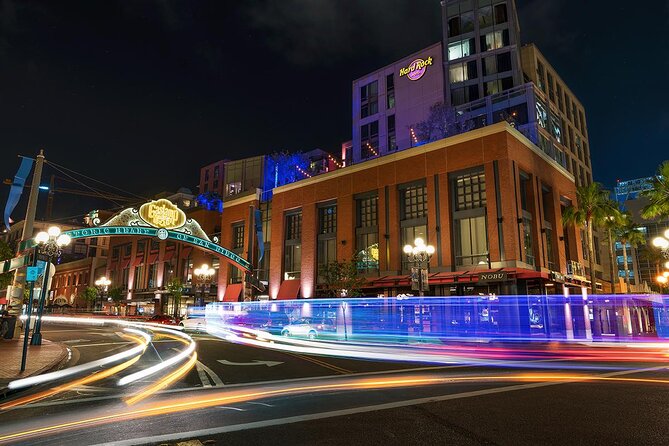
- Eight major Gaslamp landmarks in about an hour with frequent short stops
- Small-group, guided pace that keeps you moving without feeling lost
- Dark history anchored to specific addresses, not vague spooky talk
- Classic Gaslamp character from hotels and old theaters to a Prohibition-era lounge
- Busy-night reality check: crowd noise can affect how clearly you hear the guide
A One-Hour Walk of Gaslamp Hauntings Without the Bus
This tour is built for a very specific kind of evening: you want to walk, you want to see the Gaslamp Quarter up close, and you want your entertainment to come with context. The whole experience clocks in at about an hour, and it ends back where it starts at 868 Fourth Ave. The meeting point matters here. Gaslamp is active, and you’ll thank yourself for showing up early enough to find the group before the sidewalks get loud.
What makes it work is the rhythm. Instead of one long lecture, you get short story stops. That format keeps you engaged and also helps you build a mental map of the district. You’re not just chasing ghosts. You’re learning why these buildings became famous in the first place, then hearing the darker side that people associate with them today.
You can also read our reviews of more tours and experiences in San Diego.


Price and Value: Is $32 Fair for This Haunted Walking Route?
At $32 per person, you’re paying for three things: a trained guide, intensely researched true stories, and stops that are all part of the Gaslamp’s recognizable street grid. You are not paying for food, and you are not paying for motorized transport. That’s important, because it means the value is tied to storytelling and location access, not amenities.
Is it worth it? For me, the best way to judge this kind of tour is to ask what you want out of your money. If you want a guided walk that turns familiar streets into a story you can remember, $32 can land in the reasonable zone. If you expect hands-on paranormal theatrics, or you want to go inside multiple historic buildings, the tour’s format may disappoint. The best-fit experience here is the one where you lean into atmosphere, history, and guided interpretation.
Also note this: the tour runs in English, uses a mobile ticket, and operates with a maximum group size of 35. A lot of places charge more for far less structure than that.
Meeting on Fourth Ave: Timing, Noise, and Staying Comfortable
Your night starts at 868 Fourth Ave, and you finish back at the same spot. That simple loop is convenient. You’re also near public transportation, which helps if you’d rather not stress about parking.
Now for the real-world part: Gaslamp can get extremely busy, especially around bar and club time. In that situation, your biggest challenge won’t be the route. It’ll be hearing the guide. A few people have said they had trouble catching details when the crowd was thick. So if you’re choosing the night, pick a time window where you’re confident you can hear someone standing near you, not shouting through a party.
Comfort also matters because this is a walking tour and it expects moderate physical fitness. Wear shoes you’re happy to move in for about an hour, and plan to cross curbs and step around pedestrian traffic.
Eight Stops of Haunted Gaslamp: What You’ll See and Why It Matters
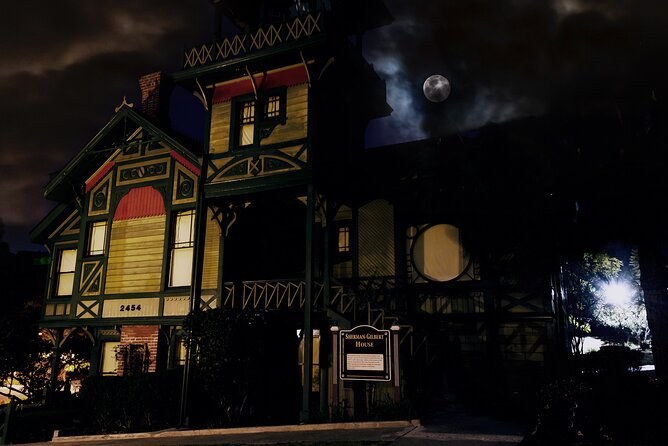
The heart of this tour is the street-to-street transformation. Each stop gives you a specific building, a specific slice of history, and a specific set of paranormal reports people associate with the address.
Stop 1: Garage Kitchen + Bar (Carriage Works Roots and a Tragic Backstory)
You begin at Garage Kitchen + Bar, a modern spot with a past that goes back to carriage work. This place was once a hub for selling and repairing carriages and horses, and later it even handled horseless carriages. That alone is a fun contrast: you’re standing in a contemporary bar while the story reaches into the pre-automobile world.
Where the spooky talk comes in is the mention of a tragic event and the area’s reputation for paranormal activity. The way this stop is framed works best when you’re paying attention to contrasts—how a lively venue can sit on a darker history.
What to watch for: because this is a quick stop, you’ll get the gist fast. If you love slow, detailed immersion, you’ll have to enjoy the tour’s “short story, big picture” style.





Stop 2: Horton Grand Hotel (1886 Charm With Ghost Tales)
Next up is the Horton Grand Hotel, commissioned in 1886. It’s one of those places where age alone feels like part of the attraction. The stories people associate with it include eerie apparitions and flickering lights, which makes sense for a hotel setting where lots of rooms, hallways, and odd angles exist.
This stop is a good example of why the tour format can feel satisfying. You’re not hearing generic “something spooky happened.” You’re getting a sense of how a long-standing hotel can accumulate legends over time.
Potential drawback: hotel buildings can be busy or active depending on the time of day. If it’s packed, your ability to pause and hear the guide can vary.
Stop 3: Gaslamp Museum at the Davis-Horton House (Oldest Building, WWII Mystery)
Then you hit the Gaslamp Museum at the Davis-Horton House. The focus is the William Heath Davis House, described as the oldest building in San Diego and the most haunted residence in the Gaslamp Quarter.
This stop adds more layers than just ghost stories. The building served as a makeshift hospital, had office quarters, and was also tied to WWII history as a hiding spot for a German spy. That combination of local timeline and wartime intrigue gives the haunting talk extra weight. It’s not only fear; it’s the sense that big, complicated events happened here.
What I like about this stop: it gives you a reason to care about the building even if you’re not fully into paranormal expectations.
Stop 4: 516 Fifth Ave / Yamada Building (1869 Boom-Era Architecture and Lingering Legends)
At 516 Fifth Ave, you’ll visit the Yamada Building, built in 1869 during the transcontinental boom. The tour connects the address to a chain of Asian-descended owners, and it also highlights Frank Yamada, who ran a popular billiard hall called Frank’s Place in the 1950s.
Then the story turns to mystery: lingering spirits and unexplained occurrences connected to the building’s haunted reputation. This stop works well if you enjoy how everyday business life—like a billiard hall—can become part of a wider legend.
Quick practical note: this is another shorter pause. You’ll get enough to connect the dots, but you won’t spend time doing deep architectural study.
Stop 5: Prohibition Lounge (A 1920s Speakeasy With a Morgue Basement Tale)
The tour shifts into speakeasy mode with the Prohibition Lounge, themed like a 1920s hideout. The scary angle comes from its basement past: it’s said that the basement once served as the city’s morgue.
I find this stop effective because the setting already feels like a stage set. When a theme matches the legend, you don’t have to force your imagination.
Also, since this is a bar-themed location, it can be active. If your night is on the louder side, you might want to stand where you can hear your guide without drifting into the loudest conversations.
Stop 6: 664 Fifth Ave / Old City Hall (Bank Facade Changes and the Story People Still Feel)
At 664 Fifth Ave, you get Old City Hall, originally built as a bank in Florentine Italianate style. The detail that really grabs attention is what happened to the facade: it was dismantled and covered in stucco in the 1950s to modernize the look, then restored to its original grandeur in the 1980s.
That restoration piece matters because it shows how buildings can change while the legends stick around. The tour also brings up reports of lingering spirits and mysterious happenings within the building’s walls.
How to enjoy this stop: treat it like a lesson in time layers. You’re seeing how the outside got altered, then restored, while people kept telling stories about what they felt inside.
Stop 7: Yuma Building (Multiple Identities and Two Reported Hauntings)
The Yuma Building has had multiple roles over time: office space, a hotel, and now commercial space on the first floor with luxury private residences above. With so many different uses, it’s easy to understand why legends would multiply.
The haunted reports include a presence called The Captain, plus a woman driven to madness who is said to haunt the building. Whether you believe every detail or not, the story gives you a clear reason for why people associate this place with persistent, uneasy energy.
This stop is also a reminder of how the Gaslamp district evolves. Buildings don’t freeze in time, but the stories people attach to them can feel permanent.
Stop 8: Ghirardelli Ice Cream & Chocolate Shop (Old Casino Theater Tragedy and After-Effects)
The tour ends at Ghirardelli Ice Cream & Chocolate Shop, housed in the old Casino Theater, opened in 1913. The building later went through a darker chapter as an adult store until the early 1970s, and it’s linked to a tragic fire that killed a trapped projectionist.
Now it’s a popular stop for sweets, but the story keeps the shadow attached. It’s one of the strongest “then and now” contrasts in the route.
If you’re hoping for a final jolt, this is the stop where that energy tends to live. Even people who do not experience anything paranormal often remember the emotional punch of the theater tragedy tied to an address they can picture.
Guide Style Makes the Night: What You Should Expect From the Storytelling
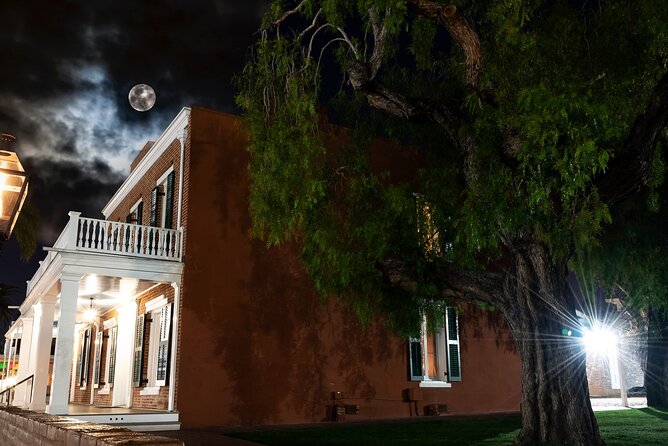
The tour lives or dies by the guide’s delivery. And you’ll see that in the pattern of experiences people describe. Many people praise guides for being animated, entertaining, and good at linking each scene to a clear history.
Names that came up include Aiden, Alex, Molly, Dan, and Peggy. The best sessions tend to share two traits: the guide keeps the story flowing, and they help you “see” what happened in the building’s past while you stand in the modern street.
On the flip side, a smaller set of experiences complain about rushed pacing or stories that did not feel convincing. Another common issue is sound. If you can’t hear, you can’t connect.
So here’s my practical advice: arrive a few minutes early, stand where you can hear without craning, and treat loud nights as a variable you manage, not a failure of the tour.
The Big Reality Check: Mostly Outside, So Manage Expectations
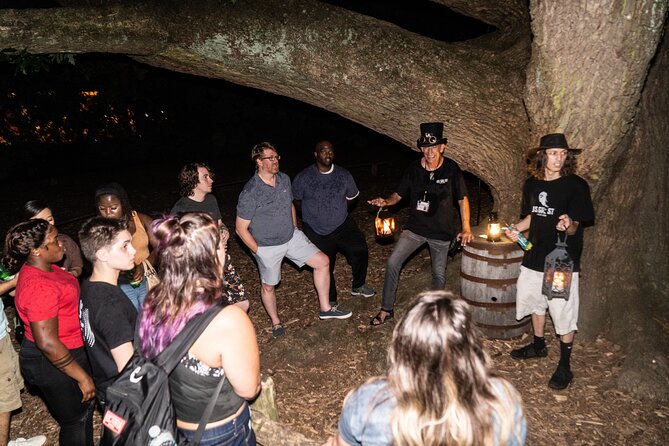
This tour is designed as a walking route through the Gaslamp, and that means you generally won’t be going inside every building. Some locations are privately owned or simply not set up for public tours during this experience.
This matters if your idea of a ghost tour includes walking into dark rooms and feeling the temperature drop. You might still get plenty of spooky atmosphere, but it’s the guided storytelling and historic framing that do the heavy lifting.
You should also know this: even when the tour is well done, you may not see obvious paranormal activity. Some people mention having no dramatic encounters, while others describe stronger reactions like an EMF detector turning red near old City Hall. If paranormal output is your goal, treat it as a bonus, not the main product.
Who This Walking Ghost Tour Is Best For
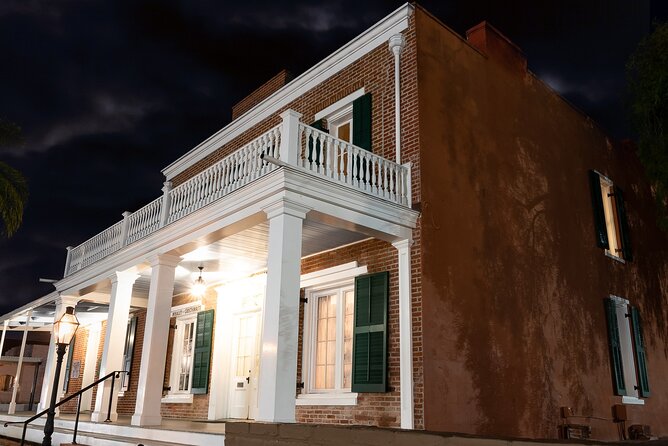
This is a strong choice if you like a city-walk evening where history and story combine. It’s also great for people who want something social but not complicated: you meet, you walk, you stop often, and you return.
It tends to fit well for:
- Active people who don’t mind standing briefly at different addresses
- History lovers who enjoy WWII side stories and older architecture details
- Folks who want a planned route instead of wandering the Gaslamp randomly
- Families who want a structured outing (as long as everyone can tolerate walking and crowd noise)
It may be less ideal if:
- You want to enter buildings throughout the night
- You need quiet for hearing details
- You’re only satisfied by intense paranormal effects
Should You Book Sinister Shadows of San Diego Gaslamp Ghost Tours?
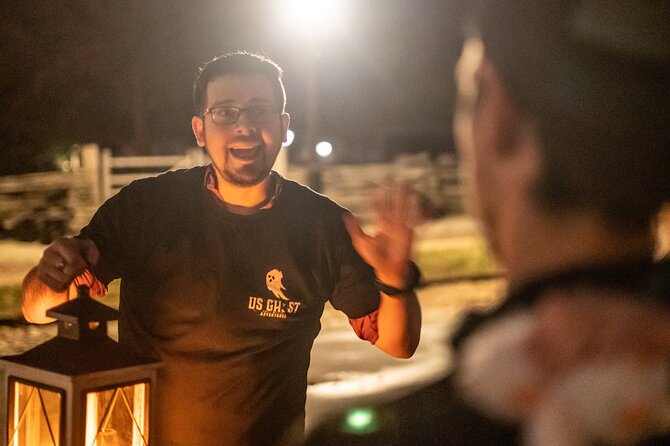
Book it if you want a well-structured, one-hour nighttime walk where the addresses actually matter and the stories are tied to specific buildings like the Horton Grand Hotel, the Davis-Horton House, and Old City Hall. The price is reasonable for a guided, stop-based route in a prime part of town, especially if you enjoy atmosphere more than theatrical hauntings.
Skip it (or choose carefully) if your top priority is going inside multiple historic locations or if you get frustrated when ambient street noise makes it hard to hear. If you’re going during peak nightlife hours, plan for tougher listening.
If you do book: wear comfy shoes, show up early at 868 Fourth Ave, and pick a spot where you can hear the guide. That alone can turn a so-so night into a memorable one.
FAQ
How long is the Sinister Shadows of San Diego Gaslamp Ghost Tours experience?
The tour runs for about 1 hour.
What is the price per person?
The price is $32.00 per person.
Where does the tour start and end?
It starts at 868 Fourth Ave, San Diego, CA 92101, and ends back at the same meeting point.
Is this a walking tour?
Yes. It is a walking tour, and you should have a moderate physical fitness level.
What language is the tour offered in?
The tour is offered in English.
Is food or drinks included?
No. Food and beverage are not included.
Are tickets or entry fees included for the stops?
The tour info shows admission ticket free for the listed stops, so you are not paying separate admission fees as part of the experience.
Is there motorized transportation included?
No. Motorized transportation is not included.
Is there mobile ticketing?
Yes, the tour includes a mobile ticket.
Is free cancellation available?
Yes. You can cancel for a full refund up to 24 hours in advance.