REVIEW · SAN DIEGO
The Escape Game at Westfield UTC in San Diego
Book on Viator →Operated by The Escape Game San Diego - University Town Center · Bookable on Viator
A clock is ticking, so the fun starts fast. At The Escape Game San Diego (Westfield UTC), you and your team tackle clue hunts and puzzle solving in a guided, mission-style format with a dedicated game guide. Expect a set-up briefing, then 60 minutes to finish the mission and escape.
I especially like how the experience feels purpose-built for teamwork. You’re not just wandering around looking at props. You’re talking, testing ideas, and moving together, which is exactly what makes it work.
I also like the variety. With six different game options—from Prison Break to Cosmic Crisis—you can match the vibe to your group and still get a fresh challenge.
One drawback to consider: rooms can feel tight when groups are bigger. If you’re rolling with a larger crew, plan on more shoulder-to-shoulder puzzle time, and lean into communication early.
In This Review
- Key points to know before you go
- Arrival at Westfield UTC: how this experience really starts
- The guide briefing: where you set up your strategy
- Pick your mission: six themes, one team race
- What actually happens during the 60 minutes
- Small-group flow: why the cap matters
- Puzzle-solving tips that actually help
- The wrap-up: how it feels when you escape
- Price and value: is $45.99 per person worth it?
- Who this is best for (and who should think twice)
- Quick logistics: what you should plan for
- Should you book The Escape Game at Westfield UTC?
- FAQ
- How long is The Escape Game San Diego (Westfield UTC)?
- What games can you choose from?
- Do you need to print a ticket?
- Is there a group size limit?
- Are service animals allowed?
- Can I cancel for a refund?
Key points to know before you go

- Six mission choices let you pick the theme that fits your group mood, from time travel to a black hole disaster.
- A guide is there to help, so you’re not stuck in silence if you hit a wall.
- A 60-minute deadline keeps the pace high, and it rewards clear roles and quick testing.
- Small-group feel with a maximum of 12 travelers helps you actually stay involved.
- Mobile ticket makes arrival simple at the start.
- Real guide personality shows up in the end-of-game experience, including supportive staff moments (I saw mentions of guide help and birthday kindness).
Arrival at Westfield UTC: how this experience really starts

The Escape Game San Diego meets at 4373 La Jolla Village Dr, Westfield UTC, and it ends right back at the same meeting point. That matters more than it sounds, because you don’t waste time figuring out where you go next. You show up, you check in, and your team gets moving.
If you’ve never done an escape game, here’s the key mindset shift. You’re not trying to be smart alone. You’re trying to be useful together. The rooms are built for fast conversation: what did you notice, where could it lead, what should we try next?
The clock starts after the brief orientation, not instantly the moment you walk in. Still, you should show up ready to focus. Wear something you can move in, because even if the puzzles are mostly indoors and contained, you’ll shift positions a lot trying to solve and compare notes.
You can also read our reviews of more tours and experiences in San Diego.



The guide briefing: where you set up your strategy

Once you arrive, you’re met by a dedicated game guide. Their job is to lead you into the experience and help you as needed. That “as needed” part is important: you’re not on your own, but you still earn your escape by doing the work as a team.
In practice, this is when I’d do two things fast:
- Assign roles. Not permanently, but for the first stretch: one person reads the room, one focuses on puzzle components, one watches time and flags when you’re spinning.
- Agree on a simple callout system. For example: shout what you found, then point at it. No one should be guessing what you mean later.
Even if you feel unsure, the guide is there. From what I learned from the experience write-ups, guides like Phillip and Ayden get praise for being helpful during the game, not just at the start. That’s a sign you can ask for support without ruining the fun.
Pick your mission: six themes, one team race
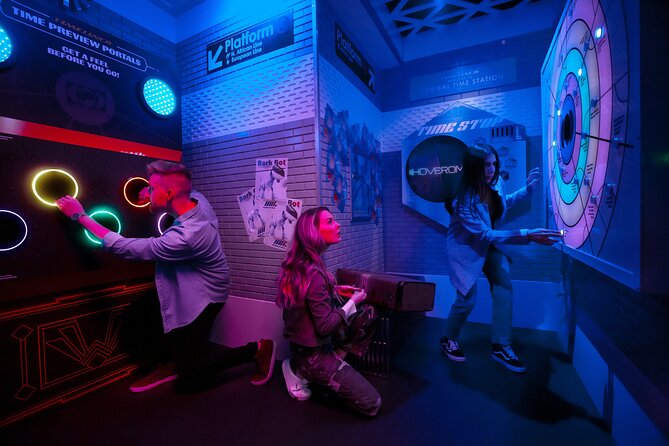
You get to choose from six uniquely themed missions, and you’ll play based on the game you select. The content is different in each one, but the core structure is the same: you solve puzzles, you find clues, and you escape within the time limit.
Here’s what each option is built around:
- Prison Break: Escape from an evil warden. Great if your group likes a straightforward, mission-driven plot.
- The Heist: Recover a stolen masterpiece. Works well for people who like observation and figuring out sequences.
- Playground: Complete your report card and reach summer break. A fun pick if you want lighter energy.
- Timeliner: Train Through Time: Save the future. A good match if you enjoy time/order puzzles.
- Cosmic Crisis: Destroy the black hole. If your group likes sci-fi stakes, this one gives you that vibe.
- Ruins: Forbidden Treasure: Find the treasure. Ideal when you want a classic adventurer feel.
I like that you can pick based on your group’s mood. If your crew is celebrating something, choosing a theme that fits the moment makes the memory stick. I also like that you’re not stuck with a single storyline—if you ever come back, you can pick a different game.
What actually happens during the 60 minutes

After you enter, the core experience is simple: your team has exactly 60 minutes to complete the mission and escape. The time limit doesn’t feel like pressure for the sake of pressure. It pushes you to test ideas quickly and share discoveries before they get lost.
Here’s the practical reality of how you’ll spend that hour:
- You hunt for clues, then connect them to puzzle steps.
- You solve in layers, meaning one solution often reveals the next task.
- You ask for help if needed, because your guide is there to keep the game moving.
And yes, some teams finish with serious time left. In the write-ups I reviewed, one group did The Heist and escaped with 27:50 to spare and finished without clues, which suggests the puzzles can reward strong teamwork and quick pattern recognition. Another group in Cosmic Crisis made it out with 12 minutes left.
Even if you don’t finish blazing fast, that’s not a failure. In escape games, the win is the combined problem-solving journey—your group learning how to work together under time pressure.
Small-group flow: why the cap matters
This activity has a maximum of 12 travelers. That ceiling is a good sign for pacing. In rooms where lots of people pile in, games can slow down because you’re waiting for turns or crowding around puzzle areas. Here, the size cap should help keep the action moving and keep you from feeling like a spectator.
Still, keep one caution in mind: even with a cap, some groups can feel cramped in the room. One write-up noted it was a bit cramped for a group of 7, but they still escaped with time remaining. Translation: you’ll be close to your team. Plan on it, and use it to your advantage—stand where you can see and point, not where you’re just comfortable.





Puzzle-solving tips that actually help
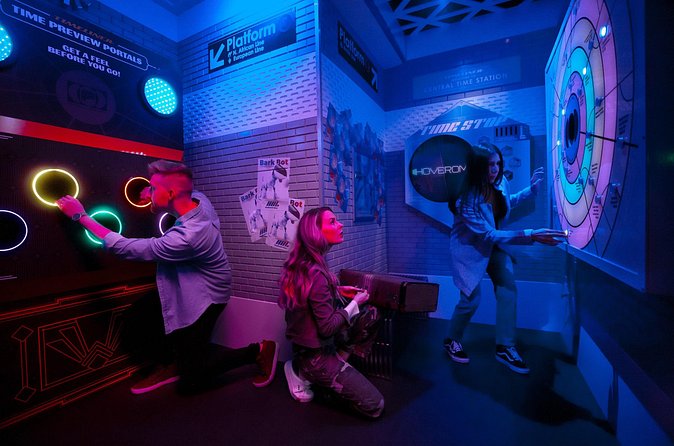
You’ll hear all kinds of escape-room advice, but most of it is fluff. Here’s what’s useful based on how these games run and what shows up in the experience feedback.
First: talk early and often. If one person finds something and everyone else stays quiet, the group wastes minutes replaying guesses. Make it normal to say what you see, even if you’re not sure it matters yet.
Second: track your attempts. If you try a sequence and it fails, don’t just reset and hope. Have someone remember what changed. That helps prevent repeating the same wrong logic.
Third: use the guide strategically. Because the guide can help as needed, you don’t have to brute-force every step. If your group is stuck on the same section for several minutes, ask for a nudge. You’re trying to solve, not to prove stubbornness.
Fourth: keep an eye on time without panicking. A lot of groups start sprinting toward the end because they forgot what they already tried. Assign one person to time awareness so everyone else can focus on puzzle logic.
If your group includes mixed ages or first-timers, you might also want a theme that matches comfort level. For example, a lighter vibe like Playground can keep energy high if some teammates are newer to puzzle games.
The wrap-up: how it feels when you escape

Once you complete the mission, you escape, and the experience ends back at the meeting point. The time structure suggests a clear arc: briefing, 60-minute mission, then exit.
What I noticed from the feedback is that staff attention doesn’t disappear at the escape moment. People praised guides like Ayden and Paloma and Clare for making the experience fun and for providing thoughtful touches at the end. One write-up also mentioned the team comped a ticket for a birthday, which is a nice signal that they understand celebrations can matter as much as the puzzles.
In other words: you’re not just paying for a locked-room challenge. You’re also paying for a guided activity where the staff help you get through the experience and keep it friendly.
Price and value: is $45.99 per person worth it?

At $45.99 per person for about 1 hour 15 minutes total, this isn’t a $10 activity. It’s priced like an entertainment experience that includes planning, staffing, and puzzle design—plus the guided element.
So how do you judge value?
- If your group likes teamwork games, the price starts to make sense quickly. You’re buying a shared challenge that’s active, not passive.
- The 60-minute structure means you’re not wondering when the activity ends.
- The guide is part of the product, since they help you as needed.
- The ability to choose from six themes increases the odds you’ll find something that fits your group.
Where value can drop is when a group is split between people who want to solve and people who want to watch. Escape games are best when most of your group is engaged. If you have a group where half the people will disengage, consider keeping participation high by choosing a theme your whole crew is excited to play.
Also, think about timing. The experience is commonly booked about 8 days in advance on average. If you’re visiting during busy times, booking sooner can help you get your preferred game slot.
Who this is best for (and who should think twice)
This is a strong fit if you’re traveling with:
- Friends who like puzzles and problem-solving
- Families looking for a structured activity
- Teams and groups that enjoy communicating and brainstorming
- People celebrating birthdays, since staff have shown up for that kind of moment
It may be less ideal if your group hates tight coordination or gets frustrated easily. The time pressure is real. But you can reduce stress by using the teamwork tips above and asking the guide for help when the group is stuck.
Quick logistics: what you should plan for
You’ll want to show up with a little extra buffer so you can check in smoothly. You’ll use a mobile ticket, so have it ready on your phone.
The meeting point is clear at the Escape Game San Diego (Westfield UTC) address, and you return there at the end. That’s helpful if you plan to continue the day with lunch or shopping in the same area.
Service animals are allowed, and most people can participate. If your group has specific needs, you should check directly with the provider since no additional accessibility details are listed here.
Should you book The Escape Game at Westfield UTC?
I’d book it if you want a hands-on, team-first activity that doesn’t rely on weather or long travel. For a little under two hours total, you get a focused challenge with a guide and the chance to pick among six themed missions. That mix of structure, variety, and staffing makes it feel like more than a one-time gimmick.
Skip it only if your group hates collaboration, struggles with quick decisions under time pressure, or doesn’t want to be in a room where space can feel a bit tight. If that’s your crew, you might prefer a less puzzle-heavy activity.
If you do book, go in ready to talk, test, and adjust. That’s the secret sauce. And if you end up with one of the guides people praise—like Phillip, Ayden, or Paloma and Clare—you’re in for a smooth, friendly game day.
FAQ
How long is The Escape Game San Diego (Westfield UTC)?
The overall experience is about 1 hour 15 minutes, and you have 60 minutes to complete the mission and escape.
What games can you choose from?
You can choose one of six games: Prison Break, The Heist, Playground, Timeliner: Train Through Time, Cosmic Crisis, or Ruins: Forbidden Treasure.
Do you need to print a ticket?
No. You’ll use a mobile ticket.
Is there a group size limit?
Yes. The experience has a maximum of 12 travelers.
Are service animals allowed?
Yes. Service animals are allowed.
Can I cancel for a refund?
Yes. You can cancel for a full refund up to 24 hours in advance of the experience’s start time. Cancellation cut-off is based on local time.