REVIEW · JULIAN
Pies & Pickaxes: A Historic Walking Tour of Julian, CA
Book on GetYourGuide →Operated by Drives and Detours · Bookable on GetYourGuide
Julian history starts on the sidewalk. Pies & Pickaxes is a download-and-go walking tour built around Main Street landmarks, with stories you’d likely miss at normal speed, plus audio you can pause and replay. I like that it’s only $7, so you can sample the town without committing to a big day, and I also like the pie perks angle that helps you turn the walk into actual snacks afterward. One thing to keep in mind: the tour ends at the Julian Pioneer Museum, but museum admission is extra and it’s open only on weekends.
You’ll start at the Bailey House next to Julian Beer Co, follow the trail of Julian’s founder Drue Bailey and early residents, then climb to the Julian Pioneer Cemetery for a birds-eye look. After that, you’ll walk back down past historic buildings, the old Julian Jail, and the Witch Creek Schoolhouse, while learning about the earliest inhabitants of the area, the Kumeyaay people. Plan for a phone-powered experience: bring comfortable shoes and your headphones, and make sure your phone is charged and location services are on.
In This Review
- Key things to know before you start
- How the app-led walk works on Main Street
- Bailey House and Drue Bailey: your first “wait, I didn’t notice that” moment
- The hill to Julian Pioneer Cemetery and the valley view you earn
- Down Main Street: historic buildings, the old Julian Jail, and why the stories work
- Witch Creek Schoolhouse and the Kumeyaay people: learning with context
- Pie perks: how to turn the walk into real bites
- Julian Pioneer Museum at the end: what to do with the $3 ticket
- Price and value: is $7 a fair deal for this kind of walk?
- Who this fits best, and who should rethink it
- Should you book Pies & Pickaxes?
- FAQ
- Where does the Pies & Pickaxes tour start?
- How long does the tour take?
- Do I need to reserve a spot?
- Is a smartphone included?
- Do I need headphones?
- What’s included in the price?
- What is not included?
- How much is museum admission at the end?
- Is the Julian Pioneer Museum open every day?
- What are the tour hours or cancellations like?
Key things to know before you start

- Bailey House is the launch point right next to Julian Beer Co, so you’ll know exactly where to begin.
- Drue Bailey and early residents set the tone early, with short, story-driven audio prompts.
- Julian Pioneer Cemetery adds a payoff with a high viewpoint over town and the surrounding valley.
- Main Street walking, not sightseeing bus: you’ll cover several landmarks at an easy, self-paced pace.
- Pie perks are part of the design, with tips and discounts along the way.
- Julian Pioneer Museum is the finish line, but admission is not included and weekend hours matter.
How the app-led walk works on Main Street

This tour is set up for quick, casual exploring. You don’t need to line up with a group leader at a specific time, and you don’t need reservations. The core idea is simple: you download the app content ahead of time, then use the Drive and Detours experience on your own schedule while you walk.
The walk is designed for a 1-hour experience from start to finish. That matters because Julian’s Main Street is easy to enjoy slowly, but you’ll feel the timer if you stop for extra shopping or photo breaks along the route. If you like to linger, treat this like an outline you can finish, then extend on your own after you end at the museum.
You’ll want to be ready before you step off. Bring headphones (earbuds work), keep your phone charged, and turn on location services so the audio cues can match where you are. Also download ahead if you can, since the tour content is available as downloadable material to help you save data.
Finally, note the tour format: it’s a private group experience, though it’s still self-paced. If you prefer a live guide walking beside you the whole time, you may want to consider a traditional guided tour instead.
Bailey House and Drue Bailey: your first “wait, I didn’t notice that” moment
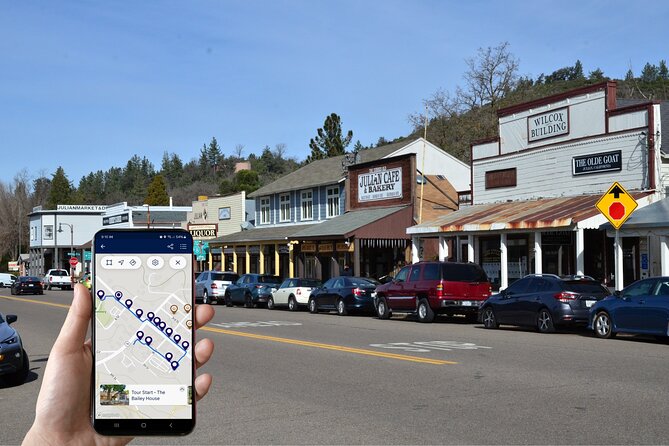
Your tour starts at the northwest end of Main Street, in front of the Bailey House, next to Julian Beer Co. This is a smart setup because it puts you right on the main drag, where you’re already likely to be walking. It also helps you orient quickly: you aren’t guessing where to begin.
In the opening stretch, you’ll hear about Julian’s founder, Drue Bailey, and you’ll get some funny stories about the first residents of this small mountain town. The tone matters here. Instead of heavy facts only, the audio cues are geared toward personalities and human details, which is usually what makes a historic place feel alive.
This first leg is also a good way to reset your pace. When you start with a few minutes of context, you’ll likely find yourself noticing details in storefronts and buildings you might otherwise walk past without a second look. It’s the kind of setup that turns a casual stroll into a more rewarding route.
If you’re tempted to race ahead to the “big stops,” don’t. Spend the first few minutes listening carefully. You’ll catch a lot more meaning later when the audio connects people to the places you’re seeing.
The hill to Julian Pioneer Cemetery and the valley view you earn

After the opening stories near Main Street, you’ll make your way up a small hill to the Julian Pioneer Cemetery. This is one of the tour’s best structural choices: it gives you a break from street-level walking and a payoff for your effort.
From the cemetery, you’ll get a birds-eye view of Julian and the surrounding valley. That viewpoint does more than support a photo. It gives you a sense of how the town sits in the landscape, and that makes later landmarks feel more connected to the area’s geography.
As you listen, keep your eyes moving. Even if the audio is short, the view lets you “read” the town layout—where Main Street runs, what’s above and below, and how spread out the area can feel. If you like to understand a place spatially, this stop will help.
One practical caution: you are walking up and later walking back down. The tour isn’t described as wheelchair-friendly or suitable for mobility impairments, and the route includes hills. Wear shoes you trust on uneven ground, and take the hill at a steady pace.
Down Main Street: historic buildings, the old Julian Jail, and why the stories work
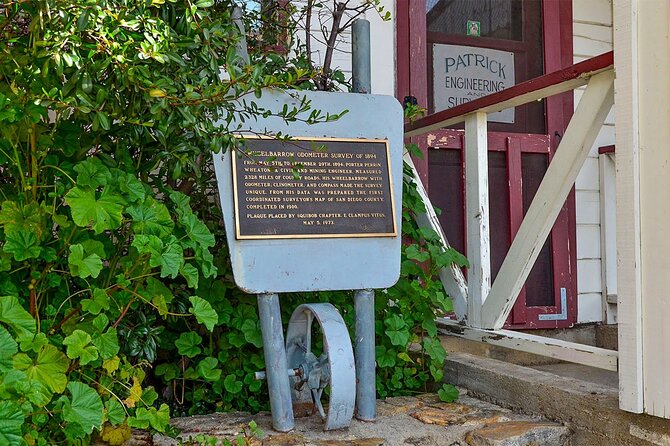
Once you’ve had the cemetery viewpoint, the tour shifts back onto Main Street. You’ll work your way down past several historic buildings, with audio stories about residents who helped shape Julian into the town it is today.
This is where the pacing is important. A self-guided format can feel random if the audio doesn’t give you anchors. Here, it does. As you pass buildings, you’re told who lived there or what their role was, which turns a street view into a sequence of mini-biographies.
You’ll also pass by the old Julian Jail. Jail stops can go either way on tours: sometimes they’re just name-and-date plaques. In this format, the audio focus on residents and the town’s development helps keep the jail from feeling like an isolated trivia item. It becomes part of how a small frontier town handled order, problems, and daily life.
I like this section because it blends architecture-adjacent listening with real human context. If you’re the type who enjoys town walking tours but gets bored when it’s just dates, this part is built for you.
The main tradeoff is time. Because the tour is about an hour, you won’t have time for a deep museum-style read at each building. Treat it as a storytelling walk, then come back for extra details if you want.
Witch Creek Schoolhouse and the Kumeyaay people: learning with context

After the jail segment, you’ll move toward the historic Witch Creek Schoolhouse. This is another deliberate choice in the route: it signals that Julian’s story isn’t only about one founder or one era. The schoolhouse adds a look at education and community life, which usually makes history feel more personal.
Along the way, you’ll also learn about the earliest inhabitants of the area, the Kumeyaay people. That’s important because it broadens the story beyond the settler-era names you’ll hear on Main Street. In a place like Julian, it’s easy to let the timeline jump forward in your head; a tour like this helps you keep it connected to the deeper, earlier presence in the region.
Because the audio is your guide, pay attention to how the narration frames these points. If a segment talks about the people first, then transitions toward later town development, you’ll get more than facts. You’ll get how the layers of time overlap in one small area.
This portion also supports a calmer pace. The audio prompts give you a reason to slow down and actually read what’s around you instead of walking on autopilot.
Pie perks: how to turn the walk into real bites

Of course, this tour has food built into the concept. You’ll learn tips on where to get a slice of pie and other treats, and you’ll get pie perks that include insider tips and discounts at local businesses.
This is more useful than it sounds. In a small mountain town, the hardest part is not finding something to eat. It’s finding the right place that matches your timing, your preferences, and the lines you don’t want to deal with. A tour that points you to options mid-walk can save you time and reduce the “guess and hope” approach.
Also, because the route ends near the museum, you can plan a simple flow: finish the last audio stop, then grab pie nearby if you’re still hungry. If you’re not, you can still use the tips as a next stop for later in the day.
Just keep expectations realistic. The tour description says tips and discounts are part of the experience, but it doesn’t promise specific pie names or hours. Use the info as guidance, then confirm details at the shop before you commit.
If you’re traveling as a couple or small group, the price makes this an easy add-on to a day in town. At $7 per person, you can take the walk even if you only want one or two of the stops more than the others.
Julian Pioneer Museum at the end: what to do with the $3 ticket

Your tour ends at the Julian Pioneer Museum. It’s open on weekends only, so this matters for your planning. If you’re visiting on a weekday, you may still enjoy the exterior context and the end-of-route pacing, but you won’t be able to walk into the museum itself.
Admission to the museum is not included. The cost listed is $3 per adult. That’s a small add-on, but it’s still the one part of the day that can change your overall value.
Here’s how I’d think about it: the walking tour itself is affordable, and the museum fee is optional. If you love museums and want a deeper stop at the end, budget the extra $3 per adult. If you’d rather spend your time on pie, photos, and wandering Main Street, you can treat the museum as a bonus you check only when it’s open.
The key is to plan around the museum’s weekend schedule. If you’re going for a specific weekend, this ending point can feel like a satisfying capstone.
Price and value: is $7 a fair deal for this kind of walk?

At $7 per person for a 1-hour historic walking experience, the value is strong—mostly because what you get is flexible and easy to try. You’re paying for story-driven audio content plus a simple route that guides you from the Bailey House area to several major landmarks.
Your main “hidden” costs aren’t money. They’re effort and tech. You need your own smartphone, headphones, and a charged phone with location services enabled. If you forget those, the experience can turn frustrating fast. And if you’re not into walking, you may not enjoy the route even if the audio is good.
The other small variable is the museum. With admission not included and weekend hours only, you might or might not pay the $3 depending on when you visit. Either way, you can still finish the story walk and enjoy the landmarks.
Overall, I’d call this a good deal for people who like self-guided audio walks and want a structured route without paying for a full guided tour. It’s also a decent choice if you want history that moves at street-walking speed, not at museum-reading speed.
Who this fits best, and who should rethink it

This tour is best for travelers who like to set their own pace. You don’t need a reservation, and you can explore at your own speed with the app prompts guiding you. If you enjoy listening walks, you’ll likely appreciate the way each segment points you to a specific landmark.
It’s also a nice fit if you like mixing history with practical town time. You’ll get the storytelling around Julian’s past, and you’ll also get pie recommendations and discounts to help you plan your meals.
On the other hand, it’s not suitable for people with mobility impairments, people with heart problems, wheelchair users, or anyone with recent surgeries. That’s based on the walking route including hills, plus the general expectation of physical effort. If any of that affects you, you’ll want a different format.
Also, if you’re allergic to phone-based experiences, this might not feel right. The tour is designed around the Drives and Detours app, so bring the tech, not just the curiosity.
If you want a guided conversation with a person in charge, or you prefer shorter, flatter stops, look for an alternative. This one is built for the sidewalk.
Should you book Pies & Pickaxes?
Book it if you want an easy, budget-friendly way to learn Julian’s story while walking Main Street and a nearby hill. The route gives you variety: founder Drue Bailey stories, a cemetery viewpoint, historic buildings, the old Julian Jail, and the Witch Creek Schoolhouse—plus the Kumeyaay people context, which adds depth beyond the typical “town founder” narrative.
Skip it if you need step-free accessibility, or if you dislike phone-guided audio tours. Also, plan the end with the Julian Pioneer Museum in mind, since weekend hours and the $3 adult admission can affect your final payoff.
If you time it right and come prepared with headphones and a charged phone, this is a smart little add-on that makes a short Julian visit feel thoughtfully guided without feeling rigid.
FAQ
Where does the Pies & Pickaxes tour start?
It starts on Main Street at the northwest end, in front of the Bailey House next to Julian Beer Co.
How long does the tour take?
The tour duration is listed as 1 hour.
Do I need to reserve a spot?
No. The tour is described as download and go, with no reservations needed.
Is a smartphone included?
No. A smartphone is not included, so you’ll need your own device to access the app.
Do I need headphones?
Headphones are recommended for the best listening experience.
What’s included in the price?
Included features are the app and tour download, flexible usage with unlimited access within 30 days, and downloadable content to save data.
What is not included?
Not included items are transportation, food and beverage, a smartphone, and admission to the Julian Pioneer Museum.
How much is museum admission at the end?
Admission to the Julian Pioneer Museum is listed as $3 per adult.
Is the Julian Pioneer Museum open every day?
No. The museum is open on weekends only.
What are the tour hours or cancellations like?
Free cancellation is listed as available up to 24 hours in advance for a full refund.